10 Tips for Buying Plumbing Fittings Globally?
Buying plumbing fittings across borders is not simply a price comparison exercise. It is a technical sourcing decision involving pressure, materials, standards, logistics, and after-sales support. A fitting may look identical on a screen, yet its thread profile or sealing surface may differ by a few millimeters.
Market data shows why this category deserves closer attention. MarketsandMarkets estimates that the global pipe fittings market will grow from about USD 16 billion in 2023 to more than USD 22 billion by 2028. The World Health Organization and UNICEF reported in the 2023 Joint Monitoring Programme update that 2.2 billion people still lacked safely managed drinking water in 2022. These figures point to continuing infrastructure demand, but they do not guarantee that every supplier is reliable. Buyers must examine specifications, testing evidence, and production controls.
Small details matter. Check whether a brass fitting contains lead restrictions relevant to the destination market. Confirm thread standards, nominal sizes, working pressure, temperature ratings, and corrosion resistance. Request certificates that match the actual factory and batch. A polished product photo proves very little. Even a reputable supplier can provide incomplete documentation. That assumption can fail.
This guide presents ten practical tips for buying plumbing fittings globally. It considers supplier audits, sample testing, Incoterms, packaging, inspection plans, and warranty terms. The advice draws on engineering practice and recognized reporting, while acknowledging a practical limitation: market reports often group different fitting types together. Therefore, buyers should validate broad statistics against project drawings, local codes, and field conditions before placing a large order.
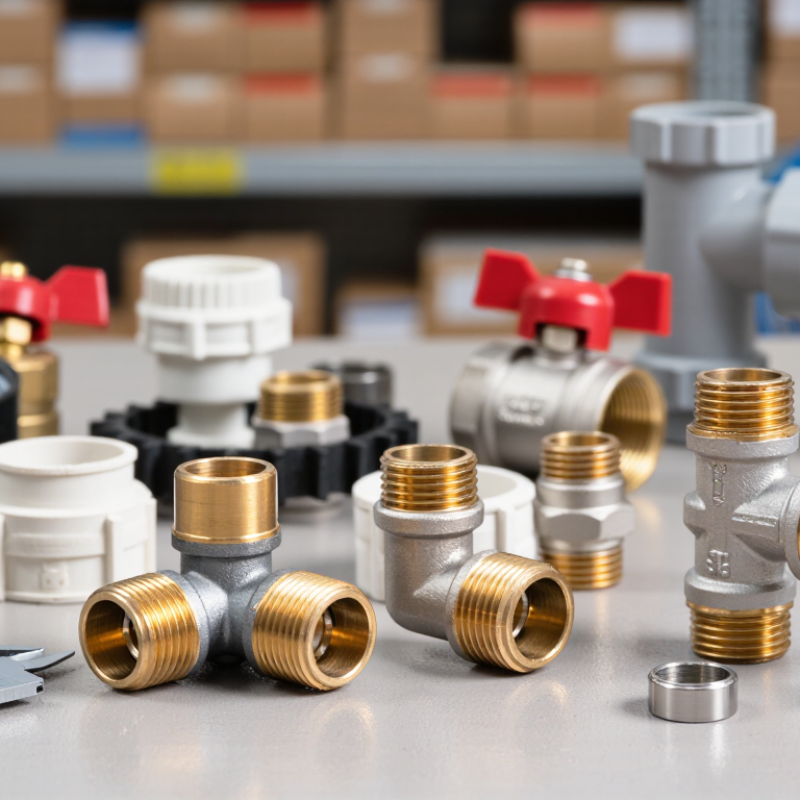
Understanding Plumbing Fittings and Global Market Requirements
Buying plumbing fittings globally requires more than comparing prices. In practice, a fitting may look suitable but fail because its thread profile, pressure rating, or connection size differs. Check whether the product matches local pipe dimensions and water conditions. Potable-water projects may require approved materials and documented testing. Ask for technical drawings, material certificates, pressure-test results, and batch information. Reliable suppliers provide clear answers, not vague promises.
Tip 1
Confirm market requirements before ordering. Review local standards, installation rules, labeling needs, and import documents. Requirements vary between countries, and translations can create expensive mistakes. Consider temperature, humidity, water chemistry, and freezing risks. A fitting designed for mild indoor use may corrode quickly near a coastline. Request samples and test them with the intended pipes. This small step can expose poor sealing or rough threads.
Tip 2
Assess the supplier, not only the fitting. Examine production records, quality-control procedures, inspection photos, and after-sales support. A video call from the factory can reveal storage conditions and packaging quality. Still, remote evidence is imperfect. Independent inspection may be worth the cost for large orders. Confirm lead times, spare quantities, tolerances, and damage procedures in writing.
Tip 3
Calculate the complete landed cost, including freight, duties, testing, insurance, and possible delays. Cheap fittings can become costly when documentation is incomplete or replacement stock is unavailable. Reliability matters more than a low quotation.
Defining Specifications, Materials, Sizes, and Performance Standards
10 Tips for Buying Plumbing Fittings Globally
Defining Specifications, Materials, Sizes, and Performance Standards
When buying plumbing fittings globally, define the application before comparing prices. Record fluid type, operating pressure, temperature, flow, and installation environment. A fitting for potable water may fail in hot chemical service. I learned this after a small mismatch caused leakage during commissioning. The drawing looked correct. The material choice was not.
Specify nominal size, actual outside diameter, wall thickness, and connection type. Threaded, press-fit, grooved, and welded ends are not interchangeable. Ask for tolerances, gasket composition, and dimensional drawings. Material selection needs evidence, not assumptions. Stainless steel, brass, ductile iron, and engineered polymers behave differently under corrosion, heat, vibration, and disinfectants. Check compatibility with adjoining pipes and valves. A cheaper fitting can increase labor costs when adapters are required.
Performance standards should be named clearly in purchase documents. Confirm pressure ratings at the intended temperature, cycle testing, leakage limits, and hygiene requirements where applicable. Request independent test reports, batch records, inspection results, and traceable certificates. Verify that certificates match the delivered lot. Do not rely on a logo alone. I still leave room for review because supplier data can contain errors. Photos, samples, and a witnessed pressure test often reveal details drawings miss. Measure twice. Then approve.
Comparing International Suppliers, Certifications, Prices, and Quality
Buying plumbing fittings globally requires more than comparing catalog prices. The 2023 World Bank Logistics Performance Index shows major differences in customs efficiency, shipment tracking, and delivery reliability. Request a written quotation with material grade, dimensions, tolerance, packaging, and delivery terms.
Certification needs careful checking. ISO 9001 indicates a quality-management system, but it does not prove that every fitting is safe for drinking water. For potable applications, review relevant standards such as NSF/ANSI/CAN 61 or accepted local equivalents. The WHO and UNICEF Joint Monitoring Programme reported in 2023 that 2.2 billion people lacked safely managed drinking water in 2022. That figure makes material traceability more than paperwork.
Quality often appears in small details. Check thread smoothness, casting lines, seal condition, and protective caps under bright inspection light.
I once treated a low quote as a bargain. It became expensive after repeated leakage. The lesson was uncomfortable: a certificate cannot replace practical inspection.
Managing Orders, Shipping, Customs, and Import Regulations
10 Tips for Buying Plumbing Fittings Globally?
Managing Orders, Shipping, Customs, and Import Regulations
Tip 1: Confirm material, size, pressure rating, and thread standards before requesting quotations. A small mismatch can stop installation.
Tip 2: Ask suppliers for test reports, batch numbers, and inspection photos.
Tip 3: Use a purchase order with clear quantities, tolerances, packaging, and delivery terms.
Tip 4: Split large orders into milestones. This reduces quality surprises, though it may increase handling costs.
Tip 5: Choose sea freight for heavy fittings when timing allows. UNCTAD’s Review of Maritime Transport reports that over 80% of global merchandise trade by volume moves by sea.
Tip 6: Compare total landed cost, not unit price. Include freight, insurance, duties, brokerage, storage, and port charges.
Tip 7: Check whether cartons need moisture protection. Rust often begins inside damaged packaging.
Tip 8: Keep commercial invoices, packing lists, certificates of origin, and product classifications consistent. The World Bank’s 2023 Logistics Performance Index highlights customs efficiency as a major logistics factor. Delays are rarely dramatic at first.
Tip 9: Verify import permits, labeling, and restricted-material rules with the destination customs authority. Rules differ by country and sometimes by product use.
Tip 10: Build a buffer into the delivery schedule. Weather, inspections, and document corrections can add days. I once underestimated inspection time; the fittings arrived, but the project crew had already left. That mistake was avoidable. Recheck every document.
Inspecting Products, Evaluating Risks, and Building Supplier Relationships
Global plumbing fitting purchases require more than comparing prices. Product inspection should begin with drawings, material specifications, dimensions, pressure ratings, and connection standards. Request clear photographs of threads, seals, casting surfaces, and protective packaging. A sample inspection can reveal rough threads, uneven plating, or weak sealing faces before a large order is approved. Small defects become expensive after installation.
Tip 1: Check samples against approved drawings.
Test several pieces, not only the best-looking unit. Confirm thread compatibility with your pipes and tools. Ask for material reports, inspection records, and relevant conformity documents. These records should be traceable to the actual production batch. Documentation is useful, but it cannot replace physical testing. I have seen paperwork appear complete while measurements were inconsistent. That possibility deserves attention.
Tip 2: Build a written risk checklist.
Evaluate transport damage, changing material costs, delivery delays, communication gaps, and unclear warranty terms. Use staged orders when supplier performance remains unproven. Keep payment and quality requirements clearly documented. A reliable supplier should explain limitations instead of promising everything. Schedule regular video inspections or factory visits when practical. Share defect photos and corrective actions quickly. Relationships improve through specific feedback, fair timelines, and consistent standards. Still, trust should grow from evidence, not friendly messages alone.
Tip 3: Review performance after every shipment.
| No. | Buying Tip | What to Inspect or Verify | Practical Benchmark or Reference | Main Global Sourcing Risk | Recommended Action | Risk Level |
|---|---|---|---|---|---|---|
| 1 | Define the application before requesting quotations | Confirm pipe material, fluid type, pressure, temperature, connection type, nominal size, and installation environment. | Specify nominal diameter, pressure class, end connection, material grade, operating temperature, and required quantity in one technical sheet. | A fitting may match the pipe size but still be unsuitable for pressure, temperature, drinking water, or corrosive service. | Issue a controlled specification and require suppliers to quote against the same revision. Do not compare prices from incomplete specifications. | High |
| 2 | Confirm thread and connection compatibility | Check thread standard, thread gender, pitch, nominal size, sealing method, flange drilling, and dimensional tolerances. | ISO 7-1 covers pressure-tight pipe threads where the joint is made on the threads; ISO 228-1 covers parallel pipe threads that do not make the joint pressure-tight on the threads. | Mixing incompatible thread systems can cause leakage, damaged threads, installation delays, or field rework. | Request thread gauges, dimensional drawings, and a sample connection test using the actual mating component. | High |
| 3 | Verify material and corrosion resistance | Review alloy or polymer designation, chemical composition, surface condition, wall thickness, plating, and compatibility with the conveyed fluid. | For metallic fittings, require a material certificate with heat or batch identification. For polymer fittings, verify the resin designation and applicable pressure-rating data. | Incorrect material substitutions may reduce service life, create contamination risks, or cause stress-corrosion and dezincification problems. | Use independent material testing for critical orders and specify prohibited substitutions in the purchase contract. | High |
| 4 | Check pressure, temperature, and flow ratings | Compare the fitting rating with system pressure, temperature, water hammer exposure, and the weakest connected component. | Use the manufacturer’s pressure-temperature table rather than relying only on a nominal “working pressure” label. Ratings can change with temperature and connection type. | Overlooking derating can lead to leakage, deformation, or sudden failure during operation. | Calculate the design envelope and obtain signed technical confirmation for any application near the published rating. | High |
| 5 | Inspect dimensions and workmanship before shipment | Measure outside diameter, wall thickness, face-to-face length, thread dimensions, bore, concentricity, and sealing surfaces. | Use calibrated gauges and a sampling plan based on order criticality. Examine casting defects, cracks, burrs, dents, poor plating, and damaged threads. | Dimensional variation may prevent assembly even when the product appears visually acceptable. | Approve a pre-production sample, record inspection results, and define acceptance limits before mass production. | Medium |
| 6 | Require traceable testing and documentation | Review inspection reports, pressure-test records, material certificates, batch numbers, packing lists, and certificate-of-conformity details. | Documents should identify the product description, quantity, production batch, test method, test date, acceptance result, and responsible inspector. | Untraceable records make it difficult to investigate failures, isolate affected batches, or support warranty claims. | Match documents against carton labels and product markings. Retain records for the expected service and warranty period. | High |
| 7 | Evaluate compliance for the destination market | Identify requirements for potable water contact, pressure equipment, building codes, customs classification, labeling, and packaging. | Compliance is jurisdiction-specific. A test report accepted in one market may not satisfy another market’s installation or drinking-water requirements. | Non-compliant products can be detained, rejected by inspectors, or prohibited from installation. | Confirm requirements with the importer, engineer, authority having jurisdiction, or qualified local compliance professional before ordering. | High |
| 8 | Assess total landed cost instead of unit price | Include product price, tooling, testing, packaging, inland transport, freight, insurance, duties, taxes, inspection, and currency exposure. | Compare quotations using the same delivery term, currency, quantity basis, lead time, and payment conditions. | A low factory price may become expensive after freight, import charges, rework, shortages, or delayed installation. | Build a landed-cost model and add a contingency for exchange-rate changes, port delays, and inspection costs. | Medium |
| 9 | Validate production capacity and quality controls | Review process flow, incoming inspection, in-process checks, final inspection, calibration records, nonconformance handling, and corrective-action history. | Supplier evaluation should cover capacity for the required volume, realistic lead times, lot traceability, and the ability to maintain approved specifications. | Capacity shortages or weak process controls can cause inconsistent dimensions, late delivery, and repeated defects. | Conduct a remote or on-site audit for strategic suppliers and use a first-article approval process before recurring orders. | Medium |
| 10 | Build a measurable long-term supplier relationship | Track delivery performance, defect rate, response time, documentation accuracy, complaint closure, and engineering-change discipline. | Use a written quality agreement defining inspection rights, change-notification periods, replacement obligations, packaging standards, and escalation contacts. | Uncontrolled design or material changes may occur after approval, especially when orders are split among production sites. | Hold periodic performance reviews, approve alternate factories in writing, and link repeat business to verified quality and delivery results. | Medium |
Note: Standards, certification, and installation requirements should be confirmed for the specific product, application, and destination market before purchase.
Related Posts
-
2026 Best Plumbing Fittings for Your Home Renovation Needs?
-

China Top PVC Pipe Manufacturers for Global Buyers
-

Top 10 Water Well Pipe Types for International Buyers?
-
How to Choose the Right PVC Fittings for Your Project?
-

Top 10 Uses of PVC Well Pipe for Water Distribution and Irrigation?
-
Essential Guide to Choosing the Right Water Well Supplies for Sustainable Water Management