2026 Best Well Pipe Types for Global Buyers?
Selecting the best well pipe in 2026 requires more than comparing prices or material labels. Global buyers must match pipe performance with geology, water chemistry, drilling depth, and installation methods. A pipe that performs well in a shallow rural well may fail in a deep industrial borehole. Soil movement, acidic water, and high pumping pressure can quietly shorten its service life.
This guide examines steel, PVC, HDPE, and stainless steel options for different well conditions. It considers strength, corrosion resistance, joint reliability, transport weight, maintenance, and total ownership cost. Field engineers often inspect wall thickness, pressure ratings, connection quality, and screen design before approving a purchase. Small details matter. A poorly sealed joint can introduce sediment or bacteria, even when the pipe itself meets specifications. Buyers should also verify applicable ISO, API, drinking-water, and local regulatory requirements before ordering.
There is no universal winner. That deserves emphasis. Steel may suit deep, demanding wells, while PVC can offer practical corrosion resistance and easier handling. HDPE supports flexible installations, but temperature and pressure limits require careful review. Stainless steel provides strong corrosion resistance, although its higher cost may not suit every project. Product data sheets can also leave important questions unanswered, especially about long-term field performance. This article offers a clear comparison, while encouraging buyers to confirm calculations with qualified drilling and water-system professionals. Reliable decisions begin with evidence, not assumptions.
What Is a Well Pipe and Why Does Pipe Type Matter?
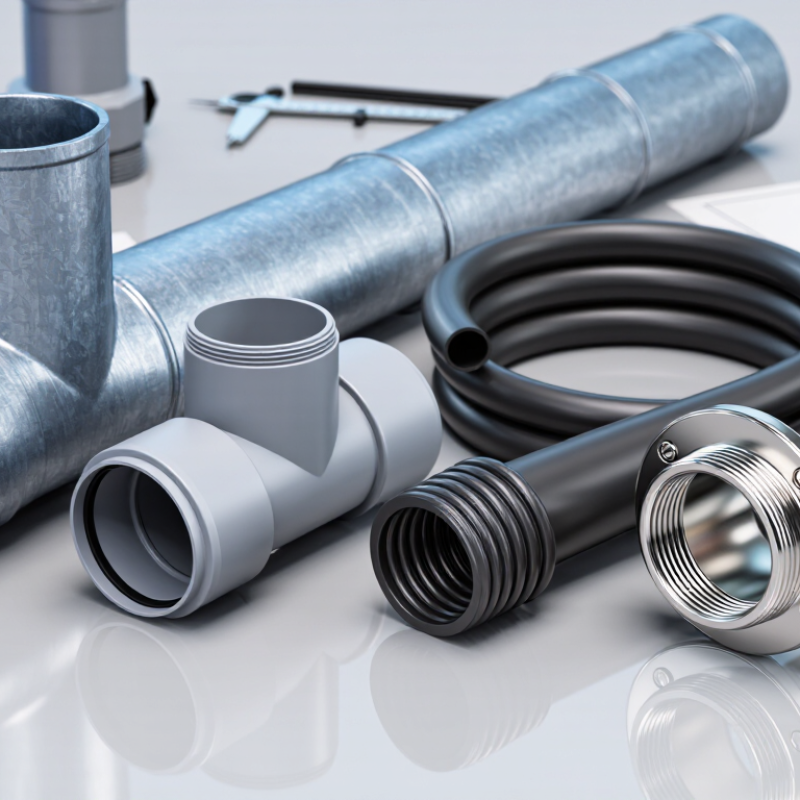
A well pipe is the protective structure installed inside a drilled or bored well. It may serve as casing, a screen, or a water-lifting riser. The casing supports unstable ground and helps prevent surface debris from entering the water zone. The screen allows groundwater to pass while limiting sand movement. Small details matter. An incorrect diameter can reduce pump performance, complicate maintenance, or leave too little space for sealing materials.
Common options include PVC, HDPE, carbon steel, and stainless steel. PVC resists many chemicals and remains relatively light during installation. HDPE offers flexibility, which can help in uneven ground, but its temperature and pressure limits require careful checking. Carbon steel provides high mechanical strength, especially in deep wells. Stainless steel can suit aggressive water chemistry, although its cost may challenge smaller projects. No material is perfect.
Global buyers should examine local geology, water chemistry, well depth, and applicable construction standards before choosing a pipe. Request test reports for wall thickness, pressure rating, dimensions, and connection quality. A reliable supplier should explain how the pipe matches the screen, gravel pack, pump, and sanitary seal. Experienced installers also inspect joints after assembly, because a strong pipe can still fail through poor connections. A basic material chart may look convincing, but it can hide transport limits, installation risks, and changing groundwater conditions.
Key Well Pipe Materials and Their Main Characteristics
2026 Best Well Pipe Types for Global Buyers?
Carbon steel remains a practical choice for deep wells, heavy loads, and unstable formations. It offers high collapse resistance and familiar welding procedures. However, oxygenated groundwater can accelerate corrosion, especially near the water table. World Steel Association data reports 1.88 billion tonnes of crude steel production in 2024, showing strong global supply capacity. Supply does not guarantee suitability. Buyers still need wall-thickness calculations, coating checks, and verified mill certificates.
PVC and uPVC well pipe provide strong corrosion resistance and smooth internal surfaces. They are lighter than steel, reducing transport and installation effort. Their limits include lower impact resistance and sensitivity to heat or poor handling. HDPE offers flexibility and excellent resistance to many chemicals. It suits shallow or irregular installations, but thermal expansion requires careful design. ISO 4427 and relevant ASTM standards can support material and pressure verification.
Stainless steel serves aggressive water conditions where durability matters. It costs more, yet it may reduce replacement risk. Water chemistry testing should guide the decision. The 2024 WHO and UNICEF JMP report says 2.2 billion people lacked safely managed drinking water services. That figure highlights the need for dependable wells, not simply cheaper pipes. In field projects, installers often discover that a theoretically ideal pipe fails because gravel packing, alignment, or joint quality was overlooked. That is an uncomfortable lesson.
How to Choose Well Pipe by Water, Soil, and Well Conditions
2026 Best Well Pipe Types for Global Buyers?
How to Choose Well Pipe by Water, Soil, and Well Conditions
Choosing well pipe starts with the water, soil, and drilling environment. Clear water does not guarantee a suitable pipe material. Acidic or salty water can accelerate corrosion in ordinary steel. PVC resists many chemicals and remains lightweight, but extreme heat, impact, or deep installation may limit its use. HDPE handles movement well and suits uneven ground, although proper joining is essential. Steel provides strong structural support in unstable formations. It may need corrosion protection.
Soil pressure and well depth change the decision. Loose sand requires a correctly sized screen and filter pack to reduce sediment entry. Fractured rock may need stronger casing and careful cementing. In shallow wells, installers sometimes focus too much on price. That can create costly repairs later. A small diameter may also restrict pumping performance. Local water chemistry tests, drilling records, and regional construction codes should guide the final selection. A qualified well professional should verify wall thickness, collapse resistance, joint strength, and screen placement.
Tips:
Test the water before choosing materials. Check soil samples during drilling. Match pipe strength to depth and pressure. Inspect every joint. Keep records of installation conditions. Reconsider the design if sediment rises unexpectedly. Some recommendations look efficient on paper, but field conditions can prove otherwise.
2026 Best Well Pipe Types for Global Buyers? - How to Choose Well Pipe by Water, Soil, and Well Conditions
| Well Pipe Type | Typical Water Conditions | Suitable Soil and Geology | Typical Depth and Load Considerations | Main Advantages | Main Limitations | Best-Fit Applications |
|---|---|---|---|---|---|---|
| PVC-U Well Casing and Screen | Fresh groundwater with low to moderate temperature; generally resistant to many dissolved salts and naturally occurring groundwater chemicals. | Stable sand, gravel, clay, and unconsolidated formations when the borehole is properly supported and developed. | Commonly selected for shallow to medium-depth wells. Collapse resistance depends on outside diameter, wall thickness, pipe class, installation depth, and formation pressure. | Lightweight, corrosion-resistant, smooth interior, easy to transport, and usually economical. | Lower impact and temperature resistance than metal; can be damaged by excessive bending, poor installation, or high external pressure. | Domestic water wells, irrigation wells, monitoring wells, and low-corrosion groundwater projects. |
| HDPE Well Pipe | Freshwater and many mildly aggressive water environments; suitable where flexibility and leak-resistant fusion joints are important. | Unconsolidated formations, areas with ground movement, and boreholes where limited flexibility is beneficial. | Depth suitability depends strongly on pressure rating, wall thickness, temperature, and external collapse calculations; not automatically suitable for very deep wells. | Excellent corrosion resistance, high impact resistance, flexibility, and heat-fused joints that can reduce leakage points. | Lower stiffness than steel; thermal expansion, buoyancy, handling, and installation equipment must be considered. | Water wells in seismic or settlement-prone areas, horizontal or difficult installations, and chemically aggressive groundwater. |
| Carbon Steel Well Casing | Freshwater, brackish water, or saline water only when corrosion control, wall thickness, and water chemistry are properly evaluated. | Hard rock, fractured rock, cobbles, boulders, and formations requiring high impact and structural strength during drilling. | Suitable for deep wells and high external loads when the selected grade, wall thickness, connection, and installation method are engineered correctly. | High strength, high stiffness, good impact resistance, and suitable for demanding drilling conditions. | Susceptible to corrosion, heavier to handle, and may require coatings, cathodic protection, corrosion allowance, or water-treatment planning. | Deep rock wells, large-diameter production wells, high-load formations, and drilling conditions with severe mechanical stress. |
| Stainless Steel Well Casing and Screen | Chloride-bearing, acidic, or otherwise corrosive groundwater when the stainless-steel grade is matched to the actual chemistry. | Sand, gravel, fractured rock, and formations where long service life and durable screen openings are required. | Can be used in medium to deep wells; structural design must account for grade, wall thickness, connection strength, and external pressure. | High corrosion resistance compared with carbon steel, durable screen slots, and good resistance to temperature and mechanical damage. | Higher material and fabrication cost; not every stainless grade performs well in high-chloride or reducing environments. | Long-life municipal, industrial, coastal, monitoring, and chemically challenging groundwater wells. |
| Ductile Iron Well Pipe | Freshwater and selected mildly corrosive environments with appropriate internal or external corrosion protection. | Stable or fractured rock and projects requiring high rigidity and resistance to external mechanical forces. | Suitable for high-load applications; design must address pipe class, joint configuration, groundwater corrosion, and installation stresses. | High stiffness, strong compression performance, and good resistance to impact and external loads. | Heavy, more difficult to transport and install, and can corrode if soil and water conditions are not controlled. | Large-diameter production wells, high-load installations, and projects requiring rigid casing. |
| Fiberglass-Reinforced Plastic Well Pipe | Many corrosive groundwater conditions, provided the resin system is compatible with the water chemistry and temperature. | Stable formations and engineered installations where corrosion resistance is more important than high impact tolerance. | Depth and load capacity depend on laminate design, diameter, wall construction, joint system, and external pressure calculations. | Low corrosion, relatively low weight, smooth bore, and good resistance to many chemical environments. | Can be brittle under impact, requires careful handling, and may have limited availability or higher project cost. | Industrial, geothermal-related, chemical, and monitoring wells with demanding corrosion conditions. |
| Galvanized Steel Pipe | Generally limited to non-aggressive freshwater applications after checking local potable-water requirements and zinc-release concerns. | Stable, low-impact formations and shallow installations where high structural performance is not required. | Usually better suited to shallow or temporary applications; service life depends heavily on soil and water corrosivity. | Readily available, strong compared with many thin-wall plastics, and familiar to many installers. | Zinc coating can deteriorate, threaded joints may leak, and corrosion can accelerate in acidic, saline, or highly conductive water. | Limited shallow wells, temporary wells, or applications where local regulations specifically permit its use. |
Well Pipe Size, Strength, Standards, and Installation Factors
Choosing the best well pipe in 2026 starts with the well design, not the material label. Pipe size must match the pump, expected flow, bore diameter, and maintenance space. Measure twice. A narrow pipe can restrict pump performance, while an oversized pipe may raise drilling and sealing costs.
Strength includes tensile, collapse, burst, and impact resistance. Steel often suits deep or unstable formations, but corrosion control requires careful water and soil assessment. PVC can resist many chemicals and remains easier to handle, yet temperature, sunlight, thread design, and installation stress need attention. Wall thickness matters as much as outside diameter. Field checks should confirm the pipe’s internal diameter after joints are assembled, because small errors can reduce pump clearance.
Standards protect more than paperwork. Drinking-water projects should follow applicable national rules for material safety, pressure ratings, threaded connections, and factory testing. ASTM, ISO, or regional requirements may differ, so the purchasing document must name the exact standard and edition. Installation quality is equally important. The bore should provide enough clearance for a uniform annular seal, and joints must be clean, aligned, and tightened without over-torquing. Keep debris out. Poor sealing can allow surface contamination, even when the pipe itself is certified. One weakness remains common: designs often trust catalog ratings without checking actual depth, water chemistry, or lifting loads. That shortcut deserves another review.
Best Well Pipe Options for Global Buyers in 2026
Global buyers in 2026 need well pipe options matched to site conditions, not only purchase prices. The right choice depends on depth, soil movement, water chemistry, and installation equipment. PVC well casing is lightweight, corrosion-resistant, and practical for many shallow or medium-depth wells. HDPE offers flexibility where ground movement or difficult transport may create stress. Steel provides high mechanical strength for deeper wells, but it needs protection against corrosion. Stainless steel can suit aggressive water, although its cost may exceed the project budget.
Selection should begin with a technical site assessment. Check outside diameter, wall thickness, pressure requirements, and connection design before ordering. A pipe that fits the borehole may still fail under pumping loads. Water chemistry matters. Low-pH water can damage unsuitable metal over time. Sandy formations may also require carefully designed screens to reduce clogging. For deep installations, buyers should verify load ratings and temperature limits. Independent testing records are valuable.
Purchasing teams should request material certificates, dimensional reports, and clear installation guidance. Ask for wall thickness and impact data. Traceable records matter. Shipping also deserves attention, especially for long pipe sections. Poor packaging can cause scratches, ovality, or damaged threads before installation. A cheaper pipe may create higher replacement costs later. I would not choose a material from price alone. Still, even a careful selection can be wrong when local geology is poorly documented. Review the drilling report again.
Related Posts
-
Top Well Pipe Manufacturers in China for Global Buyers
-
How to Choose the Right Well Pipe for Your Water Supply Needs?
-
Top 10 Water Well Pipe Types for International Buyers?
-
2026 Best Water Well Pipe Options for Global Buyers
-
Top 10 Well Casing Pipe Options for Global Buyers?
-
2026 Best Well Casing Solutions for Efficient Water Management?