
Request A Quote

Phone: 416-244-6476
Email:

    2026 Top Cat Litter Box Types for Global Buyers

    Choosing the right Cat Litter Box in 2026 requires more than following automation trends. Global buyers must consider cat behavior, household space, cleaning habits, climate, and local product support. An open box offers easy access and better visibility. A covered model can control odors and scattered litter. Top-entry designs may suit energetic cats, but older cats can find them difficult.

    Jackson Galaxy, a well-known cat behaviorist, has said, “The litter box is the most important piece of furniture in your home.” That observation remains practical. A box placed beside a washing machine may vibrate, frighten a sensitive cat, and cause avoidance. A quiet corner with stable flooring usually creates a better routine. Small details matter.

    Automatic and self-cleaning boxes are receiving strong attention for 2026. They can reduce daily scooping, but they still require inspection, emptying, and occasional deep cleaning. Sensors may fail. Replacement parts may be unavailable in some regions. Buyers should check voltage compatibility, app support, warranty coverage, and repair access before purchasing. Sifting boxes offer a simpler alternative, especially where electricity or technical service is limited.

    Material quality also deserves careful review. Smooth, non-porous surfaces resist residue and simplify washing. High walls can contain urine spray, while low entrances support kittens and senior cats. There is no universal winner. That is easy to forget. This guide compares major Cat Litter Box types through practical use, feline comfort, maintenance demands, and long-term value. Some recommendations may need reconsideration, because every cat responds differently.
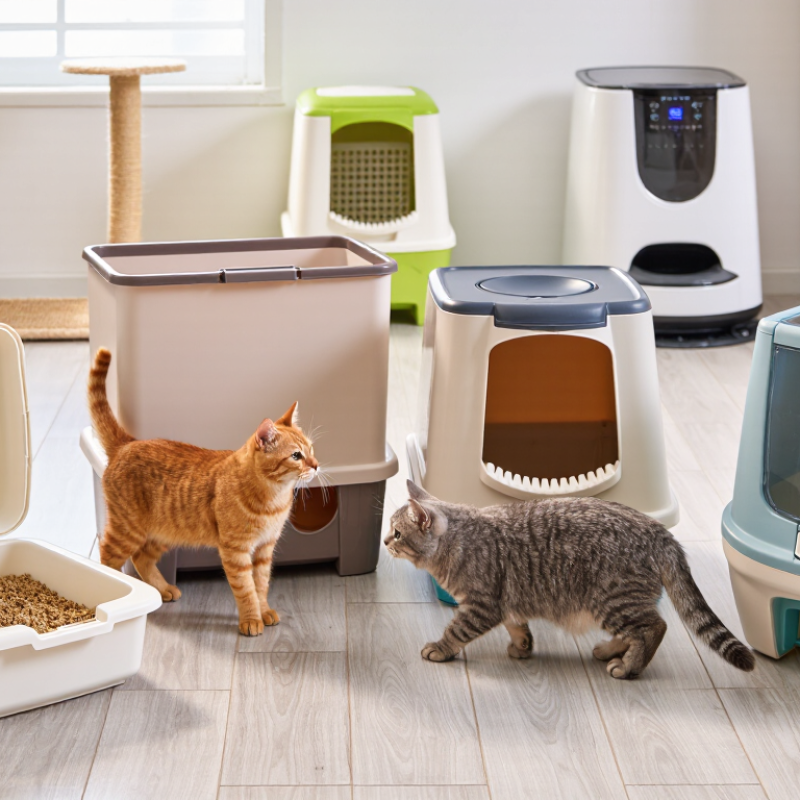
    2026 Top Cat Litter Box Types for Global Buyers

    What Cat Litter Box Types Will Global Buyers Find in 2026?

    What Cat Litter Box Types Will Global Buyers Find in 2026?

    Global buyers will find more than one standard litter tray in 2026. Open litter boxes remain popular because cats can enter easily and owners can inspect waste quickly. They suit multi-cat homes, older cats, and households with limited ventilation. Covered boxes offer better odor control, but some cats dislike confined spaces. Fit matters more. A large cat needs enough room to turn, dig, and leave without touching the lid.

    Top-entry models may reduce scattered litter and help prevent dogs or young children from reaching inside. However, they can challenge kittens, senior cats, and animals with joint pain. Sifting boxes speed up daily cleaning, especially when owners use clumping litter. Disposable models support travel or temporary housing, though frequent replacement creates extra waste. The trade-off is easy to miss.

    Automated self-cleaning boxes will attract buyers seeking convenience, particularly in apartments and busy urban homes. Reliable safety sensors, stable construction, simple maintenance, and clear waste compartments matter more than extra digital features. Electrical access and replacement-part availability also vary across regions. In humid climates, odor control may require better ventilation and more frequent cleaning. In colder areas, enclosed designs can feel more comfortable, but moisture may collect inside.

    No type wins every home. Practical testing should include entry height, interior space, noise, cleaning effort, and cat acceptance. A technically advanced box can fail if the cat avoids it. Buyer expectations need adjustment. Start with the animal’s habits, then compare convenience, cost, and local living conditions.

    In 2026, global buyers can expect six main cat litter box formats: open, covered, top-entry, sifting, self-cleaning, and disposable. The comparison score counts the defining design features of each format, including enclosure, entry configuration, waste separation, automation, and disposability. These scores describe product characteristics rather than company or brand market share.

    How Each Cat Litter Box Type Works and Meets Different Needs

    Cat owners do not share one universal litter-box need. The APPA 2024–2025 National Pet Owners Survey reports 49.6 million U.S. households own cats. That scale explains the demand for varied designs. Open trays offer easy access and quick visual inspection. They suit kittens, senior cats, and homes with several animals. Covered boxes reduce scattered litter and hide waste. However, some cats dislike enclosed spaces or trapped odors. Top-entry boxes can limit tracking, but older or heavier cats may struggle with the climb.

    Automatic boxes use sensors, timers, and rotating or raking mechanisms to separate waste after use. They reduce daily scooping, which helps busy households. Yet, moving parts need regular cleaning and careful monitoring. A machine cannot replace health observation. Changes in urine volume or stool appearance may be missed. Sifting boxes use perforated trays or liners. They work well with compatible granules, but damp clumps can stick and slow the process. Disposable boxes simplify travel or temporary housing. Their lower durability may create more waste.

    Grand View Research’s global cat-litter market reporting identifies clumping litter as a major product segment through 2030. That supports demand for boxes designed for fast separation. Still, market forecasts are not household guarantees. Room size, cat age, litter texture, and cleaning habits matter more than fashionable features. My practical preference is simple: choose access first, then odor control. The overlooked detail is entry height. A convenient box for one cat may become a daily barrier for another.

    Which Features Define Smart, Self-Cleaning, and Automatic Models?

    For global cat owners, litter box choice now depends on how “smart” the cleaning process really is. Smart models may track visits, weight, or litter levels through sensors. Their value is information, not magic. A clear app can reveal reduced use, but readings may be imperfect when two cats share one box. Short alerts help. Still, owners should observe appetite, urine, and behavior directly.

    Smart models may track visits, weight, or litter levels through sensors.
    Their value is information, not magic.

    Self-cleaning boxes remove clumps after a delay, often using a rake, rotating drum, or sifting tray. The delay matters because fresh waste needs time to firm up.

    Look for enclosed motors, smooth washable surfaces, and removable waste containers.

    Automatic models add scheduled cycles or sensors that start cleaning after the cat leaves.

    Reliable safety features should pause movement when weight or obstruction is detected. No mechanism is completely failure-proof.

    For international purchasing, confirm voltage, plug compatibility, replacement-part access, and instructions in a familiar language. A quiet motor matters in small apartments, while a stable base prevents startling movement.

    Dust control, odor sealing, and easy disassembly affect daily hygiene more than flashy screens. Complicated systems can discourage cleaning when the waste bin fills quickly.

    Choose the simplest model that fits the cat’s size, habits, and household routine. Manual inspection remains necessary.

    How to Compare Materials, Sizes, Hygiene, and Maintenance

    2026 Top Cat Litter Box Types for Global Buyers

    Choosing a litter box starts with material, not appearance. High-quality polypropylene is light, impact-resistant, and easy to ship. Stainless steel resists odor absorption and stains, but it costs more and may feel noisy. Avoid rough interiors and hidden seams. They trap damp litter and bacteria.

    Size should match the cat, not the room. A box should allow turning, digging, and comfortable entry. For larger cats, measure body length and add several inches. Covered designs control scattered litter, but some cats dislike enclosed spaces. Low-entry models help older cats, although they may allow more tracking. I once selected a compact box for convenience, and cleaning became frustrating within days.

    Hygiene depends on daily habits. Scoop clumps at least once a day, then wash the box with mild, unscented soap. Strong fragrances can discourage use. Check hinges, latches, liners, and filter compartments before buying internationally. Replacement parts should be easy to source locally. Automatic systems reduce scooping, yet they still need sensor checks and regular disassembly. No design removes maintenance. Test the size, access, and cleaning routine before ordering several units.

    2026 Top Cat Litter Box Types for Global Buyers - How to Compare Materials, Sizes, Hygiene, and Maintenance

    Cat Litter Box Type Common Materials Typical External Size
    (L × W × H)
    Usable Interior & Cat Fit Hygiene Performance Typical Maintenance Main Advantages Main Limitations
    Open Entry Pan Injection-molded polypropylene or recycled plastic 45–60 × 35–45 × 15–20 cm Suitable for most cats; choose an interior length about 1.5 times the cat’s body length, excluding the tail Easy visual inspection; open design provides good ventilation but offers limited odor containment Scoop at least once daily; wash and replace litter regularly; wipe surrounding floor as needed Low purchase cost, easy access, simple cleaning, and generally well accepted by cats More litter tracking, visible waste, and weaker odor control
    High-Sided Pan Polypropylene, ABS, or flexible polymer liners 50–65 × 38–48 × 25–35 cm Good for large cats or cats that spray upward; entry height should remain easy to step over Higher walls reduce urine and litter scatter; the open top still allows airflow Daily scooping; inspect wall joints and corners for residue; periodic full washing Better splash and scatter control than a standard pan without restricting visibility May be difficult for kittens, senior cats, or cats with limited mobility
    Covered Front-Entry Box Polypropylene base with plastic hood and swinging or open doorway 50–65 × 40–50 × 40–50 cm Works for average-sized cats; interior clearance must allow turning without touching the hood Contains some litter scatter and reduces visual exposure; enclosed air can retain ammonia if poorly maintained Scoop daily; remove the hood for washing; clean ventilation areas and door parts regularly Improves room appearance, privacy, and scatter control Some cats dislike enclosed spaces; odor control depends heavily on ventilation and cleaning frequency
    Top-Entry Box Rigid polypropylene or ABS plastic with textured lid 50–60 × 38–48 × 35–45 cm Best for agile adult cats; not ideal for kittens, elderly cats, or cats with joint problems Top opening can reduce tracking; enclosed volume may retain odor when scooping is delayed Lift the lid for daily scooping; clean the textured top and inner walls to prevent buildup Strong litter-scatter control and greater placement flexibility in small spaces Higher entry effort and more difficult access for routine inspection
    Sifting Litter Box Polypropylene frame, plastic sieve, and removable tray 48–60 × 38–45 × 18–25 cm Suitable for most cats; performance depends on matching the sieve opening to the litter granule size Separates clumps or solid waste efficiently when compatible litter is used; does not eliminate odor Sift daily or every few days; empty the tray; wash the sieve to prevent blocked openings Can reduce scoop use and preserve clean litter during routine waste removal Not suitable for every litter type; wet clumps may stick to the sieve or break apart
    Stainless-Steel Pan 304-grade stainless steel, sometimes with a plastic rim or base 50–65 × 38–48 × 15–25 cm Available in standard and large formats; confirm inner dimensions because thick rims reduce usable space Non-porous surface resists absorption and is easy to disinfect; exposed design provides strong ventilation Daily scooping; wash with mild detergent; dry completely to reduce residue and water spotting High resistance to odor absorption, scratching, staining, and long-term moisture damage Heavier, usually more expensive, and may produce noise when metal scoops contact the pan
    Automatic Self-Cleaning Box ABS or polypropylene housing, motorized mechanism, sensors, and waste drawer 55–75 × 50–65 × 45–65 cm Requires sufficient internal turning space; check doorway, step height, and maximum cat weight range Frequent automated waste removal can reduce exposure, but sensors and enclosed areas require careful cleaning Empty waste drawer several times weekly; inspect sensors and rake or drum; deep-clean according to the manual Reduces manual scooping and can support consistent waste removal in multi-cat homes Higher cost, electricity requirement, moving parts, noise, and greater maintenance complexity
    Disposable Paperboard or Recycled-Fiber Box Coated paperboard, molded fiber, or recycled cardboard 45–55 × 35–45 × 15–25 cm Best for temporary use, travel, foster care, or short-term transitions; size options may be limited Fresh units are clean and lightweight, but moisture resistance decreases as the surface becomes saturated Scoop daily; replace when odor, dampness, deformation, or surface damage appears Lightweight, easy to transport, and convenient for temporary or emergency use Lower durability, weaker leak protection, and higher replacement frequency than rigid boxes
    Buyer comparison note: Dimensions are typical market ranges rather than fixed standards. Select a box according to the cat’s body length, mobility, entry ability, number of cats, available floor space, and the type of litter used. Daily waste removal and regular washing are important for hygiene regardless of box design.

    What Global Buyers Should Check Before Selecting a Cat Litter Box

    2026 Top Cat Litter Box Types for Global Buyers

    Before selecting a cat litter box, global buyers should check the product’s real operating conditions. A compact box may suit small apartments, but larger cats need more interior space and stronger support. Measure the cat’s length, entry height, and turning area. Do not rely on attractive product photos.

    Material quality deserves close inspection. Look for smooth, non-porous surfaces that resist urine absorption and simplify daily cleaning. Removable parts should fit securely without sharp edges or loose seams. For automatic models, examine motor noise, sensor placement, waste capacity, and cleaning access. A quiet machine can still fail if its sensors become covered with litter.

    Electrical requirements also vary across markets. Confirm voltage, plug type, adapter safety, and replacement-part availability before ordering. Buyers should request clear test records, material information, user instructions, and warranty terms from the supplier. These documents show more than polished advertising. They also support safer import decisions.

    Cat behavior can expose weaknesses quickly. Some cats reject enclosed boxes, while others avoid sudden mechanical sounds. A gradual introduction may reduce stress, but no method works for every animal. I once underestimated how much entry design affects older cats. That detail deserves more attention. Odor control, filter replacement, and waste disposal should match local living conditions and maintenance habits. Availability matters. A low-cost unit becomes expensive when essential parts are difficult to obtain.

    Article Source: