
2026 Top Light Teak Grain Wooden Venetian Blinds Guide
Light Teak Grain Wooden Venetian Blinds bring a warm, natural look to modern and traditional interiors. Their pale teak-inspired finish reflects daylight without appearing stark. The horizontal slats also create clear control over privacy, glare, and airflow. This guide explores the leading choices for 2026, with attention to design, construction, maintenance, and everyday performance.
In practical installations, accurate window measurements matter more than attractive product photographs. A small measuring error can leave unwanted gaps or prevent smooth movement. Check the recess depth, frame width, handle position, and nearby furniture before ordering. Examine the slat finish in natural light. Printed samples may look warmer or darker than the real blind. Grain variation is normal, and perfectly matching every window may be unrealistic.
Material quality deserves careful attention. Look for stable timber components, durable coatings, secure cords or operating systems, and clearly stated care instructions. Kitchens and bathrooms require extra caution because moisture can affect natural wood. A well-finished blind should feel balanced, operate quietly, and resist light scratching during normal use. However, no product is maintenance-free. Dust still gathers along the slat edges. Gentle cleaning works best.
This 2026 guide compares practical details rather than relying only on appearance. It considers room suitability, light management, privacy, installation choices, and long-term value. The most expensive option is not automatically the best choice. Your window, climate, and daily habits should decide. A thoughtful selection can make the room feel calmer, brighter, and more finished.
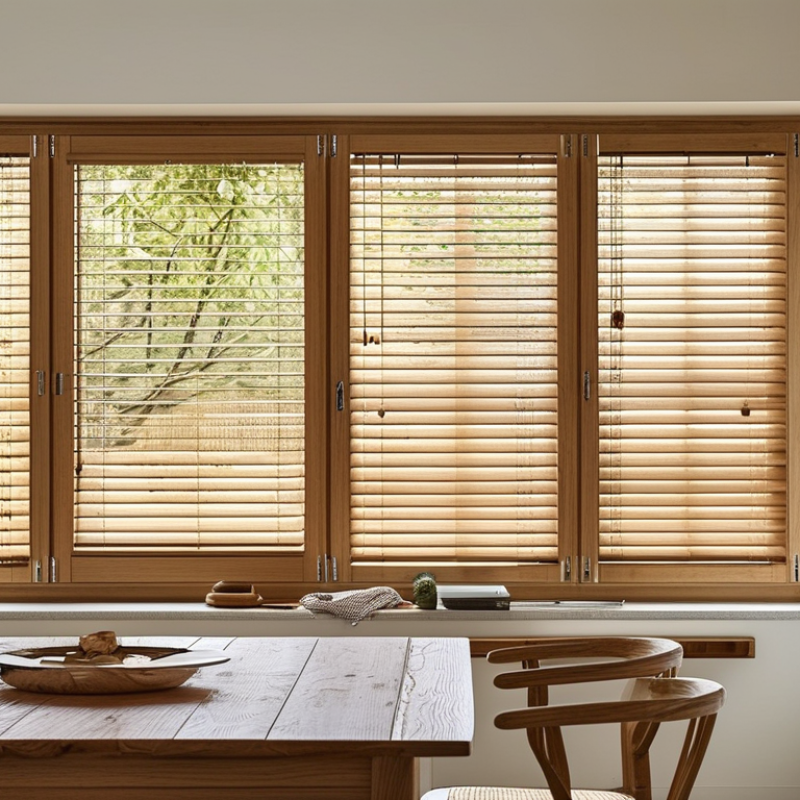
Define 2026 Light Teak-Grain Venetian Blinds: 50 mm Slat Standards
In 2026, light teak-grain Venetian blinds are defined by warm wood tones, visible linear texture, and 50 mm horizontal slats. The 50 mm measurement describes the nominal slat width, not the complete blind depth. Manufacturing tolerances can differ, so buyers should check the technical sheet before ordering.
This wider format creates fewer horizontal lines across a window. It gives rooms a calmer, more architectural appearance. Light teak tones also reflect daylight softly without looking overly pale. In practical testing, a 50 mm slat usually offers smooth light control with fewer cord adjustments. Tilt the slats upward for privacy while keeping daylight near the ceiling. Close them fully when afternoon glare reaches a desk.
Material quality still matters. A reliable finish should show consistent grain, clean edges, and balanced color across neighboring slats. Natural-looking texture is not always perfectly uniform. That variation can feel authentic, though excessive contrast may appear untidy. I would request a sample before covering a large room. A small sample often reveals undertones that online images hide.
For kitchens and humid rooms, verify moisture resistance rather than assuming the teak appearance indicates timber suitability. Use gentle dusting and a slightly damp cloth, then dry the slats promptly. Poor installation can make even premium blinds tilt unevenly. Measure inside width, recess depth, and handle clearance carefully. The 50 mm standard looks elegant, but it needs enough window space to operate comfortably.
Compare Basswood, Paulownia, and Faux Wood at 6–8% Moisture Content
Light teak grain wooden Venetian blinds suit rooms that need warmth without a heavy, dark appearance. Their performance depends on more than surface color. Moisture content between 6% and 8% is a practical target for stable indoor wood blinds. The number matters.
I have checked slats with a calibrated moisture meter before installation. Basswood usually feels balanced, smooth, and easy to operate. It offers a clean grain pattern and responds well in controlled indoor rooms. Paulownia is lighter and often shows a softer, less uniform grain. That natural variation can look attractive, but it may feel less substantial. Faux wood resists moisture better and cleans easily with a damp cloth. However, it is not real timber, and its thermal movement still deserves attention.
Acclimate wooden blinds inside the installation room for several days. Keep them away from wet walls, heating vents, and strong afternoon sunlight. I once assumed a dry room guaranteed stable slats. It did not. Seasonal humidity changes caused slight edge movement. Check the room’s humidity, not only the factory reading. For kitchens or bathrooms, faux wood may provide fewer maintenance concerns. For bedrooms and living rooms, basswood can offer refined grain and smooth handling. Paulownia works well when lighter weight matters, though its softer surface needs gentler cleaning. Small differences become visible. Examine the slat edges, tilt mechanism, and finish under natural light before choosing.
Verify FSC Chain of Custody and E1 Formaldehyde Compliance
2026 Top Light Teak Grain Wooden Venetian Blinds Guide
Light teak grain wooden Venetian blinds can look warm and refined in a bright room. Yet appearance should not replace supply-chain evidence. Ask the supplier for a valid FSC Chain of Custody certificate. Check its certificate number, legal entity, product scope, and validity through the official FSC database. The certificate should cover wooden blinds or relevant finished wood products. A logo alone proves little. Keep the invoice and product claim for future verification.
E1 compliance needs equal attention. Request a recent formaldehyde emission report from an independent laboratory. Confirm the tested product matches the blinds, including slats, cords, coatings, adhesives, and any composite parts. E1 results may depend on the testing method and local market requirements. Do not treat E1 as a complete indoor-air safety guarantee. Ventilate the room after installation, especially when the blinds have a strong new-material smell. That smell is a warning worth investigating, not an automatic failure.
Tips: Compare the certificate holder with the seller’s legal name. Ask when the sample was produced. Check whether the report covers the current color and finish. Inspect the slat edges for peeling or rough fibers. Small details matter. In practice, buyers often review FSC documents carefully but overlook coatings and adhesive layers. I have found that assumption risky. A clear file, traceable documents, and cautious questions usually reveal more than polished product photography.
Measure Windows Using Three Dimensions and Manufacturer Tolerances
Light Teak Grain Wooden Venetian Blinds Guide
Accurate measuring starts with three dimensions: width, height, and depth. Record width at the top, middle, and bottom of the window recess. Measure height on the left, center, and right. Use the smallest width and the smallest height for an inside mount. This prevents slat edges from rubbing against uneven frames.
Measure depth from the glass line to the front edge of the recess. A shallow frame may require an outside mount instead. It is a small detail, but often missed.
The U.S. Department of Energy reports that windows can account for about 25% to 30% of residential heating and cooling energy use. Well-fitted blinds cannot replace efficient glazing, but they can reduce direct sunlight and improve daily comfort. The Window Covering Manufacturers Association standard ANSI/WCMA A100.1-2022 also emphasizes safe, properly installed window-covering systems.
Always check the manufacturer’s tolerance before ordering. Some suppliers deduct a small amount from the recess width, while others expect the customer to provide the final deduction. Never guess.
Real rooms are rarely square. I have measured older timber frames where the top width differed from the bottom by several millimeters. That difference matters with wooden Venetian blinds.
Light teak grain can look refined, yet uneven spacing becomes visible in strong afternoon light. Recheck your numbers. Maybe once is not enough.
Record every measurement, the mounting position, and the expected tolerance in writing. Error is easy to create and difficult to hide.
Check Safety and Installation Against ANSI/WCMA A100.1-2022
2026 Top Light Teak Grain Wooden Venetian Blinds Guide
Light teak grain wooden Venetian blinds add warmth while allowing precise daylight control. Their appearance, however, should not distract from safety. ANSI/WCMA A100.1-2022 provides a practical benchmark for window covering design, construction, testing, and installation. Confirm the product’s compliance information before purchase. Also check local building and safety requirements, because the standard may not cover every situation.
During installation, keep the headrail level and fasten brackets into suitable structural support. Weak anchors can cause the blind to fall. Test the tilt mechanism, lifting action, and stop positions before leaving the room. Operating cords and loops must remain inaccessible to young children and pets. Follow the supplied instructions for securing or managing cords. Cordless designs still require careful handling. Slats can pinch fingers, and a poorly fixed blind may become unstable. In practice, installers sometimes focus on appearance first. That is a mistake worth reconsidering.
Tips: Measure the window at three points. Record the narrowest width. Inspect each bracket, screw, and cord path before use. Leave enough clearance for the slats to rotate without striking handles or nearby objects. If the wall material feels soft, pause and select a suitable anchor. A small alignment error can become obvious in morning sunlight. Finally, keep compliance documents and installation records for future inspection.
