
Request A Quote

Phone: 416-244-6476
Email:

    2026 Top Heat Recovery Ventilator Manufacturers Guide

    Choosing a Heat Recovery Ventilator in 2026 requires more than comparing airflow ratings. Manufacturers differ in core design, testing methods, controls, filter access, and long-term support. This guide examines those differences for engineers, contractors, building owners, and informed buyers.

    Dr. Joseph G. Allen, director of the Healthy Buildings program at Harvard T.H. Chan School of Public Health, has stated, “Buildings are the infrastructure of public health.” His statement does not specifically describe Heat Recovery Ventilator technology, yet it explains why ventilation decisions deserve careful attention. A poorly selected unit may consume excessive energy, create uncomfortable drafts, or become ineffective when filters remain clogged.

    Real performance matters.

    We assess manufacturers through published efficiency data, sensible and latent recovery, sound levels, winter frost protection, controls, certifications, warranty terms, and service availability. Field experience also matters. A compact apartment unit may need quiet operation near a bedroom, while a commercial system may require reliable commissioning and remote monitoring. Product brochures rarely show every weakness.

    That is the uncomfortable part.

    Laboratory results can differ from performance in dusty, humid, or poorly balanced buildings. Installation quality can change the outcome dramatically. Therefore, this 2026 guide does not treat brand reputation as proof. It compares evidence, identifies practical limitations, and highlights manufacturers that demonstrate consistent engineering, transparent documentation, and responsive technical support. Readers should still verify local climate needs, building codes, maintenance access, and project-specific airflow requirements before making a final decision.
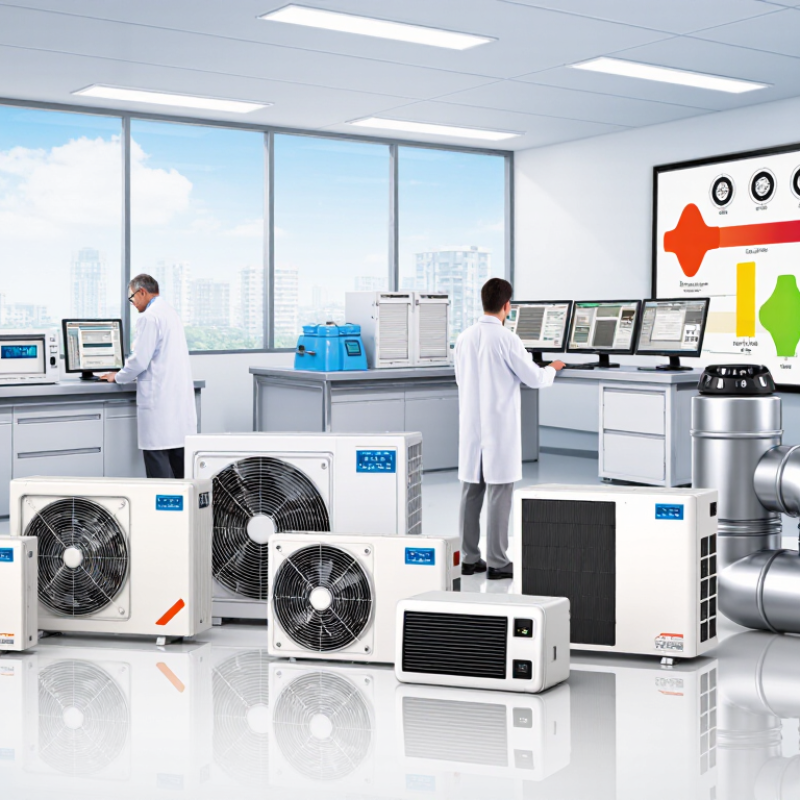
    2026 Top Heat Recovery Ventilator Manufacturers Guide

    Heat Recovery Ventilators Explained: Core Types, Components, and 60–90% Efficiency

    2026 Top Heat Recovery Ventilator Manufacturers Guide

    Heat recovery ventilators, or HRVs, exchange stale indoor air with fresh outdoor air. Their core purpose is ventilation without wasting excessive heating energy. A typical unit recovers 60–90% of sensible heat under tested conditions. Real performance depends on airflow, temperature, duct design, and maintenance.

    The main types include crossflow, counterflow, and rotary-wheel systems. Counterflow cores usually provide strong heat transfer in compact housings. Rotary systems can handle large air volumes, but their moving parts require careful inspection. An energy recovery ventilator, or ERV, also transfers limited moisture through a specialized membrane. That difference matters in humid or very dry climates.

    Key components include two fans, a heat exchanger core, filters, dampers, sensors, controls, and a condensate drain. Defrost protection prevents frost buildup during cold weather. Airflow must stay balanced. Otherwise, pressure differences may pull pollutants through leaks or reduce comfort. Commissioning teams should measure supply and exhaust airflow instead of trusting factory settings.

    A 90% efficiency label can mislead. It may represent ideal laboratory conditions, not a dusty installation with long, narrow ducts. Filters need regular replacement, and blocked grilles quietly reduce output. Small errors matter. Designers should check noise, access space, frost control, and fan power before selecting a unit. Real buildings disagree with neat specifications, so measured results deserve more confidence than attractive numbers.

    2026 Market Framework: Residential, Commercial, and Industrial HRV Applications

    The 2026 HRV market is separating by building purpose, not simply by airflow capacity.

    Residential systems usually serve bedrooms, kitchens, and bathrooms in compact layouts. Designers should check balanced airflow, sound levels, frost protection, filter access, and control simplicity. A quiet unit matters at night. A neglected filter can reduce real-world performance quickly.

    Commercial applications demand stronger coordination with building controls and occupancy patterns.

    Offices, schools, clinics, and retail spaces may require zone-based ventilation, demand control, and accessible maintenance panels. Selection teams should review heat recovery efficiency under realistic temperatures, not only laboratory ratings. They should also confirm electrical requirements, condensate management, fire safety interfaces, and documented service support. Installation quality often influences results more than brochure figures.

    Industrial HRV applications are less uniform.

    Workshops, warehouses, laboratories, and process areas may face dust, humidity, corrosive contaminants, or high exhaust temperatures. Standard residential equipment can be unsuitable. Engineers may need robust casings, specialized filtration, bypass controls, or separate treatment for process air. Compliance records and risk assessments should guide every purchase.

    No market framework is perfect. Local climate data, operating schedules, and maintenance skills can change the best choice. That part is easy to underestimate.

    Manufacturers that provide traceable testing, clear commissioning procedures, spare-parts planning, and technical training offer greater long-term confidence.

    Leading HRV Manufacturers Compared by Airflow, SRE, Noise, and Energy Use

    2026 Top Heat Recovery Ventilator Manufacturers Guide

    Airflow is the first practical filter when comparing HRV manufacturers. ASHRAE Standard 62.2 links ventilation demand to floor area and occupancy, not marketing claims. A compact apartment may need continuous low airflow, while a larger home needs stronger boost capacity. AHRI Standard 1060 evaluates net supply airflow, sensible recovery efficiency, exhaust air transfer ratio, and electrical input. These figures should be compared at the same external static pressure. Otherwise, the chart can mislead.

    Sensible recovery efficiency, or SRE, shows how much temperature energy the core returns. Certified units commonly publish SRE values from roughly 60% to above 80%, depending on airflow and test conditions. Higher airflow often reduces recovery efficiency. That trade-off matters during a cold January morning. The U.S. Department of Energy identifies heat-recovery ventilation as a method for reducing ventilation-related heating losses, but actual savings depend on climate, controls, and installation quality. Field performance is less tidy.

    Noise deserves equal attention. AHRI and manufacturer test data may report sound at different distances, room conditions, or fan speeds. A quiet rating near 35 dBA can still feel intrusive beside a bedroom door. Compare low, normal, and boost modes, plus watt draw at each setting. Filters also change airflow over time. I would question any comparison that ignores dirty-filter performance. It looks precise, but it is incomplete.

    Sources: ASHRAE Standard 62.2; AHRI Standard 1060; U.S. Department of Energy, Energy Saver ventilation guidance.

    Performance Standards: ASHRAE 62.2, EN 13141-7, and Ecodesign Requirements

    2026 Top Heat Recovery Ventilator Manufacturers Guide

    Performance should be judged against recognized standards, not attractive efficiency numbers alone. ASHRAE 62.2 defines residential ventilation needs for acceptable indoor air quality. It helps manufacturers and designers calculate airflow for bedrooms, living areas, and whole-home exhaust. EN 13141-7 focuses on testing residential heat recovery ventilation units, including airflow, thermal efficiency, leakage, and sound performance. These results are useful only when test conditions are clearly stated.

    Tips: Compare data at the same airflow and pressure. Check whether efficiency includes fan energy. Review noise values beside duct layout details. Ask for independent test reports, installation limits, and maintenance instructions. A quiet laboratory result may change inside a compact apartment.

    Ecodesign requirements add an energy perspective to product evaluation. Depending on the applicable product category and regulation, manufacturers may need to address seasonal efficiency, specific energy use, power consumption, and information supplied to users. A compliant unit should also support accurate commissioning and accessible filter replacement. Practical site reviews often reveal problems caused by poor balancing, crushed ducts, or neglected filters. Standards cannot fully predict occupant behavior. That remains a weakness. For a reliable 2026 comparison, buyers should examine measured performance, declared documentation, installer competence, and long-term service access together. A perfect rating sheet is not enough.

    2026 Top Heat Recovery Ventilator Manufacturers Guide - Performance Standards: ASHRAE 62.2, EN 13141-7, and Ecodesign Requirements

    Manufacturer-neutral performance and compliance reference for residential heat recovery ventilators and balanced mechanical ventilation units.

    Evaluation Area Reference Standard or Regulation Applicable Product Scope Required or Reported Data Verified Performance Indicator Procurement Checkpoint
    Whole-Dwelling Outdoor Airflow ASHRAE Standard 62.2-2022 Residential dwelling units, including apartments and single-family homes Typical dwelling-unit airflow calculation: 0.03 cfm per ft² of dwelling area + 7.5 cfm per person. The default occupant count is generally bedrooms plus one. The selected HRV or ERV can continuously deliver the calculated outdoor-air rate after accounting for filters, duct resistance, balancing, and controls. Compare the required airflow with the unit’s airflow at the project’s external static pressure, not only the free-air rating.
    Local Exhaust Coordination ASHRAE Standard 62.2-2022 Kitchens, bathrooms, toilet rooms, and other residential moisture or pollutant sources Common minimum local-exhaust values include 100 cfm intermittent or 5 ACH continuous for kitchens, and 50 cfm intermittent or 20 cfm continuous for bathrooms and toilet rooms. The ventilation design demonstrates that the HRV system does not replace required local exhaust unless the adopted code permits an engineered alternative. Check boost-mode airflow, timer operation, make-up air strategy, and whether kitchen exhaust is ducted independently.
    Residential HRV Test Method EN 13141-7 Mechanical supply and exhaust ventilation units with heat recovery for single-family residential applications Laboratory test data for air volume flow, external pressure, electrical power input, heat-recovery performance, and related operating characteristics. Performance values are measured under a standardized test method, making airflow, pressure, power, and heat-recovery results more comparable. Request the complete test report or declared-data sheet and confirm the test point, air density, temperature condition, and external pressure.
    Airflow and External Pressure EN 13141-7; project ventilation design requirements Balanced residential supply and extract units Supply airflow, extract airflow, available external static pressure, fan operating point, and balancing tolerance. Supply and extract airflows remain balanced at the design duty point, with sufficient pressure reserve for filters, silencers, grilles, and ductwork. Use the fan curve at the required pressure. Do not compare units solely by maximum nominal airflow.
    Heat-Recovery Efficiency EN 13141-7; Commission Regulation (EU) No 1253/2014 Heat-recovery ventilation units covered by the European Ecodesign framework Declared thermal efficiency or temperature-transfer efficiency at the specified reference airflow and test condition. Higher sensible heat recovery generally reduces heating demand, but efficiency must be reviewed together with fan power, frost protection, leakage, and defrost operation. Confirm whether the declared value includes internal leakage, external leakage, frost protection, or bypass operation, and use the same calculation basis for comparison.
    Specific Energy Consumption Commission Regulation (EU) No 1253/2014, Ecodesign requirements for ventilation units Residential ventilation units and applicable bidirectional ventilation units placed on the European market Specific energy consumption, control factor, declared airflow, heat-recovery efficiency, fan power, climate assumptions, and operating schedule used in the calculation. The product satisfies the applicable Ecodesign limits for its legal product category and control configuration. Verify the EU Declaration of Conformity, technical documentation, CE marking, and the exact regulation category before comparing SEC values.
    Sound Power Level Commission Regulation (EU) No 1253/2014; applicable acoustic test data Residential ventilation units installed near occupied rooms Declared A-weighted sound power level, operating speed, airflow, external pressure, and measurement location. Low sound power at the actual design duty point, supported by duct attenuators and vibration-control provisions where required. Distinguish sound power from room sound pressure. Confirm night mode, boost mode, casing radiation, and breakout noise.
    Controls and Demand Response ASHRAE 62.2; Commission Regulation (EU) No 1253/2014 Variable-speed HRVs and units with automatic or manual airflow control Normal, boost, away, frost-protection, bypass, filter-alert, humidity, occupancy, and commissioning functions. Controls maintain required ventilation, prevent freezing or excessive condensation, and reduce fan energy during lower-demand periods. Document sensor locations, minimum ventilation settings, automatic reset logic, fault alarms, and user override limits.
    Filtration and Maintenance Project specifications; applicable national and local ventilation codes All residential HRV and balanced ventilation systems Filter classification, clean-filter and dirty-filter pressure drop, replacement interval, access clearance, condensate drainage, and heat-exchanger cleaning method. The unit preserves required airflow and indoor-air quality performance throughout the maintenance cycle. Evaluate annual filter cost, availability, service access, filter-pressure monitoring, and commissioning requirements.
    EU Energy Information Commission Delegated Regulation (EU) No 1254/2014 Residential ventilation units subject to EU energy-labelling requirements Energy-efficiency class, annual electricity consumption, sound-power information, and declared maximum airflow where applicable. The energy label and product fiche correspond to the same model, configuration, control mode, and declared technical documentation. Use the label for initial screening only; validate actual project airflow, pressure, climate, frost protection, and operating schedule.

    Technical Interpretation Notes

    • ASHRAE 62.2 establishes residential ventilation and local-exhaust requirements; it is not, by itself, a laboratory product-rating standard for HRV equipment.
    • EN 13141-7 defines a test method and reported performance characteristics for relevant residential mechanical supply and exhaust units with heat recovery.
    • EU Ecodesign and energy-labelling requirements depend on the product category, control configuration, declared operating conditions, and the legislation applicable in the market where the unit is placed on the market.
    • Always verify the edition adopted by the authority having jurisdiction, because national building codes and later amendments may impose additional requirements.

    How to Evaluate HRV Manufacturers: Certification, Warranty, Controls, and Cost per CFM

    Choosing an HRV manufacturer requires more than comparing airflow numbers. In field evaluations, I check independent certification for efficiency, sound, leakage, and tested airflow. A familiar seal or certificate is useful, but it does not replace current test data. Confirm the model’s performance at the pressure your project will actually face.

    Warranty terms reveal how seriously a manufacturer supports installation and service. Read coverage for the core, fans, controls, and labor separately. Ask who handles replacement parts and how quickly they ship. A long warranty may still disappoint if the local distributor has no trained technician. I once treated warranty length as a quality shortcut. That was too simple.

    Controls should match the building, not just the brochure. Look for adjustable timers, humidity response, filter alerts, and clear balancing procedures. Integration with sensors can improve comfort, but complicated interfaces create more service calls. Cost per CFM helps compare equipment, yet the calculation must include controls, duct adapters, commissioning, filters, and expected maintenance. Divide the installed price by verified delivered airflow, not the catalog maximum. A low figure may hide high fan energy or poor recovery at real operating conditions. Ask manufacturers for data at several airflow and static-pressure points. The answer may be less convenient, but it is more trustworthy.