2026 Top Plastic Pipe Types for Global Buyers?
Global buyers are entering a more demanding plastic pipe market in 2026. Infrastructure projects now require lower leakage, longer service life, and clearer technical evidence. PVC, HDPE, PP-R, CPVC, PE-RT, and ABS each serve different conditions. The best choice depends on pressure, temperature, chemicals, soil movement, installation methods, and local water standards.
Bruce A. Janson, a respected polymer-piping researcher and author, has stated, “The performance of a pipe system depends on the interaction between the pipe, the soil, and the installation.” That observation remains practical. A thick pipe wall cannot correct poor bedding or careless jointing. Buyers should examine pressure ratings, material standards, dimensional tolerances, UV resistance, thermal expansion, and documented test results. Factory audits matter too. A polished brochure is not enough.
The details become visible on site. HDPE coils reduce joints across long water routes. PVC sections offer predictable handling and broad municipal familiarity. PP-R suits many hot and cold building-water systems, but welding quality remains critical. CPVC can perform well in warm, chemically demanding environments, when compatibility is verified. PE-RT offers flexibility for selected heating applications.
There is no universal winner.
Some purchasing teams still compare price per meter alone. That approach can become expensive after failures, repairs, or interrupted service. It is also easy to overstate sustainability claims without checking recycled content, manufacturing data, and end-of-life options. This guide compares the leading plastic pipe types for global buyers, while recognizing an uncomfortable truth: product selection is only as reliable as the evidence behind it.
What Are the Main Plastic Pipe Types in 2026?
2026 Top Plastic Pipe Types for Global Buyers?
What Are the Main Plastic Pipe Types in 2026?
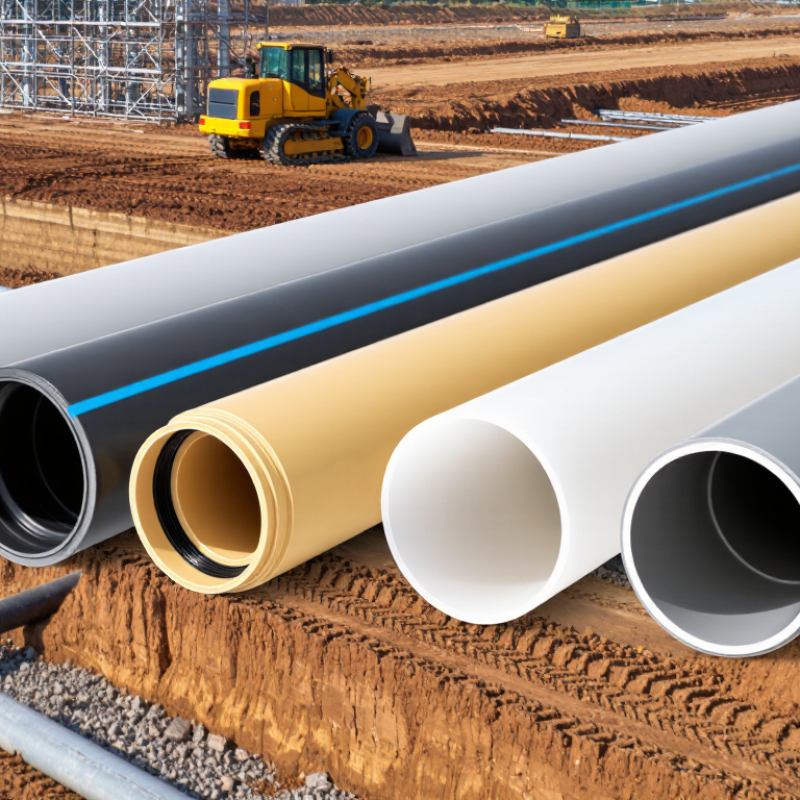
Plastic pipes now serve water, drainage, irrigation, heating, and industrial systems. Yet “plastic pipe” is not one product. Material choice depends on temperature, pressure, soil movement, sunlight, and local installation skills.
PVC remains common for cold-water lines, drainage, and underground utility work. It is lightweight, corrosion-resistant, and usually easy to install. CPVC handles higher temperatures and suits hot-water distribution. HDPE offers strong flexibility for buried pipelines, irrigation, and gas-related infrastructure where permitted by local codes. Its fused joints can reduce leakage risks, but trained technicians and proper equipment remain essential. PP-R is widely selected for indoor hot and cold water systems. It needs controlled heat fusion and careful support spacing. ABS is often used for drainage because it is light and impact-resistant. However, availability and code acceptance differ between markets.
Tips: Match the pipe to the fluid, temperature, pressure, and soil conditions. Request test reports, wall-thickness data, and installation guidance. Check UV protection for exposed lines. Do not compare prices alone. A cheaper pipe may require more fittings, labor, or replacement. In project reviews, I would recheck joint methods and local standards, because small assumptions can create expensive failures. Some systems still look suitable on paper but perform poorly when installers lack practical training.
2026 Top Plastic Pipe Types for Global Buyers
What Are the Main Plastic Pipe Types in 2026?
The chart compares typical continuous service-temperature capabilities for widely used plastic pipe materials. PVC and HDPE are common choices for cold-water, drainage, irrigation and underground infrastructure; CPVC, PEX and PP-R are preferred where hot-water performance is required. Actual limits depend on pipe grade, pressure rating, wall thickness, installation conditions and applicable standards.
Reference framework: ASTM and ISO product standards, including ASTM D1785, ASTM D3034, ASTM F441, ISO 4427, ISO 15874 and ISO 15875. Values shown are typical industry reference values, not universal design limits.
How Are Plastic Pipes Classified by Material and Structure?
For global buyers in 2026, plastic pipes are commonly classified by material and structure. Material affects chemical resistance, flexibility, temperature tolerance, and service life. PVC-U is rigid and often used for drainage and cold-water systems. CPVC tolerates higher temperatures, making it suitable for hot-water applications. PE pipes bend easily, resist ground movement, and work well in buried water or gas infrastructure where permitted. PP handles many chemicals and moderate heat. Cross-linked polyethylene offers flexibility, but installers must check connection methods carefully.
Structure creates another practical classification. Solid-wall pipes have one uniform layer and are easy to inspect. Multilayer pipes combine materials, such as plastic with a reinforcing layer, to reduce expansion and improve shape stability. Reinforced pipes may include mineral fillers, fiber, or metal layers. Corrugated pipes use ribs to improve external load resistance, especially in drainage. Foam-core designs reduce weight, although their pressure performance requires closer review. Wall thickness, diameter, pressure class, and SDR should appear clearly in technical documents.
Field experience shows that a material name alone is not enough. A PE pipe for cold soil conditions may behave differently after long exposure to sunlight. Small scratches can matter during installation. Buyers should compare test reports, operating temperatures, joint methods, and local standards such as ISO or ASTM requirements. A clean specification sheet can still hide gaps. I would also recheck chemical compatibility and actual site conditions before approving a large order.
2026 Top Plastic Pipe Types for Global Buyers? - How Are Plastic Pipes Classified by Material and Structure?
| Material Classification | Common Pipe Structure | Typical Nominal Size Range | Approximate Service Temperature Range | Key Technical Characteristics | Common Applications | Important Buyer Considerations |
|---|---|---|---|---|---|---|
| PVC-U (Unplasticized Polyvinyl Chloride) |
Solid-wall pipe | Approximately 16–1,000 mm outside diameter | About 0–60°C | Rigid, lightweight, corrosion-resistant, electrically non-conductive, and generally economical. It has good resistance to many acids, alkalis, and salts but limited impact performance at low temperatures. | Potable-water distribution, gravity sewer lines, drainage, irrigation, conduit, and industrial fluid handling. | Check pressure class, impact requirements, UV exposure, joining method, and compliance with the target market's potable-water or drainage standards. |
| PVC-C (Chlorinated Polyvinyl Chloride) |
Solid-wall pipe | Commonly about 16–400 mm outside diameter | About 0–90°C, depending on pressure and formulation | Higher temperature capability than PVC-U, with good chemical resistance and relatively low thermal conductivity. It remains rigid and requires suitable support and expansion allowances. | Hot- and cold-water plumbing, industrial process lines, corrosive-fluid services, and fire-sprinkler systems in approved designs. | Confirm temperature-pressure derating, fire-system approvals where applicable, solvent-cement compatibility, and thermal expansion allowances. |
| PE80 / PE100 (Polyethylene) |
Solid-wall pipe | Approximately 16–2,000 mm outside diameter | Typically about −40–60°C for pressure service | Flexible, fusion-jointable, highly resistant to corrosion and ground movement, and suitable for trenchless installation. PE100 generally provides higher long-term strength than PE80 at the same design conditions. | Natural-gas distribution, potable-water mains, wastewater, mining slurry, irrigation, landfill drainage, and industrial pipelines. | Specify material grade, SDR or pressure class, allowable operating temperature, fusion procedure, and resistance to rapid crack propagation where relevant. |
| PEX (Cross-Linked Polyethylene) |
Solid-wall pipe | Commonly 12–160 mm outside diameter | Approximately 0–95°C, subject to pressure rating | Flexible, resistant to freezing-related expansion compared with rigid pipe, and suitable for continuous hot-water service when correctly rated. It is commonly supplied in coils, reducing the number of joints. | Residential and commercial hot- and cold-water plumbing, radiant floor heating, hydronic heating, and snow-melting systems. | Verify PEX type, oxygen-barrier requirement, fitting system, chlorine resistance, UV storage limits, and local plumbing approvals. |
| PP-R / PP-RCT (Polypropylene Random Copolymer) |
Solid-wall or multilayer pipe | Approximately 16–630 mm outside diameter | Typically about 0–95°C, depending on pressure class | Heat-fusion jointing creates homogeneous connections. It offers good resistance to many chemicals and is widely used for hot-water systems; PP-RCT can provide improved pressure performance at elevated temperatures. | Hot- and cold-water distribution, heating systems, compressed-air lines, and selected industrial applications. | Account for thermal expansion, support spacing, welding equipment, temperature-pressure derating, and compatibility with fittings and valves. |
| ABS (Acrylonitrile Butadiene Styrene) |
Solid-wall pipe | Commonly about 32–400 mm nominal size | About −40–60°C for typical drainage use | Lightweight and impact-resistant, especially at low temperatures. It is commonly used in non-pressure drainage applications but has lower heat resistance than CPVC or many polypropylene systems. | Sanitary drainage, waste, vent systems, underground drainage, and selected industrial non-pressure services. | Confirm fire-performance requirements, solvent compatibility, noise expectations, and whether the system is intended for pressure or non-pressure use. |
| PVDF (Polyvinylidene Fluoride) |
Solid-wall or double-containment pipe | Approximately 16–400 mm outside diameter | About −40–140°C, depending on grade and pressure | High-purity material with excellent chemical resistance, strong performance at elevated temperatures, and low contamination potential. It is typically more expensive than commodity thermoplastics. | Semiconductor processing, pharmaceutical production, high-purity water, chemical transfer, and aggressive industrial fluids. | Evaluate purity grade, chemical compatibility at operating temperature, jointing method, pressure derating, and installation cleanliness controls. |
| GRP / FRP (Glass-Reinforced Plastic) |
Reinforced thermoset composite pipe | Approximately 25–4,000 mm inside diameter | Commonly about 0–60°C; higher ratings require a specific resin system | High strength-to-weight ratio, strong corrosion resistance, and smooth internal surfaces. Performance depends on glass reinforcement, resin type, laminate design, and joining system. | Water transmission, desalination, sewage, irrigation, cooling-water systems, and corrosive industrial services. | Check stiffness class, pressure class, installation loads, chemical resistance, joint design, handling requirements, and buried-pipe bedding conditions. |
| Structured-Wall PE or PP | Profile-wall, corrugated, ribbed, or spiral-wound | Commonly about 200–3,000 mm outside diameter | Typically about 0–60°C for gravity drainage | Uses a profiled outer wall and smooth or semi-smooth inner wall to reduce material weight while providing ring stiffness. These pipes are generally designed for gravity flow rather than high internal pressure. | Stormwater drainage, sewer systems, culverts, cable ducts, infiltration systems, and large-diameter gravity pipelines. | Specify ring stiffness, deflection limits, cover depth, soil conditions, joint watertightness, hydraulic diameter, and installation quality requirements. |
| Multilayer Composite Plastic Pipe | Polymer–polymer or polymer–metal multilayer | Commonly about 16–110 mm outside diameter | Typically about 0–95°C, depending on construction | Combines the flexibility and corrosion resistance of polymers with dimensional stability or oxygen-barrier performance from additional layers, including aluminum in some designs. | Building plumbing, underfloor heating, radiator connections, chilled-water systems, and compressed-air distribution. | Confirm layer construction, oxygen permeability, bend radius, fitting compatibility, thermal expansion, pressure rating, and repair procedures. |
Note: Size ranges, temperature limits, and applications are general industry references. Final selection should be based on the applicable product standard, pressure-temperature rating, chemical compatibility, installation method, and local regulations.
Which Applications Suit Each Plastic Pipe Type?
Choosing plastic pipe starts with the application, not the lowest quoted price. PVC pipes suit cold-water distribution, drainage, irrigation, and underground utility lines. They resist corrosion and remain relatively easy to install. CPVC handles higher temperatures, making it suitable for hot-water systems and selected industrial services. However, temperature ratings vary by pressure and fitting design. Always verify the complete system.
HDPE works well for buried water mains, gas distribution, mining lines, and seawater-related projects because it tolerates ground movement and impact. PEX is practical for residential hot and cold water, radiant heating, and flexible indoor routing. PP-R fits hot-water plumbing and chemical process lines, while ABS commonly serves drainage and waste systems. No pipe type wins everywhere. I have seen projects favor flexibility, then regret ignoring thermal expansion and support spacing. Local standards, soil conditions, fluid chemistry, and installation skills must shape the final choice.
- Check pressure, temperature, UV exposure, and chemical compatibility together.
- Ask for test reports and traceable quality records.
- A thicker wall is not automatically better.
- Confirm fitting methods, joint training, and repair access before ordering.
- For outdoor systems, include expansion planning and protective installation details.
- Use an independent engineer when the service is critical or unfamiliar.
What Performance Factors Matter to Global Buyers?
Global buyers compare plastic pipes by more than material and price. HDPE, PVC, PP-R, and multilayer pipes each suit different service conditions. Pressure rating is critical, but it must match temperature, fluid type, and installation depth. A pipe rated for cold water may perform poorly under continuous heat.
Look closely at impact resistance, flexibility, and UV stability. Pipes stored outdoors need protection from prolonged sunlight before installation. In colder regions, impact performance can matter more than impressive laboratory strength. Chemical compatibility also deserves careful review. A pipe carrying treated water, fertilizers, or industrial fluids may require a different construction. Small details matter.
Joint reliability often decides field performance. Heat fusion can create strong connections, while mechanical fittings may simplify repairs. However, poor alignment, dirty surfaces, or rushed cooling can weaken any system. Wall thickness should remain consistent across production batches. Ask for pressure tests, dimensional reports, material data, and traceable inspection records. Standards are useful, but paperwork alone cannot replace practical testing. In project reviews, buyers sometimes focus too heavily on purchase price. That choice can increase leakage, maintenance, and replacement costs later. A higher rating is not always better. It may add cost without improving the actual application. Consider transport distance, local skills, climate, and the expected service life before selecting a pipe type.
How Should Buyers Compare Suppliers, Standards, and Costs?
Global buyers often compare PVC-U, HDPE, PP-R, and CPVC pipes for different service conditions. The lowest price rarely identifies the best supplier. A useful comparison starts with application data: fluid type, operating temperature, pressure, soil movement, and expected service life. Ask suppliers for resin specifications, wall-thickness records, dimensional tolerances, and batch traceability. Small details matter. A pipe may look perfect outside while showing weak performance under pressure.
Standards should match the project location and installation method. Check pressure ratings, SDR values, joint requirements, and relevant testing procedures. Request current certificates, laboratory reports, and clear evidence that the tested product matches the quoted product. Independent inspection can verify markings, impact resistance, hydrostatic performance, and material consistency. Certificates alone are not enough. Their scope, date, and issuing laboratory deserve careful review. Requirements also vary between regions, so buyers should confirm local rules with qualified engineers.
Cost comparison should include tooling, fittings, freight, import duties, installation, testing, and future maintenance. A cheaper pipe can become expensive when poor joints cause leakage or delays. Compare delivered cost per meter, not factory price alone. Ask about production capacity and replacement lead times during peak demand. Some supplier claims may sound convincing but remain difficult to verify. That is where procurement teams should slow down, document assumptions, and challenge their own shortlist. A perfect comparison is unlikely. A transparent one is much more valuable.
Related Posts
-
The Evolution of Plastic Pipe: Sustainable Solutions for Modern Infrastructure
-

How to Choose the Right Plastic Pipe for Your Plumbing Project
-

2026 Best Plastic Pipe Options for Your Projects?
-
Why Choose Plastic Pipe for Your Plumbing Needs and Benefits Explained
-
How to Choose the Right Plastic Pipe for Your Project?
-
Best PVC Well Casing Options for Efficient Water Wells?