
Request A Quote

Phone: 416-244-6476
Email:

    2026 Top Walk In Humidity Chamber Types for Global Buyers?

    For global buyers, choosing a 2026 Walk In Humidity Chamber is more complex than comparing chamber size and price. Climate testing now supports battery systems, automotive parts, electronics, medical equipment, and renewable-energy components. Each application may require different humidity ranges, temperature transitions, air circulation, and safety controls.

    Reliability engineer Dr. Michael Pecht defines reliability as “the probability that a product will perform its intended function under stated conditions for a specified period of time.” This principle should guide every purchasing decision. A chamber is not merely a large insulated room. It is a controlled environment that must reproduce demanding conditions consistently, safely, and repeatedly.

    The main chamber types include constant humidity models, temperature-humidity cycling chambers, rapid-change systems, and custom walk-in rooms. Some buyers need stable 85°C and 85% relative humidity exposure. Others need fast transitions that reveal condensation, seal failure, or material fatigue. The correct choice depends on product size, test standards, loading patterns, and future capacity.

    Details matter.

    A poorly positioned sensor can distort results. An undersized humidifier may struggle during door openings. Service access can also become an expensive afterthought. I have seen specifications look impressive on paper while daily operation felt restrictive. That uncomfortable gap deserves attention.

    This guide compares leading Walk In Humidity Chamber types for international buyers in 2026. It examines performance, construction, control systems, energy use, maintenance, customization, and supplier support. The goal is practical clarity, not a perfect-sounding checklist. Conditions vary, and no single chamber fits every laboratory, factory, or testing program.
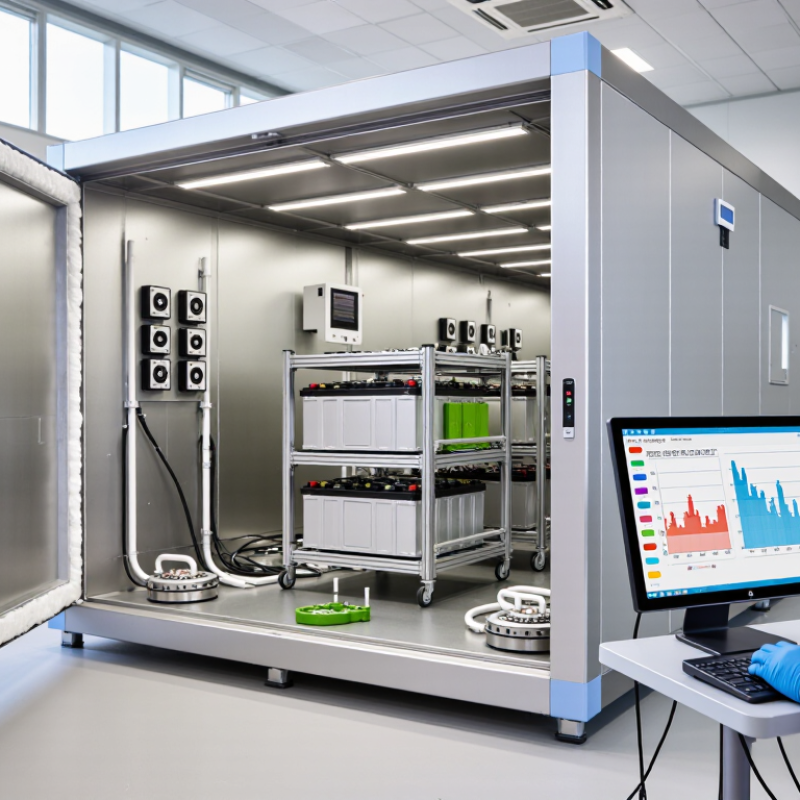
    2026 Top Walk In Humidity Chamber Types for Global Buyers?

    What Is a Walk-In Humidity Chamber and How Does It Work?

    A walk-in humidity chamber is a large environmental test room for products, materials, and components. It controls temperature, relative humidity, airflow, and exposure time. Unlike a benchtop unit, it allows technicians, racks, or full-size assemblies inside. MarketsandMarkets’ 2024 Environmental Test Chamber Market analysis estimates industry growth at roughly 6% annually through 2028. Demand is rising with stricter reliability testing.

    The working principle is straightforward, but precise control is not. A humidifier adds vapor, while cooling coils remove heat and excess moisture. Fans distribute air across the chamber. Sensors measure temperature and humidity continuously. A controller compares readings with the test profile, then adjusts heating, cooling, or steam output. IEC 60068-2-78 commonly uses 85°C and 85% relative humidity for damp-heat testing. That condition exposes weak seals, insulation, coatings, and electronics quickly.

    Walk-in models usually include steady-state humidity, temperature-cycling, stability, and customized production chambers. Global buyers should check usable volume, door access, floor loading, recovery time, and power compatibility. Energy use also matters. ASHRAE’s Handbook—Fundamentals explains that humidity readings change with temperature, even when moisture content stays constant. A small sensor error can therefore distort test results. In practical qualification work, I would verify calibration, airflow mapping, and sample spacing before trusting a long test. The overlooked detail is often the rack layout.

    2026 Top Walk-In Humidity Chamber Types for Global Buyers

    Representative humidity conditions used in widely recognized environmental testing profiles

    How a walk-in humidity chamber works: A walk-in chamber controls temperature and relative humidity by combining air circulation, heating, refrigeration, humidification, dehumidification, sensors, and a programmable controller. Buyers typically select the chamber type according to the required temperature range, humidity level, cycling profile, test volume, and applicable standard.

    The chart shows representative nominal relative-humidity conditions from IEC 60068-2-78 steady damp-heat testing, IEC 60068-2-30 cyclic damp-heat testing, and the commonly used 85 °C/85% RH electronic-reliability qualification profile. Actual chamber specifications and test tolerances depend on the applicable standard and project requirements.

    Which Walk-In Humidity Chamber Types Are Available in 2026?

    Walk-in humidity chambers in 2026 are available in several practical configurations. Constant temperature and humidity chambers maintain a fixed condition, such as 23°C and 50% RH, for long-duration reliability testing. Cyclic damp-heat chambers repeatedly change temperature and moisture. IEC 60068-2-30 commonly uses 55°C and 95% RH during high-humidity exposure. These chambers suit electronics, batteries, automotive parts, and packaged products.

    Rapid-change chambers add faster temperature transitions, but their humidity control becomes harder. Modular panel chambers offer flexible internal volumes, while drive-in chambers support large assemblies, racks, and test vehicles. Some systems combine humidity with altitude, solar radiation, or vibration equipment. The boundaries are not perfectly clean. A chamber may belong to several categories.

    MarketsandMarkets’ environmental test chamber analysis projects a 5.2% compound annual growth rate from 2022 to 2027, reflecting wider qualification demands. Buyers should examine more than chamber volume. Check humidity range, temperature recovery time, floor loading, door clearance, airflow uniformity, and sensor calibration records. A 10 m³ room can still fail a large product test if airflow is poorly distributed. IEC 60068-3-6 recommends checking temperature and humidity performance across the working space, not only near the control sensor. That detail is easy to miss. Local service capability also matters, although many purchasing teams treat it as secondary. It should not be.

    How Do Chamber Sizes, Temperature Ranges, and Humidity Controls Differ?

    Walk-in humidity chambers vary mainly by usable volume, temperature capability, and control method. A small chamber may suit electronic assemblies, while larger rooms handle vehicle parts, packaging, or production batches. Measure the load, not just the room. Leave space for airflow, maintenance, door movement, and operator access. A crowded chamber can produce uneven humidity, even when the display looks stable.

    Temperature ranges differ by insulation, refrigeration capacity, heaters, and door design. Many chambers cover moderate heat and cold conditions, but deep-low-temperature testing needs stronger cooling equipment. Ask about ramp rates. A chamber reaching a target slowly may delay testing and increase energy use. Humidity control also changes across the temperature range. Steam generators respond smoothly, while atomized water systems may react quickly but require careful water management. Dehumidification usually depends on cooling coils, dry air, or both. At low temperatures, condensation becomes a serious concern.

    In practical commissioning, I would check uniformity with sensors placed near corners, shelves, and the working zone. Empty-chamber results can look excellent. Loaded results may not. Sensor calibration, water quality, door openings, and recovery time deserve written acceptance criteria. Global buyers should also verify voltage, frequency, heat rejection, insulation performance, and local service capability. A larger chamber is not always better. It can waste energy and make humidity control less responsive. I have seen specifications focus on extreme temperature while overlooking everyday humidity stability. That is easy to underestimate.

    What Standards and Features Should Global Buyers Evaluate?

    Walk-in humidity chambers vary from steady-state climate rooms to temperature-humidity cycling chambers. Global buyers should match the chamber type to actual product risks, not merely select the largest model. A chamber for electronics may need rapid recovery after door opening. A materials laboratory may require stable humidity for long exposures. Chamber volume, temperature range, humidity range, ramp rate, uniformity, and floor loading deserve documented values.

    Evaluate test credibility carefully. Ask whether sensors are calibrated with traceability to an accepted national or international system. ISO/IEC 17025-based calibration strengthens confidence in measurement results. Applicable IEC 60068 methods can support environmental testing, but the exact test procedure must match the product standard. Check electrical safety, pressure equipment controls, refrigerant requirements, and destination-market conformity rules. Requirements differ between regions. That part is easy to underestimate. From practical evaluations, recovery time often looks impressive on paper but changes with product load, cable openings, and door habits. Independent verification under realistic conditions is wiser.

    Tips: Request uniformity maps at several setpoints, not one convenient condition. Inspect door seals, lighting, drainage, shelving, emergency release, alarms, data exports, and backup records. Confirm service access, spare-part availability, operator training, and remote support before purchase. A low purchase price can hide high energy use and difficult maintenance. Buyers should also review noise, heat rejection, chamber cleaning, and condensation control. Some specifications remain unclear until testing begins. Ask suppliers to define every acceptance criterion in writing.

    How Can Buyers Select, Customize, and Maintain the Right Chamber?

    For 2026, global buyers should select a walk-in humidity chamber by test purpose, not appearance. A standard temperature-humidity chamber suits general durability testing. Rapid cycling models support repeated thermal changes. Low-humidity designs help evaluate moisture-sensitive products.

    Define the product load, temperature range, humidity range, and test duration first. More space is not always better. An oversized chamber may increase energy use and recovery time. Verify performance with the real product load, not empty-chamber data. I have seen specifications look impressive but fail during crowded testing.

    Customization begins with the installation site. Measure doorways, ceiling height, drainage, ventilation, and available power. Specify flooring, observation windows, shelving, lighting, and door direction carefully. Calibrated sensors and documented uniformity results improve testing confidence. Buyers in different countries should confirm voltage, frequency, safety requirements, and local service access. Every added option increases cost and maintenance. Some features sound useful but rarely support the actual test plan.

    Maintenance protects accuracy and equipment life. Inspect door seals weekly for cracks or compression damage. Clean filters, drains, and humidifying components according to operating hours. Calibrate temperature and humidity sensors with traceable instruments. Keep records of alarms, repairs, cleaning, and calibration results. Small leaks become large costs. If condensation appears near the door, check sealing and airflow before changing test settings. Trained operators should review recovery time and uniformity regularly, because real conditions often expose weaknesses that factory acceptance tests miss.

    2026 Top Walk-In Humidity Chamber Types for Global Buyers — How to Select, Customize, and Maintain the Right Chamber
    Chamber Type Typical Temperature Range Typical Relative Humidity Range Common Working Volume Best-Fit Applications Key Selection Criteria Common Customization Options Maintenance Priorities
    Constant Temperature and Humidity Chamber Approximately +10°C to +85°C Typically 20% to 95% RH, depending on temperature and control system About 6 to 40 m³ Electronics, electrical assemblies, packaging, materials, coatings, and general durability studies Required temperature and RH stability, internal clearance, product heat load, access frequency, and test duration Walk-in doors Observation windows Cable ports Racking Data logging Clean and calibrate the humidity sensor, inspect the steam or water-generation system, clean the water tank, and check door seals
    High-Temperature and High-Humidity Chamber Approximately +20°C to +85°C Commonly 75% to 95% RH at elevated temperature About 10 to 50 m³ Accelerated aging, corrosion-related studies, polymer evaluation, insulation testing, and reliability screening Maximum temperature, continuous operating time, condensation control, corrosion resistance of the chamber interior, and product heat dissipation Stainless interior Reinforced floor Condensation drainage Automatic water refill Safety interlocks Remove scale from humidification components, verify over-temperature protection, inspect insulation, and keep drainage lines unobstructed
    Temperature-Humidity Cycling Chamber Approximately -40°C to +85°C, subject to refrigeration and load conditions Typically 10% to 95% RH within the chamber’s usable temperature zone About 8 to 30 m³ Product qualification, electronic component reliability, automotive assemblies, battery components, and environmental stress screening Ramp rate, cycle profile, product mass, heat load, recovery time, low-temperature humidity limitations, and test automation Programmable profiles Fast recovery Remote monitoring Multiple sensors Load carts Defrost the refrigeration system when required, clean condenser surfaces, inspect evaporator drainage, and validate ramp performance
    Rapid Temperature-Change Humidity Chamber Approximately -40°C to +85°C; higher ranges are available in selected configurations Often 20% to 95% RH in the humidity operating range About 6 to 20 m³ Accelerated thermal cycling, solder-joint evaluation, electronic modules, sensors, and compact industrial products Temperature transition rate, uniformity during transitions, sample thermal mass, refrigeration capacity, and control accuracy High-capacity refrigeration Programmable cycle control Low-airflow mode Fixture interfaces Maintain refrigeration filters, inspect fans and dampers, check sensor response, and verify that rapid transitions do not cause excessive condensation
    Solar Radiation and Humidity Test Chamber Commonly ambient to approximately +70°C, depending on irradiance and specimen heat load Often controlled from approximately 30% to 95% RH About 8 to 30 m³ Outdoor equipment, plastics, coatings, photovoltaic-related materials, textiles, and weathering research Irradiance level, light uniformity, specimen surface temperature, humidity control, lamp service life, and UV exposure requirements Solar simulation UV monitoring Rotating racks Irradiance sensors Water spray system Clean optical surfaces, monitor lamp output, replace lamps according to service limits, inspect spray nozzles, and calibrate irradiance sensors
    Low-Humidity and Dry-Air Walk-In Chamber Approximately +10°C to +60°C Typically 5% to 30% RH; very low RH may require desiccant or dry-air technology About 6 to 25 m³ Moisture-sensitive materials, battery and electronic component storage, packaging studies, powder products, and drying research Minimum achievable dew point, chamber leakage, door-opening frequency, dry-air flow, product moisture load, and energy consumption Desiccant dryer Dry-air purge Airlock Low-leakage doors Dew-point sensor Replace or regenerate desiccant, inspect door gaskets, verify dew-point calibration, and keep air filters and purge lines clean
    Corrosion and Condensation Humidity Chamber Usually approximately +35°C to +60°C Commonly 90% to 100% RH or controlled condensation conditions About 6 to 20 m³ Metal finishes, coatings, fasteners, electrical enclosures, corrosion protection systems, and condensation-resistance testing Condensation uniformity, water quality, material compatibility, drainage design, corrosion-resistant construction, and specimen loading Condensation control Special drainage Non-corrosive fixtures Water-quality monitoring Use suitable purified water, remove residue promptly, inspect corrosion-resistant surfaces, clean drains, and check chamber uniformity
    Modular or Expandable Walk-In Chamber Commonly -40°C to +85°C, depending on the selected refrigeration and heating package Typically 20% to 95% RH within the qualified operating zone Approximately 20 to 200 m³ or more Large assemblies, vehicle systems, industrial equipment, production-line validation, and laboratories with future capacity needs Available floor space, structural load, personnel access, installation route, utility capacity, future expansion, and local building requirements Demountable panels Multiple doors Vehicle access Floor reinforcement Integrated test power Inspect panel joints, roof and floor seals, refrigeration and humidification capacity, emergency systems, and structural fasteners
    Buyer selection note: Published temperature and humidity ranges are typical engineering ranges, not universal guarantees. Confirm the qualified operating envelope, stability, uniformity, ramp rate, product heat load, door-opening conditions, and test method with the chamber supplier before purchase.
    Reference framework commonly used for environmental testing: IEC 60068-3-5 for temperature testing guidance, IEC 60068-3-6 for steady-state damp heat testing guidance, and applicable customer or industry-specific qualification procedures.