2026 Top Types of Well Caps for Global Buyers?
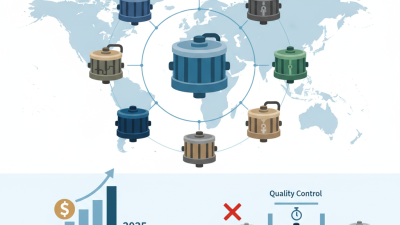
Choosing the right well caps in 2026 requires more than comparing prices or attractive finishes. Global buyers must consider well design, climate, groundwater protection, installation methods, and local technical requirements. A cap that performs well in a dry rural property may fail in a coastal or freezing environment.
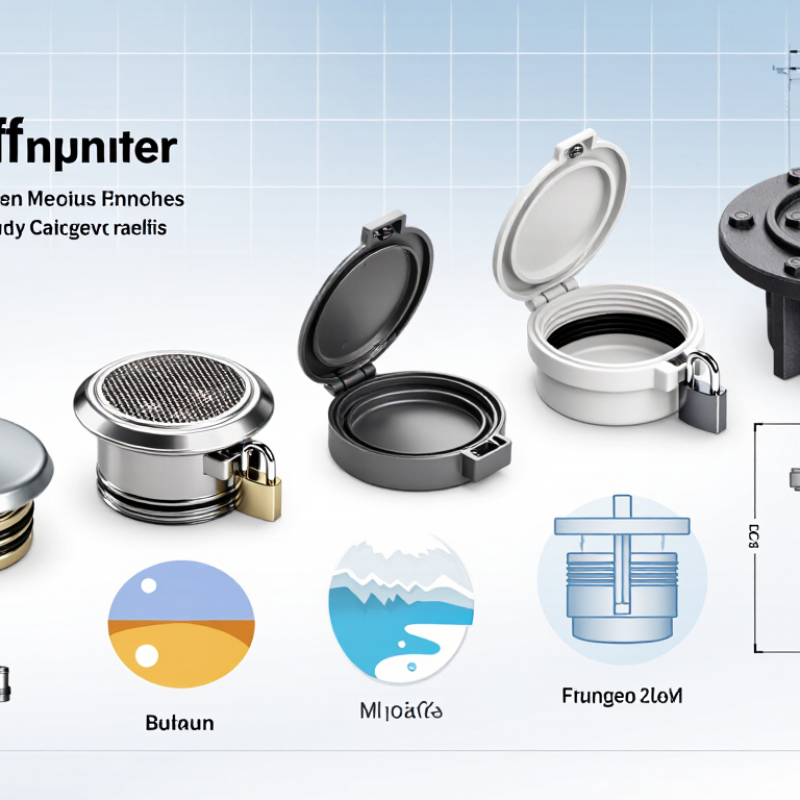
This guide introduces the main types of well caps, including sanitary, vented, locking, hinged, and heavy-duty models. Each design serves a different purpose. Sanitary caps help limit surface contamination when correctly sealed and installed. Vented caps support pressure balance and may suit specific pump systems. Locking caps add practical security, while hinged versions can simplify inspection and maintenance. Heavy-duty options are useful where vehicles, equipment, or harsh weather create extra pressure.
Materials also deserve careful attention. Stainless steel resists corrosion, thermoplastic models reduce weight, and cast metal provides strong mechanical protection. Dimensions must match the casing precisely. Even a small gap can invite insects, dust, or rainwater. Poor alignment remains a common and costly mistake.
Not every popular product is suitable. That matters.
Reliable sourcing depends on verified specifications, consistent quality control, replacement-part availability, and clear installation guidance. Buyers should request drawings, material details, seal information, load ratings, and test records before placing large orders. Regional conditions can change the decision, and some assumptions may need reconsideration.
The following overview compares practical well cap choices for international projects, helping buyers balance safety, durability, maintenance, and total ownership cost.
Well-Cap Classification: Water-Well, Sanitary, Oilfield, and Monitoring Types
2026 Top Types of Well Caps for Global Buyers
Well caps are selected by well purpose, contamination risk, and site conditions. Water-well caps commonly use sealed covers, screened vents, and vermin-resistant fittings. A properly fitted cap keeps insects, dust, and surface water away from the casing. Stainless steel or coated metal can withstand damp vaults and seasonal temperature changes. Measure the casing diameter carefully. A few millimeters can affect the seal.
Sanitary caps serve drinking-water and irrigation wells where hygiene is critical. Their design often includes a gasket, lockable bolts, and a raised vent with a screen. The vent must allow pressure equalization without creating an entry path for contaminants. Oilfield caps require stronger construction. Flanged or pressure-rated designs may support service access, higher loads, and demanding field conditions. Their rating must match the wellhead system, not just the visible cover.
Monitoring-well caps are usually compact, lockable, and suited to repeated sampling. Flush-mount versions reduce trip hazards, while above-ground covers improve visibility in rough terrain. Some include ports for tubing, cables, or sampling equipment. The categories overlap. A monitoring site may also need sanitary protection, and a water well may face heavy vehicle traffic. That is where simple product charts become misleading. Buyers should verify dimensions, materials, load ratings, vent design, corrosion exposure, and local installation requirements with a qualified engineer. Small details matter. Recheck the gasket.
Threaded and Flanged Caps: 2–6 in Connections and API 6A Pressure Classes
2026 Top Types of Well Caps for Global Buyers
Threaded and flanged well caps remain practical choices for 2–6 inch connections. Threaded caps support compact installations and faster field handling. They suit applications where space is limited and maintenance access is simple. However, damaged threads can complicate sealing and removal. Flanged caps use bolts and gaskets for a controlled connection. They support repeated inspection, accurate torque procedures, and more structured maintenance. They also need more installation space.
API 6A pressure classes commonly include 2,000, 3,000, 5,000, 10,000, 15,000, and 20,000 psi. Selection should match the complete wellhead pressure rating, not the cap alone. Confirm the connection size, bore, material class, temperature rating, and seal design. A 4-inch cap does not automatically provide a larger flow path. That detail is often overlooked. Field inspection should verify markings, certificates, gasket condition, bolt quality, and pressure-test records. Requirements may differ by API 6A edition and project specification.
Tips: Choose threaded caps for compact, lower-complexity service. Choose flanged caps when inspection frequency or pressure control requires stronger procedural discipline. Check thread condition before installation. Use calibrated torque tools for flange bolts. Never rely on appearance alone. Some procurement teams specify pressure class first, then discover a mismatch with the existing flange. That is an avoidable error. Better documentation helps, but it does not replace dimensional verification.
| Cap Type | Nominal Connection Size | Typical Connection Form | API 6A Pressure Class | Rated Working Pressure | Common Application | Key Selection Consideration |
|---|---|---|---|---|---|---|
| Threaded Well Cap | 2 in | Internal or external petroleum-pipe thread, subject to the specified thread standard | Usually project-specific; API 6A rating only when the complete equipment design is qualified | Defined by the manufacturer’s verified design and thread specification | Small-diameter well access, instrument ports, temporary closures and low-to-moderate pressure service | Confirm thread type, engagement length, seal arrangement, temperature rating and make-up torque before ordering. |
| Threaded Well Cap | 3 in | Threaded closure with metal-to-metal, elastomeric or compound-assisted sealing | Typically non-API 6A unless specifically manufactured and documented as API 6A equipment | Design-specific | Production tubing or casing-related closures where compact installation and simple removal are priorities | Thread compatibility and pressure-temperature performance are more critical than nominal size alone. |
| Threaded Well Cap | 4 in | Heavy-duty threaded connection for removable wellhead or flowline closure service | Project-specific; do not assume an API 6A class without certification | Design-specific | Onshore well servicing, test assemblies and utility or access closures | For sour service, verify material compliance and resistance to hydrogen-sulfide-related cracking. |
| Threaded Well Cap | 5 in | Large-bore threaded closure, normally selected for a defined casing or tubing connection | Project-specific | Design-specific | Large-bore temporary closures and selected low-cycle well intervention applications | Large threaded closures require careful control of galling, installation torque and seal condition. |
| Threaded Well Cap | 6 in | Large-diameter threaded cap for application-specific well or piping service | Project-specific; API 6A applicability must be stated in the technical datasheet | Design-specific | Specialty well access and low-frequency closure applications | For high-pressure service, a flanged cap is often preferred because bolting and gasket control are easier to document. |
| Flanged Well Cap | 2 in | API 6A-style nominal bore and flange connection, commonly used with a matching wellhead flange | 2,000 to 15,000 psi | 13.8 to 103.4 MPa | High-pressure wellhead isolation, pressure testing and compact surface equipment | Select the matching flange bore, nominal size, ring-groove configuration, PSL, PR and material class. |
| Flanged Well Cap | 3 in | Flanged closure with bolted connection and replaceable metallic ring gasket | 2,000, 3,000, 5,000, 10,000 or 15,000 psi | 13.8, 20.7, 34.5, 69.0 or 103.4 MPa | Surface wellhead, Christmas-tree and pressure-control equipment | The cap and mating flange must have compatible dimensions, pressure class, ring-gasket groove and bolt pattern. |
| Flanged Well Cap | 4 in | Bolted API 6A flange closure for production, testing or intervention equipment | 2,000, 3,000, 5,000, 10,000 or 15,000 psi | 13.8, 20.7, 34.5, 69.0 or 103.4 MPa | Conventional and high-pressure surface wellhead systems | Confirm bore size separately from flange size; a nominal connection size does not by itself define the pressure rating. |
| Flanged Well Cap | 5 in | Large-bore bolted flange closure with metallic ring-gasket sealing | 2,000 to 15,000 psi, depending on the qualified configuration | 13.8 to 103.4 MPa | Large-bore production wellheads, testing stacks and intervention assemblies | Higher pressure classes can require heavier bodies, larger bolting and stricter assembly procedures. |
| Flanged Well Cap | 6 in | Large-diameter flanged closure for surface wellhead or pressure-control equipment | 2,000 to 10,000 psi in many standard configurations; 15,000 psi is application-specific | 13.8 to 69.0 MPa commonly; up to 103.4 MPa when qualified | Large-bore well access, production systems and high-capacity testing equipment | Check rated bore, flange dimensions, load limits, gasket type and qualification documentation as a complete assembly. |
| Blind Flange Cap | 2–6 in | Solid blind flange used as a removable pressure boundary | API 6A classes from 2,000 to 15,000 psi when manufactured and qualified to the applicable specification | 13.8 to 103.4 MPa | Temporary well isolation, pressure testing, unused outlets and maintenance shutdowns | Use the specified API 6A ring gasket and tighten bolts according to the approved procedure. |
| Test or Intervention Cap | 2–6 in | Threaded or flanged cap with test port, gauge port or intervention interface | 2,000 to 15,000 psi when the complete assembly is API 6A qualified | 13.8 to 103.4 MPa | Pressure testing, wireline or coiled-tubing support and well intervention operations | The lowest-rated component, port, valve, gasket or connection determines the allowable working pressure. |
| Sour-Service Well Cap | 2–6 in | Threaded or flanged design using materials selected for hydrogen-sulfide service | Specified API 6A class, with applicable material and sour-service requirements | 13.8 to 103.4 MPa, depending on the selected class | Wells containing hydrogen sulfide or other corrosive production fluids | Review material class, hardness limits, corrosion resistance, sealing materials and the applicable NACE requirements. |
| Technical note: API 6A pressure classes are nominal working-pressure categories of 2,000, 3,000, 5,000, 10,000 and 15,000 psi, equivalent to approximately 13.8, 20.7, 34.5, 69.0 and 103.4 MPa. API 6A certification should not be inferred from the presence of a flange or from nominal connection size alone. Final selection should verify bore, flange dimensions, pressure-temperature rating, PSL, PR, material class, gasket type, sour-service requirements and the rating of every connected component. | ||||||
Sanitary Well Caps: NSF/ANSI/CAN 61, 304/316 Stainless Steel, and Vents
Sanitary well caps deserve more attention than their small size suggests. The U.S. EPA’s 2023 Drinking Water Infrastructure Needs Survey estimates a $625 billion investment need over 20 years. Small components can still protect major infrastructure. A properly sealed cap helps block insects, surface water, and dust. It should also allow inspection without damaging the wellhead.
For potable applications, NSF/ANSI/CAN 61 evaluation helps verify that cap materials do not release harmful contaminants into drinking water systems. The standard covers materials and components, not only complete wells. Choose documented compliance for the exact product. Stainless steel matters too. 304 stainless steel suits many ordinary environments, while 316 stainless steel offers stronger resistance in saline, coastal, or chemically aggressive locations. The difference is practical. It is not merely cosmetic.
Tips: Check the vent screen, gasket, fasteners, and drainage path during routine servicing. A screened, downward-facing vent can reduce pest entry while balancing pressure. Follow local well construction requirements and the manufacturer’s installation instructions. Avoid assuming that “stainless steel” means corrosion-proof. Poor welding, trapped moisture, and dissimilar-metal contact can still create problems. In my experience, vent design is often overlooked. That deserves reconsideration. A cap may look secure, yet an incorrect vent can compromise sanitation. EPA survey figures describe infrastructure needs, but they do not measure every well-cap failure. Buyers should request test documentation, material grade, and replacement-part availability before ordering.
Polymer Well Caps: PVC/HDPE UV Resistance and IP-Rated Enclosures
2026 Top Types of Well Caps for Global Buyers?
Polymer well caps are practical for sites where corrosion, moisture, and frequent maintenance create problems. PVC caps offer low weight, smooth surfaces, and reliable chemical resistance. However, untreated PVC can become brittle after long exposure to strong sunlight. UV-stabilized grades perform better, especially in open fields and hot climates.
HDPE caps usually tolerate impact, ground movement, and repeated handling better. Their flexibility helps reduce cracking around bolt holes and cable openings. Still, HDPE can expand under heat, so installers should allow suitable movement. Color alone does not prove UV protection. Ask for material data, accelerated weathering results, and temperature limits.
IP-rated enclosures protect electrical connections from dust and water. An IP rating is useful only when the complete assembly is tested, including the gasket, fasteners, and cable glands. IP65 may resist water jets, while IP67 generally covers temporary immersion under defined test conditions. Local installation conditions can be harsher than laboratory tests.
A tight seal matters.
I once saw a well cap fail because the gasket was pinched during fitting. The plastic was sound, but the installation was not. Buyers should check wall thickness, UV additives, drainage design, and replacement-part availability. Condensation also deserves attention. A sealed cap can trap moisture when warm air cools overnight, so pressure equalization may be necessary in some designs. The right choice depends on sunlight, impact risk, water exposure, and service access, not material names alone.
2026 Top Types of Well Caps for Global Buyers: Polymer Well Caps with PVC/HDPE UV Resistance and IP-Rated Enclosures
IP ratings are defined by IEC 60529. The first digit indicates protection against solid particles, while the second digit indicates protection against water. PVC and HDPE well caps can be designed for these enclosure ratings, but the final IP classification depends on the complete assembly, including seals, joints, cable entries, and manufacturing quality. UV-stabilized grades are recommended for outdoor installations.
Global Buyer Checklist: ISO 9001, ASTM Tests, MOQ, Lead Time, and Warranty
2026 Top Types of Well Caps for Global Buyers
Global buyers should match the well cap to site conditions, not only the catalog photo. Bolt-down caps suit protected utility areas, while locking caps improve security around public access points. Traffic-rated models need verified load data for driveways or service roads. Sanitary caps are useful where water protection is critical, but gasket quality matters more than appearance.
ISO 9001 certification can indicate controlled production, but it does not guarantee every shipment is flawless. Request the certificate scope, material records, dimensional reports, and batch traceability. ASTM tests should match the cap’s intended use, including load, corrosion, sealing, or impact performance. Confirm the test method and report date. A vague “ASTM compliant” statement is insufficient. MOQ, production lead time, packaging, and replacement terms should appear in the quotation. Warranty coverage must define defects, exclusions, claim evidence, and response time.
Tips: Ask for two samples before approving a large order. Check the hinge, bolts, gasket compression, and coating thickness by hand. Compare the drawing with the delivered sample. A low MOQ may hide higher unit costs. A short lead time may also indicate limited inspection. I have seen buyers overlook this detail. Recheck it. For remote projects, request spare seals and fasteners, because small parts can delay repairs more than the cap itself.
Related Posts
-
Top 10 Well Caps in China for Global Buyers Guide?
-

Best Well Caps for Global Buyers What to Consider?
-

Best Well Caps for Effective Water Management Solutions?
-
Why Well Caps Are Essential for Safe Oil Wells?
-
Understanding the Importance of Water Well Pipe Selection for Safe Water Access
-
2026 Best Plumbing Fittings for Your Home Renovation Needs?