
Request A Quote

Phone: 416-244-6476
Email:

    7 Tips for Choosing a Hybrid Grid Tie Inverter?

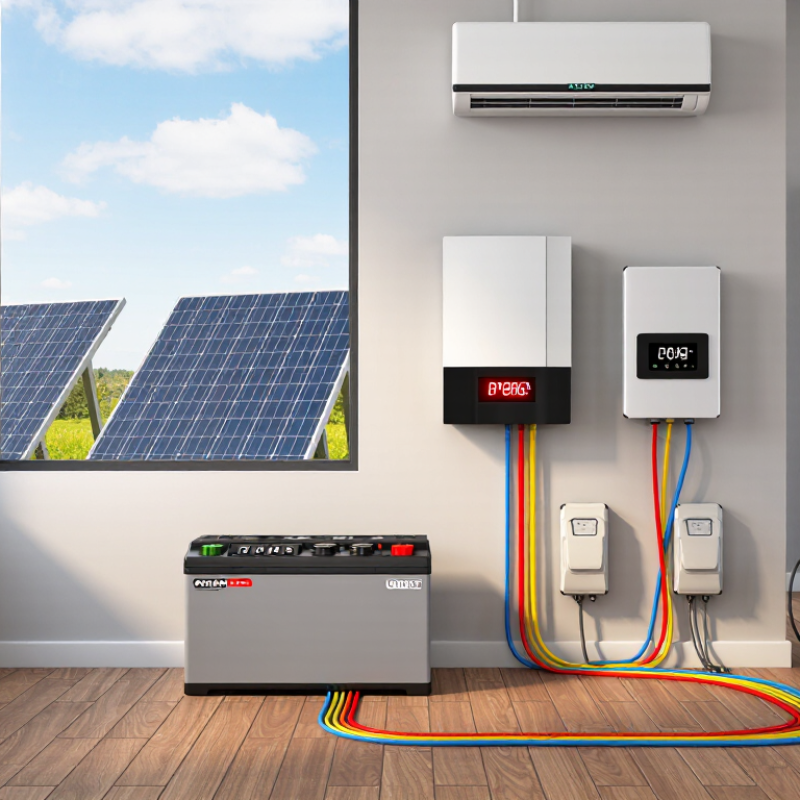
    Choosing a Hybrid Grid Tie Inverter is not simply a matter of comparing wattage and price. It is a decision about energy flow, safety, battery storage, and future expansion. A suitable model should coordinate solar panels, household loads, batteries, and the utility grid without creating unnecessary losses. The wrong choice may leave a 5 kW array underused or make a battery bank difficult to manage.

    Steven Strong, a respected solar-electric designer and author, has described the inverter as “the heart of a solar-electric system.” That perspective remains useful. The inverter controls how power moves through the home. It also influences backup performance during outages. Real installation experience shows that datasheets never tell the entire story. Roof shade, cable distance, battery voltage, local grid requirements, and peak appliance demand can change the best option.

    This guide presents seven practical tips for choosing a Hybrid Grid Tie Inverter. It considers continuous output, surge capacity, battery compatibility, efficiency, monitoring, warranty support, and certified installation. It also asks uncomfortable questions. Will the system still perform well after five years? Can the inverter handle a pump starting suddenly? Is the advertised efficiency realistic under partial loads? Sometimes, a cheaper inverter appears attractive. It may become expensive after one failed component or limited service support. No single model suits every property. Careful comparison, professional advice, and honest load calculations matter more than impressive marketing language.
    7 Tips for Choosing a Hybrid Grid Tie Inverter?

    Define Your Energy Needs and Grid-Connection Goals

    7 Tips for Choosing a Hybrid Grid Tie Inverter?

    Define Your Energy Needs and Grid-Connection Goals

    Start with reality. List monthly consumption, peak loads, and critical circuits before comparing inverter specifications. EIA data shows average U.S. household electricity use was about 10,800 kWh annually in 2022. That figure hides important details. A heat pump, well pump, or electric vehicle can create sharp evening peaks. Your inverter must handle those moments, not only average daily demand.

    Review twelve months of utility bills and note seasonal changes. Peak demand matters. Decide whether solar energy should reduce bills, support backup loads, or export electricity. The goals require different inverter capacities, battery controls, and transfer arrangements. Export is not guaranteed. Local utilities may impose capacity limits, application requirements, or zero-export settings. Confirm these rules before selecting equipment. IEEE 1547-2018 also defines important interconnection functions, including voltage regulation and abnormal-grid response.

    The IEA’s Renewables 2024 report recorded nearly 420 GW of new solar capacity in 2023. Rapid deployment increases the need for predictable grid behavior and careful system planning. Select an inverter with suitable voltage, phase, frequency, and monitoring ranges. Check its continuous and surge ratings separately. A practical mistake is sizing only from annual energy use. I would also test the design against cloudy winter days, simultaneous appliance use, and future loads. That review may expose an uncomfortable truth: the cheapest inverter can become undersized quickly.

    7 Tips for Choosing a Hybrid Grid-Tie Inverter: Define Your Energy Needs and Grid-Connection Goals

    This planning example estimates daily energy use from common household loads. The refrigerator and lighting are essential backup loads, while cooking, laundry, and climate control can determine the inverter’s peak power requirement. Before selecting an inverter, compare the total daily energy demand with the battery capacity, identify simultaneous loads, and confirm the required grid-export and backup operating modes with your local utility.

    Check Inverter Compatibility with Solar Panels and Batteries

    Choosing a hybrid grid-tie inverter starts with compatibility, not appearance or advertised power. Check the solar panels’ voltage and current ranges against the inverter’s MPPT input limits. The panel string voltage must remain safe during cold mornings, when voltage can rise sharply. Measure carefully. Small details matter.

    Battery matching requires equal attention. Confirm the battery’s nominal voltage, usable capacity, chemistry, and maximum charging current. Lithium batteries may require communication between the battery management system and inverter. Without that connection, charging control may be limited or unavailable. Lead-acid batteries need different voltage settings and often tolerate less aggressive cycling. Do not guess.

    During a site inspection, compare the inverter’s continuous output with the battery’s discharge rating. A battery may store plenty of energy but still fail to support heavy loads. Check surge capacity for pumps, refrigerators, and workshop tools. Also verify whether the inverter supports the intended grid voltage, phase configuration, and backup arrangement. Installation manuals and certified electrical guidance are more reliable than sales summaries. I have seen compatibility tables overlooked because the headline wattage looked impressive. That shortcut can create nuisance shutdowns, reduced battery life, or expensive rewiring. Recheck every figure before purchase.

    7 Tips for Choosing a Hybrid Grid Tie Inverter? - Check Inverter Compatibility with Solar Panels and Batteries
    Tip Compatibility Dimension What to Check Typical Technical Data or Target Why It Matters
    1Match PV Voltage Solar panel string voltage Compare the panel string’s maximum open-circuit voltage at the coldest expected temperature with the inverter’s maximum DC input voltage. Also confirm that the operating voltage falls inside the MPPT range. Residential hybrid inverters commonly accept a maximum PV input of approximately 500–1,000 V DC, with MPPT operating ranges often around 100–600 V DC. Exceeding the maximum DC voltage can damage the inverter. A string below the MPPT range may produce poor energy harvest or fail to start reliably.
    2Check PV Current and Power Panel output current and array size Ensure the short-circuit current and maximum operating current of each string are within the inverter’s per-MPPT limits. Check the permitted PV oversizing ratio. Modern panels commonly produce approximately 10–18 A per string under standard test conditions. Many inverters allow a DC-to-AC ratio of about 1.1:1 to 1.5:1, subject to the manufacturer’s limits. Excess current may trigger protective shutdowns, while excessive PV oversizing can cause clipping, thermal stress, or warranty issues.
    3Verify Battery Voltage and Chemistry Battery bank compatibility Confirm nominal voltage, allowable charging voltage, maximum charge and discharge current, battery chemistry, and whether communication with the battery management system is supported. Common residential battery banks use 48 V nominal architecture, with lithium iron phosphate batteries typically requiring a charge voltage of approximately 51–58 V, depending on the battery design. Incorrect voltage or charging parameters can reduce battery life, cause protective trips, or create a safety hazard. Lithium batteries should have a properly functioning BMS.
    4Size Battery Power Correctly Charge, discharge, and backup-load capability Compare the inverter’s continuous and peak battery current with the battery’s continuous discharge rating. Confirm that the battery can supply the desired backup loads during outages. A 5 kW load on a 48 V battery requires roughly 104 A before conversion losses. Allow additional capacity for inverter efficiency losses and short-duration surges. A battery with insufficient current capability may limit output power, disconnect under heavy loads, or experience unnecessary stress.
    5Review Grid and Backup Output AC voltage, phase, frequency, and transfer behavior Match the inverter to the local electrical supply, including single-phase or three-phase operation, nominal AC voltage, grid frequency, neutral requirements, and backup transfer time. Common residential systems use approximately 120/240 V at 60 Hz or 230 V at 50 Hz. Backup transfer times may range from 10 ms to several hundred milliseconds. Electrical mismatch can prevent grid connection, cause nuisance trips, or make sensitive equipment restart during an outage.
    6Compare Efficiency and Operating Limits Conversion losses and installation environment Check maximum and weighted efficiency, standby consumption, operating temperature, cooling method, humidity rating, noise level, and indoor or outdoor installation requirements. Well-designed residential units often list maximum efficiency of approximately 95–99%. Many operate within approximately −25°C to 60°C, with output derating at elevated temperatures. Higher efficiency reduces energy losses. Temperature derating and environmental limitations affect available power and long-term reliability.
    7Confirm Safety and Regulatory Requirements Protection functions, certification, and installation rules Verify anti-islanding protection, overvoltage and overcurrent protection, ground-fault detection, surge protection, rapid shutdown requirements where applicable, and certification for the installation location. A compliant grid-tied system must disconnect from the utility during a grid outage. Protection requirements vary by jurisdiction and may reference standards such as IEEE 1547, IEC 62109, or local electrical codes. Certification and correctly installed protective devices are essential for utility approval, fire safety, personnel safety, and legal operation.
    Important: The stated values are common planning ranges, not universal specifications. Always verify the latest inverter, solar panel, battery, utility, and local electrical-code documentation before purchase or installation.

    Compare Power Ratings, Efficiency, and Operating Modes

    7 Tips for Choosing a Hybrid Grid Tie Inverter

    Compare power ratings carefully. Tip 1: Match continuous output to your home’s peak demand, not just its average load. A 5 kW inverter may struggle when pumps, ovens, and air conditioners start together.

    Tip 2: Check surge capacity and duration. Short bursts matter. IEA PVPS reported over 400 GW of new solar capacity added globally in 2023, increasing the need for flexible grid-connected systems. More solar does not automatically mean better performance.

    Tip 3: Compare weighted efficiency, not only the maximum figure. Many inverters advertise efficiency above 97%, but real homes operate across changing loads.

    Tip 4: Review the efficiency curve at 10%, 50%, and 100% output.

    Tip 5: Confirm operating modes, including solar priority, battery backup, zero-export, and time-of-use charging.

    NREL’s 2024 Annual Technology Baseline places battery round-trip efficiency near 85% for many storage systems, before additional conversion losses. That difference becomes visible on a utility bill.

    Tip 6: Verify whether backup power works during grid outages and supports motor loads.

    Tip 7: Inspect voltage ranges, MPPT channels, monitoring quality, and local service procedures.

    An experienced installer should test these details, not merely repeat brochure numbers. I would also question unusually high efficiency claims.

    Laboratory results can differ from dusty roofs, cold mornings, and partially shaded strings. A perfect datasheet does not exist.

    Choose measurable performance over impressive language.

    Evaluate Safety Features, Monitoring, and Installation Requirements

    7 Tips for Choosing a Hybrid Grid Tie Inverter

    Evaluate Safety Features, Monitoring, and Installation Requirements

    A hybrid grid tie inverter should be judged beyond its rated efficiency. The IEA PVPS Trends 2024 report recorded more than 1.4 terawatts of global photovoltaic capacity by the end of 2023. That scale makes protection details increasingly important. Check anti-islanding protection, overcurrent control, surge protection, ground-fault detection, and rapid shutdown compatibility. Confirm compliance with applicable IEC standards and local grid codes. Ask for test certificates, not vague marketing claims.

    Monitoring must show more than daily energy totals. Choose a system that displays battery voltage, state of charge, grid imports, export limits, inverter temperature, and fault history. Email or mobile alerts should identify the affected circuit and event time. Cybersecurity also matters. Use encrypted connections, strong passwords, and controlled installer access. NREL’s Best Practices for Operation and Maintenance reports emphasize continuous performance tracking because small losses can remain unnoticed without reliable data. A beautiful dashboard is not enough.

    Installation requirements deserve a practical inspection. Verify battery voltage ranges, maximum PV input current, short-circuit ratings, cable sizes, ventilation, and emergency isolation points. Leave clear working space around the enclosure. Confirm whether backup loads need a separate panel. Field checks often expose missing labels or undersized conductors. I have seen specifications interpreted too generously. That mistake is avoidable. Review temperature derating, utility approval, commissioning tests, and future battery expansion before purchase.

    Review Warranty Coverage, Certifications, and Long-Term Value

    A hybrid grid tie inverter can appear affordable until warranty terms meet real operating conditions. Check whether coverage lasts five, ten, or fewer years. Read the exclusions. Some warranties cover parts but exclude labor, shipping, or battery-related failures. Ask whether replacement units are new, refurbished, or repaired. Also confirm the claim process, response time, and required installation records.

    Certifications deserve equal attention. Look for documents showing compliance with applicable grid and safety standards, such as UL 1741, IEEE 1547, or IEC 62109. Certification labels alone are not enough. Request the certificate number and verify its scope through an official testing or regulatory database. A unit approved for one region may not satisfy another region’s interconnection rules. This detail is often overlooked.

    Long-term value depends on more than conversion efficiency. Compare standby consumption, monitoring quality, firmware support, battery compatibility, and expected service life. A slightly cheaper inverter may cost more if its portal fails, repairs require overseas shipping, or software updates stop early. Review the installer’s maintenance plan and the manufacturer’s service history. I would also record serial numbers and commissioning data from day one. That habit feels excessive, but it can protect a future warranty claim. No product is perfect, and advertised savings may weaken when replacement batteries, downtime, and labor enter the calculation.