
Request A Quote

Phone: 416-244-6476
Email:

    Why Choose a Bedroom Door Lock for Privacy and Security?

    Choosing a Bedroom Door Lock is not merely a design decision. It affects privacy, sleep, and everyday confidence. A closed bedroom door should create a clear personal boundary, especially in shared homes, apartments, and family spaces.

    A suitable lock can prevent casual entry without creating unnecessary fear. Privacy locks with interior buttons, turn pieces, or emergency release holes offer simple control. Keyed locks provide stronger access management, but they also require responsible key storage. The right choice depends on who uses the room, how often access is needed, and whether fire-safety guidance applies. Small details matter. A loose latch, shallow strike plate, or poorly aligned door can weaken an otherwise reliable product.

    Locksmith educator Wayne Winton has offered a practical reminder: “Security works best when people use it consistently.” That principle applies here. A complicated Bedroom Door Lock may look impressive, yet frustrate children, older adults, or tired homeowners. A simple lock, installed correctly, may perform better every night. Still, no lock is perfect. It cannot replace careful habits, strong doors, or clear household communication.

    This guide examines privacy functions, lock types, installation quality, and daily usability. It also considers what manufacturers often overlook: noise, emergency access, and the small gap beneath a door. Readers will gain practical criteria for comparing products, not just attractive features. The best decision may not be the most expensive one. It should be dependable, understandable, and appropriate for the room. That sounds obvious. It is often missed.
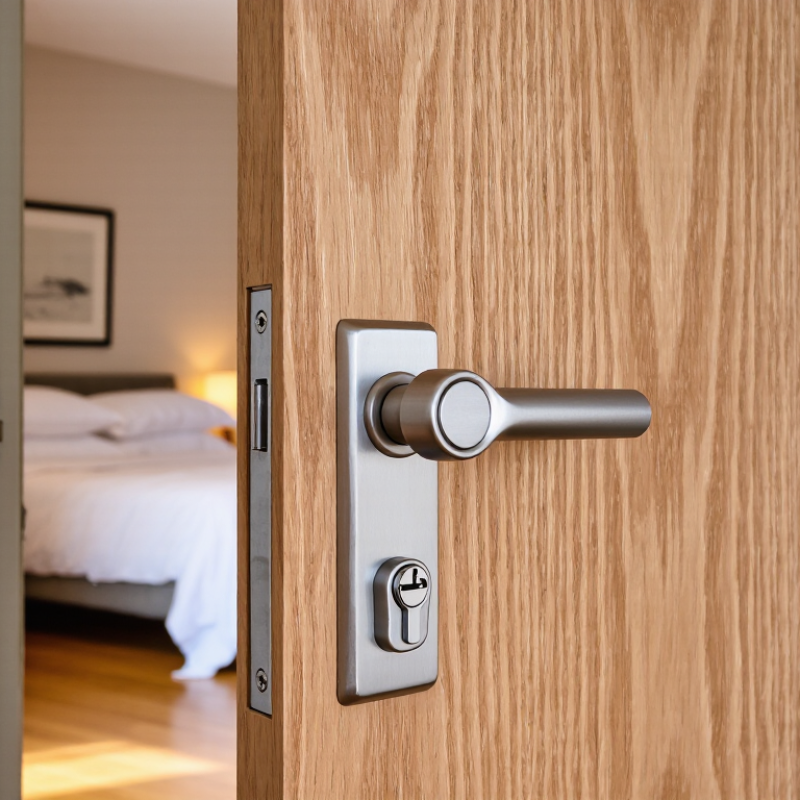
    Why Choose a Bedroom Door Lock for Privacy and Security?

    What Is a Bedroom Door Lock and How Does It Work?

    A bedroom door lock is a device that controls entry while protecting personal privacy. Unlike a front-door lock, it usually focuses on preventing accidental entry rather than resisting forced attacks. Common designs include privacy knobs, lever locks, and compact deadbolts. Each uses a latch or bolt that moves into a strike plate fixed to the door frame.

    Here is how the mechanism works. Turning the handle retracts the spring latch, allowing the door to open. Pressing a button or turning a thumbturn extends the latch again. Some privacy locks include a small emergency release hole on the outside. A straight tool can release the lock during an urgent situation, such as a child becoming trapped inside. This feature should never be blocked.

    Installation accuracy matters. The latch must align with the strike plate, or the handle may feel stiff. A practical check is simple: close the door gently and test the lock several times. If the door needs force, the frame may have shifted, or the hinges may be loose. A lock can provide privacy without offering strong security. That distinction is easy to miss. Electronic models may use codes or batteries, but forgotten batteries can create an inconvenient failure. Mechanical locks are less complex, though their internal springs can wear over time. Choose a design that matches the room, the user’s needs, and the door’s existing holes. Truthfully, no bedroom lock is perfect; careful fitting often matters as much as the lock itself.

    How Bedroom Door Locks Protect Privacy

    A bedroom door lock creates a clear boundary inside the home. It helps protect sleep, private conversations, clothing, documents, and personal devices from unwanted access. The need is practical. The FBI Crime Data Explorer recorded more than 847,000 burglary offenses in the United States during 2022. A bedroom lock cannot stop every intrusion, but it can add another delay and visible barrier.

    Privacy also matters when everyone has permission to enter the home. Children, guests, roommates, and maintenance workers may not understand personal boundaries. A privacy lock with an interior thumb turn allows fast exit during an emergency. A keyed lock can offer stronger control, but the key must remain accessible to trusted users. The Bureau of Justice Statistics’ National Crime Victimization Survey separates attempted and completed household burglaries, showing why layered protection remains useful.

    Small details matter. The strike plate should sit firmly in the door frame, with long screws secured into solid framing. A loose latch may feel secure but fail under pressure. Sound still travels through thin doors, so a lock cannot replace respectful household rules. It also should not be used to trap anyone. That limitation deserves honest attention. A simple test helps: close the door, engage the lock, and check whether the latch fully seats without forcing the handle. Sources: FBI Crime Data Explorer, 2022; Bureau of Justice Statistics, National Crime Victimization Survey.

    Why Choose a Bedroom Door Lock for Privacy and Security?

    Bedroom door locks add practical protection by combining a closing latch, controlled access, and an emergency-entry feature. Privacy locks are designed to prevent casual entry, while keyed and keypad locks provide stronger access control. The scores represent the number of common privacy and security functions typically provided by each lock type, not laboratory test results.

    How Bedroom Door Locks Improve Home Security

    A bedroom door lock can strengthen home security by controlling access to a private space. It helps protect personal documents, electronics, medication, and valuables from casual entry. A solid latch also keeps the door closed when children or guests move around the home. Small detail. Better control.

    In practical use, a lock works best when paired with a strong door, secure hinges, and a well-maintained frame. Privacy locks are convenient for daily use, while keyed locks offer stronger access control. However, a bedroom lock is not a complete security system. It cannot replace exterior door locks, window protection, or a reliable alarm. Fire safety also matters, so occupants should be able to exit quickly during an emergency. I once viewed an interior lock as a simple privacy feature. That assumption was incomplete. Its value depends on correct installation and sensible household routines.

    Tips: Choose a lock that matches the door’s thickness and swing direction. Test it monthly for smooth operation. Keep an emergency access method available to trusted household members. Avoid storing a key in an obvious nearby location. Check that the door opens freely from inside. A lock that sticks is not dependable. Consider who needs access before selecting a keyed design, especially in shared homes. A short conversation can prevent confusion later.

    Why Choose a Bedroom Door Lock for Privacy and Security? — How Bedroom Door Locks Improve Home Security

    Lock Type Primary Privacy Function Security Contribution Typical Operation Emergency Access Feature Best-Suited Use
    Privacy Button Lock Provides temporary privacy by locking from inside the bedroom. Discourages casual entry but is not designed as a high-security barrier. Push-button or turn-button inside the room; normally operated with a lever or knob outside. Usually includes an exterior emergency-release slot or pinhole. Bedrooms, guest rooms, and interior residential doors.
    Turn-Button Privacy Lock Allows occupants to lock the door without carrying a key. Creates a clear privacy boundary and helps prevent unintentional entry. Thumb turn on the interior side; lever or knob on the exterior side. Commonly released from outside with a small tool or coin, depending on the design. Family bedrooms and rooms where convenient daily use is important.
    Keyed Entry Lock Can provide privacy when the door is locked with a key. Offers stronger resistance to unauthorized entry than a basic passage or privacy lock. Key operation from the outside and a thumb turn or key operation from inside. Interior thumb turns allow quick exit; local building and fire-safety requirements should be followed. Bedrooms requiring additional control over access.
    Deadbolt Provides firm door locking but is less convenient for frequent bedroom privacy use. Uses a solid bolt that generally provides greater resistance to forced movement than a spring latch alone. Turned with a key or interior thumb turn. Single-cylinder versions typically allow rapid operation from inside; installation must not obstruct emergency escape. Bedroom doors that also open to an exterior area or require stronger access control.
    Keypad Lock Allows residents to lock the room without using a physical key. Access codes can be changed or shared selectively, reducing the need for copied keys. PIN code, touchpad, or mechanical push-button entry, depending on the model. May include an interior thumb turn, mechanical override, or emergency power contact. Homes needing key-free access and convenient code management.
    Smart Lock Supports remote or automatic locking features when properly configured. May provide access logs, temporary permissions, and notifications; cybersecurity and battery management are important. Mobile app, PIN, fingerprint, key, or automatic locking, depending on the product. Should include a reliable interior exit method and a backup access option. Connected homes and households that need controlled, trackable access.
    Mortise Lock Can combine a latch and locking mechanism within the door edge. Its enclosed case and integrated construction can provide robust everyday door security when correctly installed. Lever handle, key cylinder, thumb turn, or a combination of these controls. Interior hardware should permit quick operation without a key where required for safe exit. Solid interior doors and installations needing integrated hardware.

    Practical selection guidance: Choose a privacy lock for everyday bedroom use, a keyed lock or deadbolt when stronger access control is needed, and a keypad or smart lock when key-free entry is a priority. Always verify door thickness, backset, frame strength, emergency-release requirements, and applicable local building or fire-safety rules before installation.

    Which Types of Bedroom Door Locks Are Available?

    Bedroom door locks come in several forms, and each suits a different privacy or security need. Privacy knobs and levers are common for bedrooms. They usually lock from inside and open with a small emergency release outside. This design prevents casual entry, but it does not resist forced entry well. It works best for shared homes, children’s rooms, and guest spaces.

    Keyed entry locks provide stronger resistance when the door needs controlled access. They require a key outside and a turn button inside. A separate deadbolt can add protection, but bedroom doors still need a quick exit during emergencies. Keypad and electronic locks remove the need for physical keys. Some offer temporary codes, audit records, and automatic locking. However, batteries can fail. Keep a mechanical override or fresh batteries nearby.

    Sliding bolts and surface bolts are simple, affordable choices for added privacy. They can feel secure, yet they may slow emergency access. Door thickness, frame strength, and strike-plate screws matter as much as the lock itself. A weak frame can defeat an expensive mechanism. Check that the door closes smoothly without forcing the latch. I would also avoid relying on one feature alone. People often choose a lock for its appearance, then discover that privacy matters more than maximum security. Local building and fire-safety rules should guide installation, especially in bedrooms used for sleeping.

    How to Choose and Install the Right Bedroom Door Lock

    Choosing the right bedroom door lock begins with the door itself. Measure its thickness, the backset, and the existing borehole before shopping. A lock that looks suitable may not fit the latch or strike plate. For everyday privacy, a turn-button lock often works well. A keyed lock offers stronger control, but keep an emergency key in an accessible, agreed location.

    I once replaced a loose bedroom lock without checking the door frame. The latch missed the strike plate by a few millimeters, so the door never closed smoothly. Measure twice. Examine the hinges, frame, and wood for damage. Choose solid hardware with a firm latch, smooth operation, and clear installation instructions. Check local building and fire-safety requirements, especially when the room may need quick access during an emergency.

    Installation requires a screwdriver, tape measure, pencil, and sometimes a drill. Remove the old lock carefully, then place the new latch with its bevel facing the closing direction. Mark the strike plate and test the alignment before tightening every screw. The door should close without force, and the handle should not wobble. Do not overtighten screws in soft wood. After installation, test the lock from both sides several times. A small mistake can become a daily annoyance. Recheck it after a week, because wood can shift with humidity.