Request A Quote

Phone: 416-244-6476
Email:

    Top Benefits of Using PVC Pipework in Construction and Plumbing Applications?

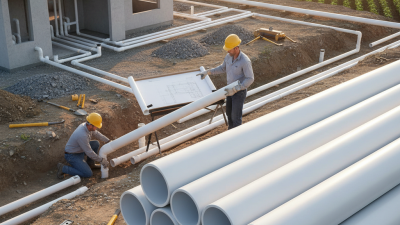
    In recent years, PVC pipework has gained immense popularity in construction and plumbing applications. This versatile material offers a range of benefits that can significantly enhance both efficiency and cost-effectiveness. From residential homes to large commercial projects, the use of PVC pipework is becoming increasingly common.

    One of the key advantages of PVC pipework is its lightweight nature. Contractors can easily handle and transport these pipes on-site. Additionally, the durability of PVC makes it resistant to corrosion and chemicals. This ensures a long lifespan and reduced maintenance costs. However, some may overlook the importance of proper installation techniques, which is crucial for optimal performance.

    Moreover, PVC pipework is eco-friendly. It is recyclable and generates less waste in its production compared to other materials. Yet, there are concerns over the use of certain additives in manufacturing. It’s essential to choose high-quality products to mitigate potential risks. In conclusion, the increasing adoption of PVC pipework demonstrates its value in modern construction, but careful consideration is necessary to maximize its benefits.

    Top Benefits of Using PVC Pipework in Construction and Plumbing Applications?

    Key Attributes of PVC Pipework in Modern Construction
    Top Benefits of Using PVC Pipework in Construction and Plumbing Applications?

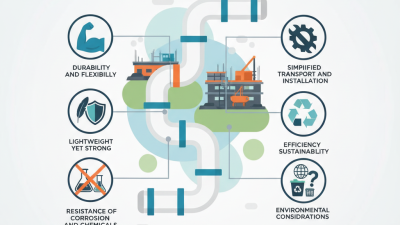
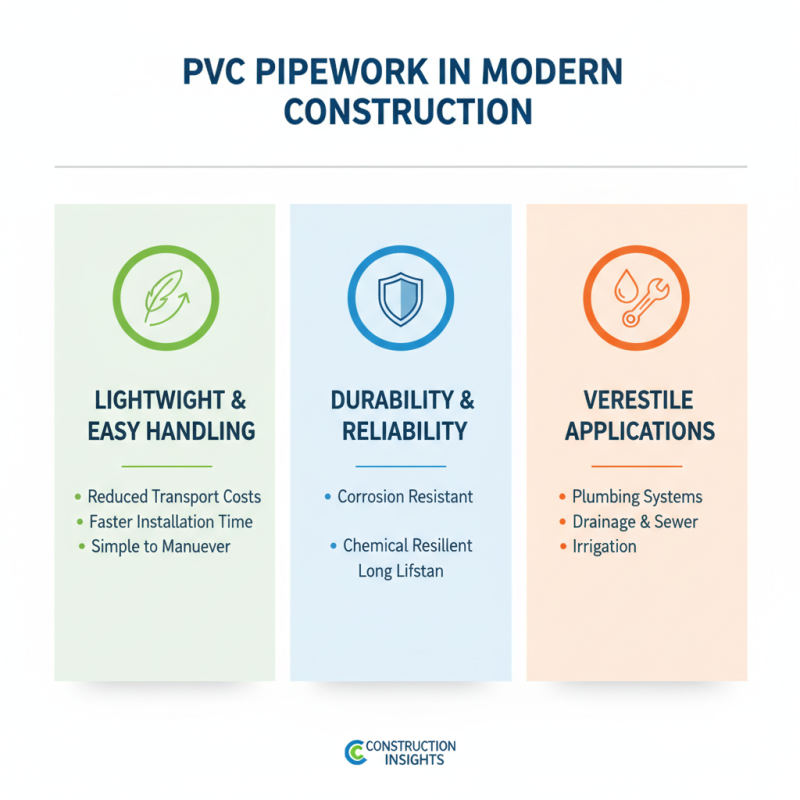
    PVC pipework is a popular choice in modern construction. Its lightweight nature makes it easy to handle during installation. This also reduces transportation costs and time. The durability of PVC is impressive. It resists corrosion and is not affected by harsh chemicals. This attribute makes it a reliable option for plumbing applications.

    Moreover, PVC pipework is versatile. It can be used for various purposes, from drainage to supply lines. Its smooth internal surface offers excellent flow characteristics. This helps in minimizing blockages and increasing efficiency. Yet, some users find that longevity can vary in specific environments. Proper installation is crucial to maximize its benefits.

    Another key feature is the cost-effectiveness of PVC. It is generally more affordable than other materials. This can lead to significant savings on large projects. However, planners need to consider the potential for brittleness over time. In colder climates, this can be a concern. Awareness and proper maintenance are essential for ensuring lasting performance.
    Cost-Effectiveness: Analyzing PVC Pipework Lifespan and Maintenance

    Top Benefits of Using PVC Pipework in Construction and Plumbing Applications?

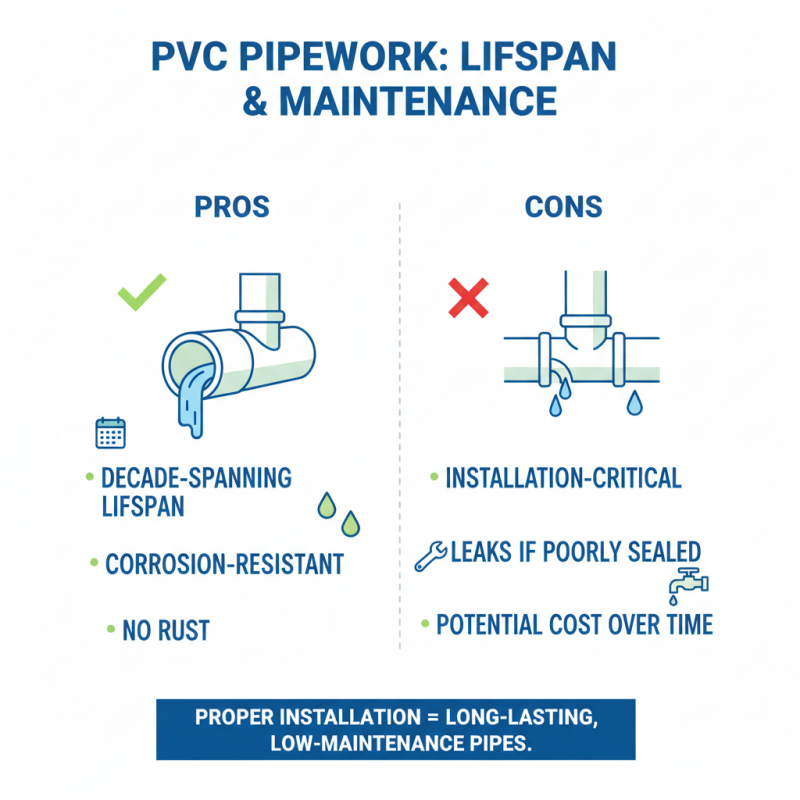
    When considering materials for construction and plumbing, the lifespan and maintenance of PVC pipework stand out. PVC pipes can last decades if installed correctly. They resist corrosion, which minimizes the need for frequent replacements. Unlike metal pipes, they do not rust. However, improper installation can lead to issues. If joints are not sealed properly, leaks might occur. This could negate some of the cost benefits over time.

    Maintenance for PVC pipes is generally straightforward. They require less frequent repairs compared to other materials. Regular inspections can help spot potential problems early. It's also worth noting that while PVC is durable, extreme temperatures can have an impact. In very hot climates, PVC can warp or bend, affecting performance. Homeowners should consider regional climate when choosing pipework material. Balancing cost-effectiveness and longevity is key. The initial savings might be tempting, but long-term durability should not be overlooked.

    Environmental Impact: PVC Recycling and Sustainability in Plumbing

    PVC pipework is gaining attention in construction and plumbing not just for its durability but also for its environmental benefits. One of the key aspects is the recycling process of PVC. Unlike some materials, PVC can be reprocessed multiple times. This helps reduce waste in landfills. Old pipes can be collected, cleaned, and transformed into new products. This cycle is vital for sustainability.

    However, the reality is not without challenges. While recycling PVC is possible, not all facilities are equipped for it. The efficiency of recycling programs varies widely. Many people are unaware of how to properly dispose of PVC products. This lack of awareness can lead to more PVC waste ending up in the environment. We must address these gaps to improve overall sustainability in plumbing.

    Moreover, making new PVC requires energy and resources. Despite the ability to recycle, the production process still poses environmental concerns. There are emissions associated with manufacturing that cannot be ignored. It is crucial to factor in these impacts when considering PVC as an option. A responsible approach to using PVC involves not only promoting its recycling but also addressing the entire lifecycle.

    Top Benefits of Using PVC Pipework in Construction and Plumbing Applications

    Benefit Description Environmental Impact Recyclability
    Durability PVC pipes are resistant to corrosion, chemicals, and weathering, ensuring a long lifespan. By reducing the need for replacements, PVC minimizes waste generation. PVC is highly recyclable, with many facilities available for processing.
    Cost-Effectiveness Lower material and installation costs compared to metal options. Saves resources and energy, contributing to overall sustainability. Recycling PVC reduces the need for new raw materials, lowering environmental impact.
    Lightweight Easy to handle and transport, reducing energy consumption during transport. A lighter structure contributes to lower manufacturing emissions. Being lightweight aids in more efficient recycling processes.
    Water Resistance Excellent resistance to moisture makes PVC ideal for plumbing. Helps in reducing water wastage through leaks, supporting water conservation. PVC contributes to sustainable water management practices.
    Versatility Used in various applications including drainage, irrigation, and electrical conduits. Promotes flexible design in construction, minimizing resource waste. Different grades of PVC can be recycled for varied applications, enhancing sustainability.

    Durability and Chemical Resistance of PVC in Various Conditions

    PVC pipework has made a significant mark in construction and plumbing due to its durability. It can withstand a variety of environmental factors. These pipes resist abrasion and impact, making them suitable for harsh conditions. In extreme temperatures, PVC maintains its shape and integrity. This property ensures long-lasting performance in many applications.

    Chemical resistance is another critical advantage. PVC does not corrode easily, even when exposed to various substances. It stands firm against acids, alkalis, and salts. This resistance extends its usable life in diverse industries. However, improper installation can compromise its effectiveness. Careful attention to detail is essential during setup.

    While PVC offers remarkable benefits, it’s essential to consider some drawbacks. Some may argue that it lacks the aesthetic appeal of other materials. Others raise concerns about environmental impacts during production. Proper disposal methods must be considered to mitigate future issues. Evaluating these factors is vital for making informed decisions.

    Versatility of PVC Pipework: Applications in Diverse Plumbing Systems

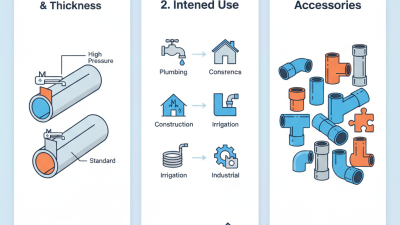
    PVC pipework is gaining popularity in plumbing systems due to its versatility. It can be used in various applications, from residential projects to industrial installations. In homes, PVC pipes transport water safely and efficiently, making plumbing repairs simpler. They can endure high pressure, which is beneficial for many setups.

    In commercial environments, PVC's lightweight nature simplifies handling. It can be easily cut and joined without heavy tools. This reduces overall labor costs and time. However, certain challenges arise. Extreme heat can warp PVC, compromising its integrity. Care must be taken in hot climates.

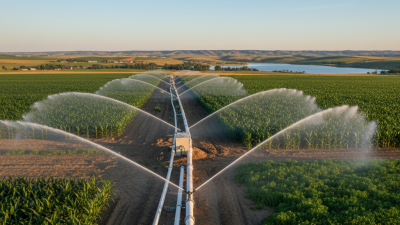
    Beyond plumbing, PVC pipes have uses in drainage and irrigation systems. Their resistance to corrosion ensures long-term reliability. Yet, in some environments, they may not be the best choice. Understanding the specific needs of a plumbing project remains crucial for successful implementation.