7 Best Centrifugal Fans for Industrial Applications?
Choosing among the 7 Best Centrifugal Fans for Industrial Applications requires more than comparing airflow numbers. A fan may look powerful on paper, yet struggle when filters become dirty, ducts narrow, or exhaust temperatures rise. Real performance depends on the complete ventilation system.
Frank P. Bleier, author of Fan Handbook, stated, “Fan selection is a system problem, not merely a fan problem.” That principle guides this comparison. Each model should be examined through measurable factors, including static pressure, air volume, efficiency, motor construction, noise, corrosion resistance, and maintenance access. Small details matter. A properly sized impeller can reduce energy waste, while a poorly chosen housing may create turbulence and costly vibration.
Industrial experience also changes the decision. A dusty woodworking plant needs different protection than a food-processing room or chemical-handling area. Some Centrifugal Fans perform well under continuous duty but become expensive when replacement parts are difficult to source. Others offer strong pressure output but produce more noise than expected. That trade-off is easy to overlook.
This guide compares seven practical options for demanding facilities. It considers published specifications, operating conditions, installation needs, and long-term reliability. The ranking is useful, but not absolute. Every factory has its own weaknesses. A fan that succeeds in one plant may disappoint in another. Even experienced engineers can misjudge a system without accurate field measurements. That uncomfortable limitation deserves attention before any purchase.
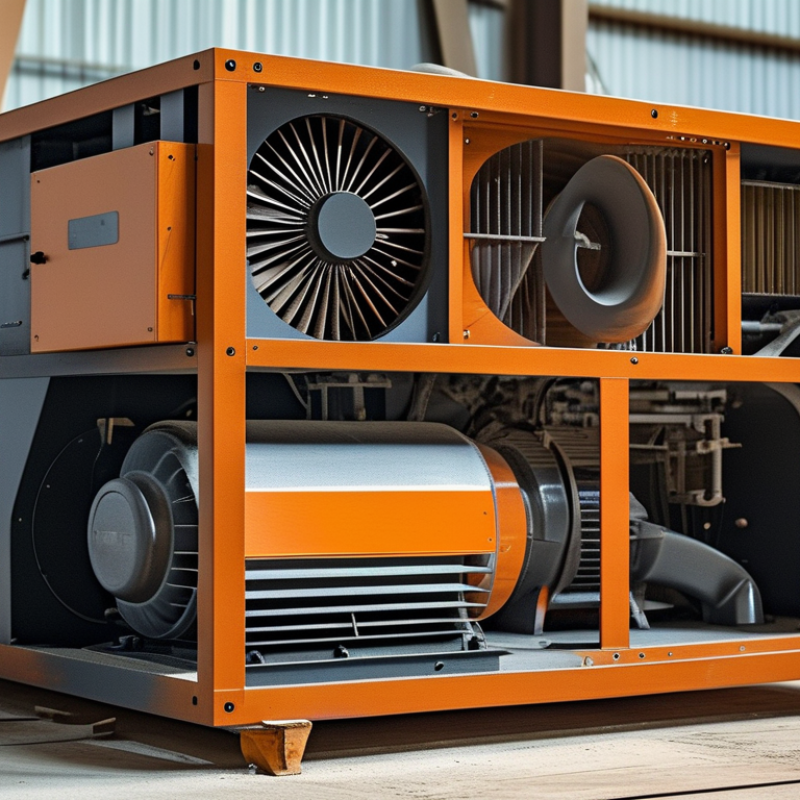
What Industrial Centrifugal Fans Are and How They Work
Industrial centrifugal fans move air by changing its direction and velocity. Air enters through the impeller’s center, or eye, and travels outward between rotating blades. The blades add energy to the air, creating centrifugal force and higher pressure.
A motor drives the impeller, while the surrounding housing collects the fast-moving air. Its curved shape, often called a scroll, slows the airflow and converts part of its velocity into usable static pressure. This process allows the fan to push air through ducts, filters, heat exchangers, and production equipment. I have seen airflow problems caused by poorly sized ducts rather than weak fans.
Blade design affects performance. Backward-curved blades usually provide efficient operation and stable pressure. Radial blades tolerate heavier dust and rough service. Forward-curved blades can deliver high airflow in compact systems, but they may demand careful motor selection. Every design has a compromise.
Real conditions matter. Dust buildup can reduce performance and increase vibration. A blocked filter can also make a healthy fan appear defective. Measuring airflow, static pressure, motor current, and vibration gives maintenance teams useful evidence. Fan curves should be checked against actual system resistance, not used alone. That step is often skipped.
The best industrial centrifugal fan depends on temperature, material load, operating hours, noise limits, and required pressure. Safety guards, balanced rotating parts, and scheduled inspections protect both equipment and workers. Even experienced engineers should verify assumptions after installation. Field behavior can differ from calculations.
7 Best Centrifugal Fans for Industrial Applications
Typical total-efficiency comparison of common centrifugal fan configurations. Actual performance depends on fan size, speed, system resistance, air density, and operating point.
How they work: A rotating impeller accelerates air outward by centrifugal force. The scroll or casing converts part of the air velocity into static pressure, allowing the fan to move air through ducts, filters, heat exchangers, and other industrial equipment.
Key Criteria for Selecting an Industrial Centrifugal Fan
7 Best Centrifugal Fans for Industrial Applications?
Key Criteria for Selecting an Industrial Centrifugal Fan
Selecting an industrial centrifugal fan starts with the duty point, not the catalog headline. Confirm required airflow, static pressure, temperature, and operating hours. A fan that moves enough air at low resistance may fail when filters become loaded. Measure the system carefully. Dusty ducts, sharp elbows, and long vertical runs can change the real pressure demand.
Fan construction must match the process. Carbon steel suits many dry-air systems, while coated or stainless materials may resist moisture and corrosive gases better. Check the impeller design, balancing grade, shaft strength, and bearing arrangement. For combustible dust, involve a qualified safety engineer and verify suitable electrical and mechanical protection. Never assume a standard motor is adequate.
Energy use deserves serious attention. Compare efficiency at the actual operating point, not only the maximum rating. Variable-speed control can reduce power during lower production periods, but poor control settings may create unstable airflow. Noise also matters. A loud fan can increase worker fatigue and require costly acoustic treatment. In plant inspections, vibration, hot bearings, and unusual rattling often reveal problems before failure.
Maintenance access is easy to overlook. Provide room for belt replacement, cleaning, inspection, and motor removal. Keep spare parts available. A perfect selection becomes impractical if technicians cannot reach it safely. Manufacturer test data, certified performance curves, and relevant industry standards improve confidence, although field conditions may still differ. Recheck assumptions after installation. Real systems are rarely as tidy as drawings suggest.
Seven Top Centrifugal Fans for Industrial Applications
Seven Top Centrifugal Fans for Industrial Applications
The best centrifugal fan depends on pressure, airflow, dust loading, temperature, and control strategy. My practical shortlist includes seven proven designs: backward-inclined, airfoil, backward-curved, radial-blade, radial-tip, forward-curved, and high-pressure multistage fans. Backward-inclined fans suit factories and process ventilation because they resist overload. Airfoil models deliver strong efficiency in clean-air systems. Radial-blade fans handle abrasive particles and heavier dust. Radial-tip designs offer a useful compromise between pressure and contamination resistance. Forward-curved fans remain compact, but their narrower operating range requires careful selection. Multistage units support high-pressure pneumatic conveying and combustion-air duties. The ranking is not absolute. A clean-room fan and a cement-plant fan need different priorities.
The U.S. Department of Energy’s Improving Fan System Performance sourcebook notes that system-level improvements can produce substantial energy savings, often approaching 20% in suitable installations. The International Energy Agency reports that electric motor-driven systems consume roughly 53% of global electricity, making fan efficiency relevant beyond the motor alone. AMCA 208 provides a recognized method for calculating fan energy efficiency grades. Ask for certified airflow, pressure, sound, and efficiency data. Test conditions matter. A catalog number without system resistance can mislead.
Tips: Measure static pressure at the actual operating point. Keep filters, dampers, and ducts included in the calculation. Use variable-speed control when demand changes, but verify motor cooling at low speed. Inspect bearings and impellers for dust buildup. I have seen an efficient fan perform poorly after an undersized duct was installed. That mistake is easy to miss. Recheck the system after commissioning.
7 Best Centrifugal Fans for Industrial Applications? - Seven Top Centrifugal Fans for Industrial Applications | No. | Fan Type | Typical Airflow Range | Typical Static Pressure | Common Motor Power | Typical Impeller Diameter | Best-Suited Industrial Applications | Key Advantages |
| 1 | Backward-Curved Fan | 5,000–250,000 m³/h | 800–3,500 Pa | 2.2–200 kW | 315–1,600 mm | General process ventilation, air-handling units, factories, and clean-air exhaust systems | High efficiency, non-overloading power characteristic, and stable operation across a broad airflow range |
| 2 | Forward-Curved Fan | 1,000–80,000 m³/h | 300–1,800 Pa | 0.55–45 kW | 200–1,000 mm | Compact ventilation units, HVAC systems, air curtains, and low-pressure process air movement | Compact housing, high airflow at relatively low pressure, and suitability for space-limited installations |
| 3 | Radial-Blade Fan | 2,000–100,000 m³/h | 1,500–7,000 Pa | 2.2–110 kW | 250–1,250 mm | Dust collection, material handling, woodworking extraction, and abrasive particulate service | Strong pressure generation, robust impeller construction, and better tolerance of dust-laden air than many smooth-blade designs |
| 4 | High-Pressure Centrifugal Fan | 1,000–60,000 m³/h | 3,000–15,000 Pa | 4–160 kW | 250–1,000 mm | Boiler combustion air, furnace systems, pneumatic conveying, and high-resistance duct networks | High pressure capability, reliable performance against system resistance, and suitability for long duct runs |
| 5 | Roof Exhaust Centrifugal Fan | 2,000–50,000 m³/h | 150–1,200 Pa | 0.75–30 kW | 315–1,000 mm | Warehouse ventilation, factory roof extraction, commercial kitchens, and general building exhaust | Direct discharge to atmosphere, efficient use of roof space, and reduced indoor ductwork requirements |
| 6 | Explosion-Resistant Centrifugal Fan | 1,000–80,000 m³/h | 500–4,000 Pa | 1.1–75 kW | 250–1,250 mm | Solvent handling, paint facilities, chemical processing, fuel storage, and potentially explosive atmospheres | Designed with compatible materials and motor protection for hazardous-area requirements; certification must match the installation zone |
| 7 | High-Temperature Centrifugal Fan | 1,000–100,000 m³/h | 500–5,000 Pa | 2.2–160 kW | 315–1,400 mm | Ovens, dryers, kilns, heat-treatment lines, incineration systems, and hot-gas extraction | Heat-resistant construction, options for shaft cooling or bearing isolation, and dependable operation in elevated-temperature air streams |
| Note: The specifications shown are representative industrial selection ranges rather than a single product rating. Actual performance depends on air density, temperature, system resistance, impeller speed, motor arrangement, filtration, and applicable safety requirements. Final selection should be verified against a certified fan performance curve and the relevant local standards. |
Comparing Fan Performance, Efficiency, and Durability
The seven strongest centrifugal fan choices are backward-curved airfoil, backward-curved plate, backward-inclined, forward-curved, radial-blade, radial-tip, and high-pressure radial designs. “Best” depends on duty point, dust loading, temperature, and available space. Backward-curved models usually deliver strong efficiency and stable operation. Forward-curved fans suit compact, lower-pressure systems. Radial-blade designs handle abrasive particles better, though they often consume more power.
Performance must be checked at the actual airflow and static pressure. A catalog peak can mislead. The U.S. Department of Energy reports that fan systems may consume up to 20% of industrial motor electricity. Small efficiency losses therefore become expensive over long operating hours. AMCA 208 introduces the Fan Energy Index, which compares total electrical input at a defined duty point. This is more useful than comparing motor efficiency alone. Noise, control range, surge behavior, and maintenance access also deserve measurement.
Durability depends on more than thick steel. Look for balanced impellers, sealed bearings, replaceable wear components, and corrosion-resistant surfaces. ISO 14694 provides industrial fan balance and vibration guidance, supporting consistent mechanical reliability. In dusty plants, radial and radial-tip designs can outperform smoother airfoil blades. But they may lose efficiency. That trade-off is easy to underestimate. Field inspections should record vibration, bearing temperature, belt condition, and airflow every few months. One imperfect assumption remains: laboratory results rarely reproduce site turbulence, fouling, or operator habits.
Installation, Safety, and Maintenance Requirements
Industrial centrifugal fans perform reliably only when installation and maintenance receive equal attention. Select the fan for airflow, pressure, temperature, and dust conditions. An oversized unit can waste energy and create damaging vibration. Verify the mounting surface is rigid, level, and able to support the full assembly. Leave clear access for inspection and belt replacement. Flexible connectors should reduce vibration without carrying the fan’s weight. Align ducts carefully. Forced alignment often stresses the casing.
Safety starts before commissioning. Isolate electrical power and lock out the disconnect during service. Install guards over belts, couplings, shafts, and rotating inlets. Check grounding, emergency stops, and protective relays before operation. Never inspect a moving impeller by hand. Dust buildup can unbalance the wheel and increase bearing loads. Unusual noise matters. A small change may indicate looseness, wear, or airflow blockage.
Tips: Record vibration, temperature, amperage, and belt condition during routine checks. Compare readings over time, not alone. Clean the impeller and housing on a planned schedule. Use suitable tools and approved lubricants. Replace damaged guards immediately. A common field mistake is treating lubrication as maintenance itself. It is only one task. Some maintenance plans look complete, yet ignore duct leaks and loose fasteners. Review the system after seasonal changes, process modifications, or repeated trips. When readings conflict, stop and investigate rather than adjusting settings blindly.
