What Are the Best Commercial Overhead Doors from China?
Choosing the best Commercial Overhead Doors from China requires more than comparing catalog prices. The right decision depends on opening size, daily cycles, wind exposure, insulation, safety controls, and service access. Grand View Research’s Industrial Doors Market report identifies automation, energy efficiency, and operational safety as major market drivers. These factors matter at a warehouse loading bay, where a 6-meter door may open hundreds of times daily.
China offers a broad manufacturing base, from insulated sectional doors to high-speed fabric systems and heavy-duty rolling doors. The China National Bureau of Statistics continues to track significant activity across manufacturing, logistics, and construction, supporting strong domestic demand for industrial access systems. However, production scale does not automatically prove quality. That assumption deserves scrutiny. Buyers should review tested cycle ratings, panel thickness, thermal performance, wind-load data, emergency release design, and control-panel reliability. A door can look impressive on a showroom floor and still fail under constant forklift traffic.
Professional selection also requires independent verification. ASSA ABLOY’s industry publications emphasize lifecycle cost, safety, and system reliability rather than purchase price alone. Applicable standards may include EN 13241, UL 325, or other destination-market requirements, depending on the project location. Certifications should match the actual model, not merely the factory’s general product range. Supplier audits, sample testing, spare-parts planning, and clear warranty terms reduce avoidable risk. China may provide excellent value, but not every quotation represents equal engineering depth. This guide compares the leading options through performance, compliance, durability, customization, and long-term support. There is no perfect door. There is only the best fit for a specific operation.
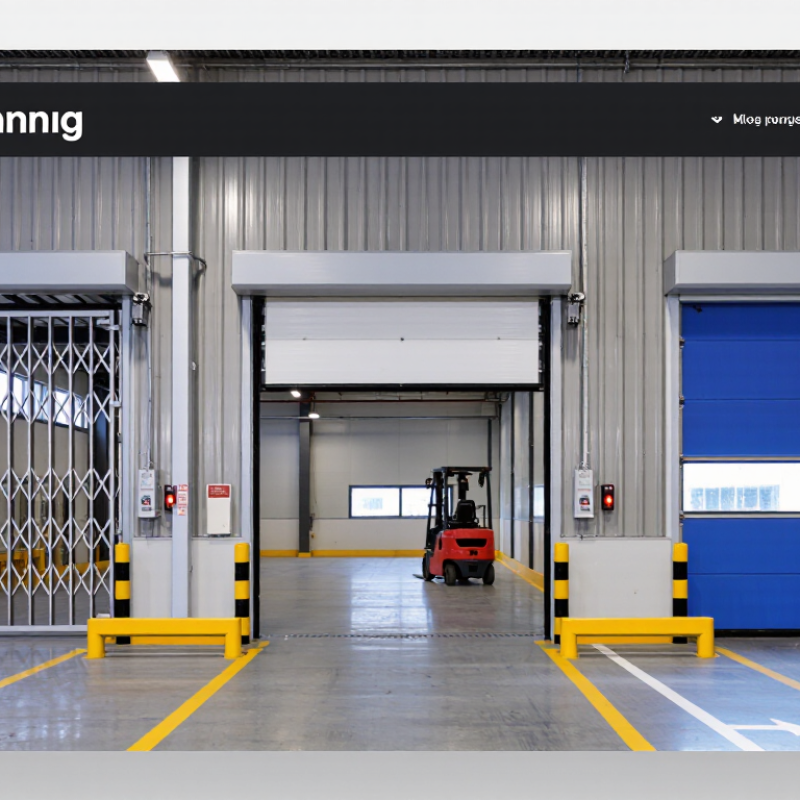
Types of Commercial Overhead Doors Available from China
Commercial overhead doors from China come in several practical forms. The right type depends on traffic, weather, security, and ceiling space. Sectional doors use hinged, insulated panels. They suit warehouses, workshops, and loading bays. Steel panels improve durability, while polyurethane cores reduce heat transfer. Clear panel options can bring daylight into busy service areas. Yet panel thickness alone does not prove good insulation. Gaskets, joints, and installation matter too.
Rolling doors use horizontal slats that coil above the opening. They need limited headroom and work well in retail storage rooms. For frequent vehicle movement, high-speed doors reduce opening time and dust movement. Fabric curtains are lightweight, but they may need careful tension checks. Full-view aluminum doors offer visibility for logistics areas and clean production spaces. They look modern. Scratches can show quickly. Fire-rated doors are another category, but their tested assembly, closing system, and local approval must be verified. A label on a quotation is not enough.
When evaluating Chinese suppliers, request drawings, wind-load data, cycle ratings, motor specifications, spare-parts lists, and installation instructions. Ask how each door is tested before shipment. Photos of welded guides and bottom seals can reveal workmanship. Photos never replace inspection. Check voltage, control logic, safety edges, photocells, and emergency release arrangements with a qualified installer. I would also compare warranty exclusions, packaging, lead times, and after-sales response. One weakness in my early assessments was focusing too heavily on purchase price. A cheaper door may require stronger maintenance planning. Measure twice. That trade-off deserves a written calculation.
Key Materials and Construction Features to Compare
For commercial overhead doors from China, compare material thickness before comparing price. Galvanized steel suits warehouses, loading bays, and exposed service areas. Aluminum reduces weight and resists corrosion, but it can dent more easily. Stainless steel handles harsh moisture better, though its cost may rise quickly. Ask for measured gauge data, not vague terms like “heavy duty.” A door’s finish also matters. Powder coating should cover edges, corners, and welded joints evenly. Field inspections often show thin panels looking acceptable until forklifts cause repeated impacts. That changes how “economical” construction should be judged.
Tips: Request panel samples, cross-section drawings, and test records. Check polyurethane foam density, thermal breaks, and bottom seals. Cold storage needs tighter joints than an unheated workshop. Ask how many operating cycles the springs, hinges, and rollers are rated for. Confirm track alignment and bearing quality during assembly. Small defects become noisy failures. Do not rely on catalog photos alone.
Construction details decide whether materials perform well. Look for reinforced hinges, protected lifting cables, sturdy brackets, and adjustable guides. Tracks should remain rigid under the door’s full moving load. For windy sites, request documented wind-load calculations for the opening. For busy facilities, compare cycle ratings and available replacement parts. Ask how inspections are recorded before shipment. Clear photos of welds, seals, and hardware provide useful evidence. No checklist is perfect. Installation quality can change the result dramatically, especially when the frame is uneven.
Performance Standards, Safety Systems, and Certifications
Choosing commercial overhead doors from China should begin with performance evidence, not a low quotation. On warehouse projects, I examine cycle ratings, panel insulation, wind resistance, and corrosion protection. A loading bay door may open dozens of times daily, so its spring system and motor need matched duty ratings. Ask for test reports showing dimensions, temperature ranges, cycle counts, and air leakage results. Numbers reveal weaknesses. A door that looks strong can still rattle under wind or lose heat around its seals.
Safety systems deserve equal attention. Photoelectric sensors should stop closing when a person, pallet, or vehicle crosses the opening. Bottom-edge detection, emergency release, manual override, and controlled closing reduce practical risks. For high-traffic sites, consider warning lights, audible alarms, and interlocks with dock equipment. I also check whether controls remain usable during a power failure. That detail is often missed.
Certifications can support confidence, but paperwork alone proves little. Confirm that certificates match the exact door model, motor, dimensions, and production site. Look for recognized testing under relevant regional standards, plus documented factory quality inspections. Request traceability records, installation instructions, maintenance schedules, and spare-part availability before ordering. Independent inspection before shipment is sensible, especially for large quantities. I would not accept vague claims such as “international standard” without a certificate number or testing scope. Performance may vary between batches; this is where careful sampling matters. A reliable supplier should answer clearly, even when limitations exist.
How to Evaluate Chinese Door Manufacturers and Suppliers
Choosing the best commercial overhead door from China starts with evaluating the manufacturer, not just comparing prices. Ask how long the factory has produced industrial doors and which markets it serves. Request technical drawings, material specifications, cycle-life data, and test reports. Check panel thickness, wind resistance, insulation, spring design, motor performance, and safety sensors. Reliable suppliers explain these details clearly. Vague answers deserve caution.
Tips: Request a production video and a live factory inspection. Confirm whether the factory or a trading company will manage your order. Check sample quality before approving mass production. Contact recent customers, if possible. A third-party inspection can verify dimensions, welding, coating, packaging, and operation before shipment. Do not trust a polished quotation alone.
A strong supplier also provides installation guidance, spare parts, manuals, and responsive after-sales support. Discuss delivery terms, replacement procedures, warranty limits, and communication channels in writing. Make sure the door design meets the safety and building requirements of its destination. Small details matter, such as crate protection for control boxes and moisture barriers around steel panels. I have seen attractive samples fail because packaging was weak. That is an easy mistake to miss. A lower price may also reflect thinner components, fewer tests, or limited support rather than better efficiency. Try to compare complete systems, not isolated unit prices.
Installation, Maintenance, Pricing, and Import Considerations
Choosing the best commercial overhead door from China requires more than comparing online prices. The door must match your building, traffic level, climate, and safety requirements. Measure the opening carefully, including headroom, side clearance, and floor condition. A small measurement error can delay installation.
A practical starting point. Ask the supplier for drawings, material specifications, motor details, and test documentation. Confirm local building, electrical, fire, and wind-load requirements before ordering. Professional installation is strongly recommended, especially for high-cycle doors and heavy insulated panels. Check the delivery package against the packing list before installation. Missing brackets or damaged tracks can create expensive delays. Remote video inspection may help, but it cannot replace an experienced site assessment.
Pricing usually includes the door curtain or panels, tracks, hardware, motor, packaging, and shipping. Request a complete quotation with clear Incoterms, warranty terms, spare parts, and replacement procedures. Import costs may also include customs duties, port handling, inland transport, and local taxes. Verify product classification with a qualified customs professional. Maintenance should include monthly visual checks, track cleaning, fastener inspection, sensor testing, and lubrication where specified. Keep service records with dates and replaced parts. In practice, low prices sometimes hide weaker hardware or limited support. I have found that the cheapest option is not always economical. Ask difficult questions early.
