
10 Best Water Drilling Rigs for Sale in 2026
Reliable water access remains a major infrastructure challenge. The WHO/UNICEF Joint Monitoring Programme reported that 2.2 billion people lacked safely managed drinking water in 2022. That figure signals need, not a guarantee that drilling is the right solution everywhere. Local hydrogeology, water quality, and long-term maintenance matter just as much.
For contractors, utilities, and project buyers, choosing a Water Drilling Rig starts with the ground beneath the site. A compact rig may suit a narrow rural road, while deeper targets can demand greater torque, pullback capacity, and dependable mud or air systems. The UN World Water Development Report 2024 also highlights how water challenges vary across regions, reinforcing the need to match equipment to local conditions. This guide compares 10 water drilling rigs for sale in 2026, focusing on practical factors such as drilling method, depth capability, mobility, operator controls, and after-sales support. Specifications should be checked against the manufacturer’s current documentation; advertised maximum depth alone can be misleading. A rig that looks powerful on paper may be a poor fit for fractured rock, limited access, or a tight service budget. Small details count. We also recognize a limitation: no single ranking can account for every formation, crew, or project constraint. Use these comparisons as a shortlist, then verify performance claims, parts availability, and site requirements with qualified suppliers before purchasing.
What Water Drilling Rigs Are and How They Work
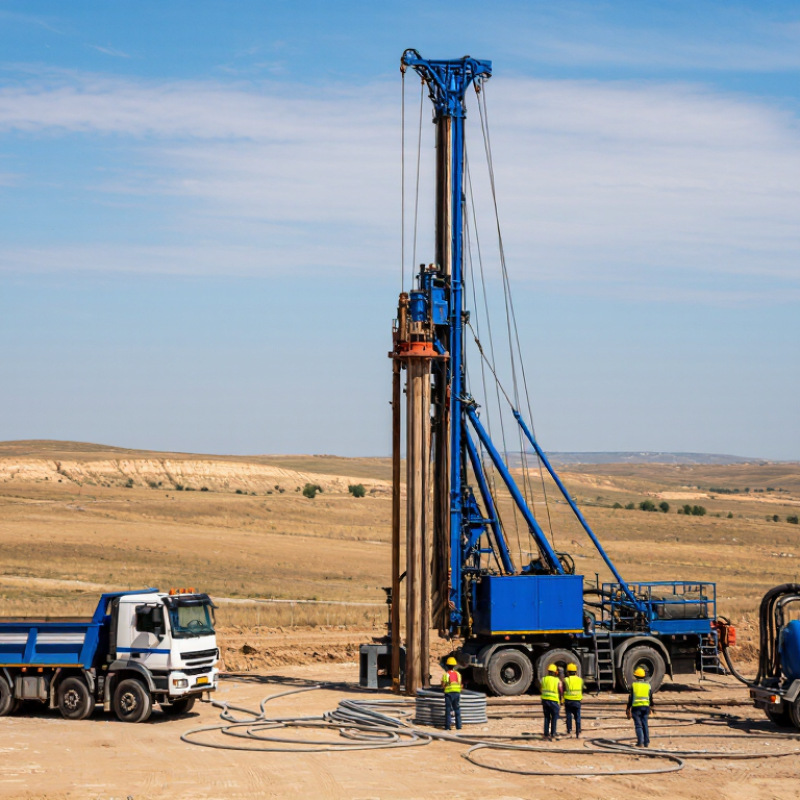
A water drilling rig is a machine designed to create a borehole and reach groundwater below the surface. Its mast holds a drill string, while a powered rotary head turns the attached bit. Pressure pushes the bit into soil or rock. The job looks simple from a distance. In practice, changing ground conditions can slow progress quickly.
As the bit cuts, air or drilling fluid carries rock fragments up and out of the hole. The chosen method depends on the formation: softer ground may suit rotary drilling, while hard rock often calls for a hammer-style system. Small clues matter. Changes in drilling speed, vibration, and the material returning to the surface can signal a new layer. Crews track these details, but readings do not always tell the whole story.
When comparing water drilling rigs for sale, buyers should match the machine to expected depth, geology, site access, and available power. A large rig is not automatically better; it may be difficult to move across a narrow rural track. Check mast height, lifting capacity, circulation equipment, and compatibility with casing. Specifications look exact, yet local geology can still surprise a crew. That uncertainty deserves a place in the plan.
10 Best Water Drilling Rigs for Sale in 2026 — What Water Drilling Rigs Are and How They Work
A water drilling rig is equipment used to bore a well through soil and rock so that a screened well can reach a groundwater-bearing formation. Depending on the drilling method, the rig rotates a drill string, drives a hammer, circulates drilling fluid or air, or advances a casing. The rig creates the borehole; a separate pump is normally installed to bring water to the surface.
| No. | Rig type or configuration | How it works | Indicative depth range | Typical bore diameter | Best suited to | Main advantages | Important considerations |
|---|---|---|---|---|---|---|---|
| 1 | Truck-mounted rotary mud rig | A rotating bit cuts the formation while drilling fluid circulates down the drill string and returns up the borehole, carrying cuttings. | About 100–500 m | About 100–450 mm | Water wells in unconsolidated ground and mixed formations. | Efficient drilling in many soil types; fluid can help support the borehole wall. | Requires a suitable fluid-handling system and space to manage drilling returns. Actual reach depends on formation, tooling and rig setup. |
| 2 | Truck-mounted down-the-hole (DTH) air rig | Compressed air powers a hammer near the bit, which repeatedly strikes the rock as the drill string rotates; air lifts rock fragments out of the hole. | About 100–400 m | About 100–300 mm | Hard-rock water wells where air drilling is suitable. | Fast penetration in competent rock and clear cuttings returns in suitable conditions. | Needs a high-capacity compressor. Air drilling may be unsuitable in some loose, water-sensitive or unstable formations without additional measures. |
| 3 | Crawler-mounted DTH rig | A crawler carrier positions the rig on site; the DTH hammer and compressed air perform the drilling in a similar way to a truck-mounted DTH system. | About 80–300 m | About 100–300 mm | Rough, sloping or access-limited sites that can accommodate a tracked machine. | Tracks can improve mobility on uneven ground, and the rig can be transported separately from road vehicles. | Check ground bearing capacity, transport arrangements and working-platform requirements before mobilization. |
| 4 | Trailer-mounted rotary rig | A towable rig turns a bit and uses drilling fluid or air, depending on its configuration, to remove cuttings from the borehole. | About 30–150 m | About 100–250 mm | Shallow to medium-depth domestic, agricultural and monitoring wells. | Can be less costly and easier to move than a large self-propelled rig. | Depth, bore size and drilling method vary substantially by equipment package; towing access and a suitable tow vehicle are necessary. |
| 5 | Compact skid-mounted rig | The rig is mounted on a skid or frame and uses rotary drilling or a small hammer system, with cuttings removed by fluid or air. | About 30–120 m | About 75–250 mm | Restricted-access sites, small farms and projects with limited space. | Compact footprint; can be moved by an appropriately rated vehicle or lifting equipment. | Often has less pullback, mast height and compressor capacity than larger rigs. Confirm that the setup meets the planned well design. |
| 6 | Reverse-circulation rig | Drilling fluid flows down the annular space and cuttings return inside a large-diameter drill pipe, typically with an air-lift system. | About 100–600 m | Often about 300–1,000 mm | Large-diameter production wells and projects requiring high-volume sample returns. | Can handle large boreholes and bring cuttings to the surface efficiently on suitable projects. | Requires specialized, larger equipment and substantial site and fluid-management planning; it is not necessary for many household wells. |
| 7 | Sonic drilling rig | A resonant head vibrates the drill string at high frequency while applying rotation and downward force; casing can advance with the bit to limit borehole collapse. | About 50–300 m | About 75–300 mm | Sampling-sensitive work, unconsolidated deposits and some environmental or groundwater investigations. | Can recover relatively continuous samples and reduce the need for drilling fluid in some conditions. | Specialized equipment and operating costs can be higher; performance depends on the formation and required bore diameter. |
| 8 | Cable-tool percussion rig | A heavy bit is repeatedly raised and dropped to break the formation; a bailer removes loosened material, and casing may be driven as drilling proceeds. | About 30–300 m | About 100–600 mm | Some shallow or medium-depth wells in formations where percussion drilling is practical. | Mechanically straightforward and does not rely on continuous high-pressure air circulation. | Generally slower than many rotary methods, particularly in hard rock; requires room for the equipment and handling of drilling tools. |
| 9 | Truck-mounted top-drive rotary rig | A top drive rotates the drill string from the mast while a mud or air circulation system transports cuttings out of the borehole. | About 100–500 m | About 100–450 mm | Contractors needing a versatile production rig for varied well projects. | Can make and break drill-string connections efficiently and can be configured for different rotary methods. | “Top drive” describes the rotation system, not a single drilling method. Check included pumps, compressor, mast capacity and tooling. |
| 10 | Combination rotary and DTH rig | The rig can use rotary drilling with fluid in softer or unstable layers and switch to an air-powered DTH hammer in suitable rock. | About 100–400 m | About 100–350 mm | Projects expected to cross both loose overburden and hard-rock formations. | Method flexibility can reduce the need to bring a second rig to a mixed-geology site. | Confirm that the rig includes compatible circulation equipment, compressor capacity and tools for the planned formations. |
Depth and diameter figures are broad, indicative ranges for comparing rig configurations, not guaranteed specifications. Achievable depth and bore size depend on geology, casing and well design, tooling, power, operating conditions and local regulations. Before purchasing, verify the manufacturer’s technical documentation, required support equipment, transport limits and service availability.