
Request A Quote

Phone: 416-244-6476
Email:

    China Top 10 Eco Friendly Tissue Paper Suppliers?

    Choosing a tissue supplier is not only about price. Buyers also need to understand what the paper contains, how it is made, and whether the supplier can document its claims. Eco Friendly Tissue Paper may use recycled fiber, bamboo, or responsibly sourced virgin pulp, but the label alone does not tell the whole story. Details matter.

    This guide to China’s top 10 eco-friendly tissue paper suppliers is intended to help importers, distributors, and private-label brands compare options with care. It considers product range, available specifications, production experience, export support, and evidence behind environmental claims. A reliable supplier should be able to share clear information about fiber sources, relevant certifications, packaging, and sample quality. Check whether certificates apply to the specific product and facility, and confirm that they are current. Ask about minimum order quantities, lead times, and how the paper performs in real use: a soft sample sheet can feel very different from a full carton after shipping.

    Small checks count. A lower quoted price may not include custom packaging or freight, and “recycled” can mean different things across product lines. Some supplier information may also be incomplete or difficult to compare; that is worth noting, not glossing over. Use this list as a starting point, then request documents and samples before making a sourcing decision. The best fit depends on your market, quality needs, and budget.
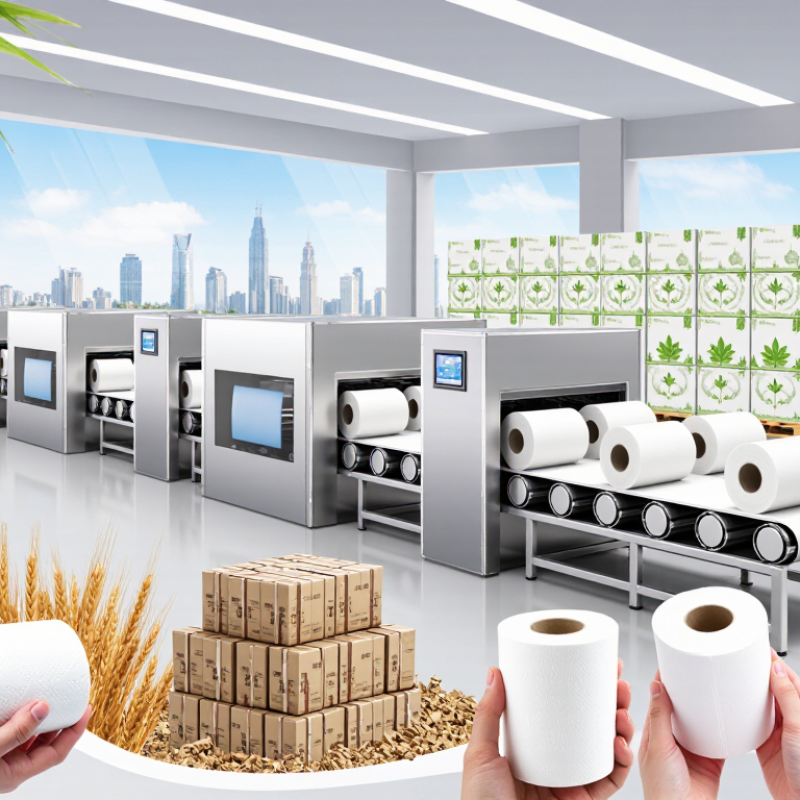
    China Top 10 Eco Friendly Tissue Paper Suppliers?

    China’s Tissue Paper Industry: 11.65 Million Tonnes Produced in 2023

    China’s Tissue Paper Industry: 11.65 Million Tonnes Produced in 2023

    China produced 11.65 million tonnes of household paper in 2023, according to the China Paper Association’s annual industry report. The category includes tissue products such as toilet paper, facial tissue, napkins, and kitchen towels.

    This scale makes supplier selection more than a price comparison. A converting line may process jumbo rolls by the pallet, but production volume alone reveals little about fiber sources, recycled content, or mill energy use.

    For buyers comparing eco-friendly tissue suppliers in China, request evidence behind environmental claims. Ask for product-level fiber composition, traceability documents where applicable, and recent water and energy figures per tonne. Check whether the data cover the paper mill or only the converting plant. The distinction is easy to miss.

    The association’s production figure offers useful industry context, not proof that every tonne has a low environmental impact. Public reporting also has gaps; a certificate should not replace traceable records or a factory assessment.

    Tip: Compare samples for softness, strength, and lint. Then match each result to the product specification and supporting documents.

    Eco-Friendly Tissue Standards: GB/T 20808-2022, FSC and Recycled Fiber

    When comparing China’s tissue paper suppliers, environmental claims need more than a green label. GB/T 20808-2022 sets requirements for tissue paper, including product quality and relevant safety indicators. It helps buyers assess whether paper meets a consistent technical baseline. It does not, by itself, prove that a product uses recycled fiber or comes from responsibly managed forests. That distinction matters.

    FSC certification can support claims about forest-based materials, but buyers should check the certificate’s scope and the product’s chain-of-custody documentation. A supplier’s general certificate may not cover every tissue grade or production site. Ask for current records, not just a logo on packaging. Small details count.

    Recycled fiber content also deserves careful review. Request the stated percentage, the method used to verify it, and details about fiber quality. Recycled tissue can reduce demand for virgin pulp, yet processing, transport, and product performance still affect its footprint. A very soft sheet is not automatically the greener choice. I would compare like with like: sheet count, basis weight, packaging, and documented fiber sources. Some supplier claims remain hard to compare, and that is a real limitation buyers should acknowledge.

    Supplier Comparison: Fiber Sources, Certifications, Capacity and Export Reach

    A useful top-ten comparison should begin with fiber, not a supplier’s green claims. Ask whether the tissue uses recycled pulp, certified forest fiber, bamboo, or a documented blend. Each source affects softness, strength, water use, and supply stability. Check current chain-of-custody records and confirm they cover the specific mill and product. Paperwork matters.

    Capacity deserves a practical check. Compare monthly output with converting lines, sheet counts, roll formats, and seasonal demand. A large stated capacity means little if lead times shift or minimum orders exceed your forecast. Request sample specifications, recent production schedules, and shipment references, with sensitive details concealed. Check cartons for moisture protection and rolls for consistent winding. These details show up after arrival. Could be better.

    Export reach is more than a list of countries. Compare regular destinations, port options, container loading plans, and the supplier’s ability to prepare accurate product documents. Ask how it handles delays and product claims, then verify delivery history through references where possible. A strong shortlist balances traceable fiber, audited systems, dependable capacity, and clear export communication. No supplier fits every market.

    China’s Top 10 Eco-Friendly Tissue Suppliers: Products and Company Profiles

    China’s top ten eco-friendly tissue suppliers are best assessed through products, production controls, and verifiable sourcing.

    A useful company profile should list facial tissue, toilet rolls, napkins, hand towels, and jumbo parent rolls, then explain whether the factory makes pulp, converts parent rolls, or handles both.

    China Paper Association’s 2023 annual report recorded 127.05 million tonnes of paper and paperboard production, against 131.65 million tonnes of consumption.

    That scale shows why supplier-level evidence matters. Sector totals alone do not prove a tissue product is sustainable.

    Compare each supplier’s recycled-fibre share, pulp sourcing, water and energy use, and wastewater controls. Ask for current audit documents and test results tied to specific products, not just a general environmental statement.

    Small details matter: a thin, soft sheet may use less material, but it can also tear sooner and require more sheets.

    That trade-off deserves scrutiny.

    Check packaging, sheet count, ply, and product performance alongside sourcing claims. The FAO’s 2022 forest-products statistics put global paper and paperboard production at about 401 million tonnes; this broader category is not a tissue footprint measure.

    A credible profile should say so, and distinguish documented factory data from estimates.

    How to Verify Suppliers: Sourcing, Water Use, Packaging and Quality Data

    China’s Top 10 Eco Friendly Tissue Paper Suppliers? A shortlist is only a starting point. Verify each supplier’s sourcing claims with dated documents, not a polished product page. Ask for fiber-origin records and evidence supporting recycled or responsibly managed inputs. Check that the paperwork covers the specific product and production site you plan to buy from. Claims can be vague. A supplier’s willingness to explain gaps is useful, too.

    For water use, request figures per tonne of finished tissue, the reporting period, and the measurement boundary. Compare like with like; mill-level totals can hide differences in product mix. Ask whether water is reused and how wastewater is monitored. Packaging deserves the same scrutiny. Request material breakdowns and confirm whether transport wrap, cores, and cartons are included. “Recyclable” alone tells you little about local collection or actual material composition.

    Tips: Request recent quality data for basis weight, strength, absorbency, and roll dimensions. Compare several production lots, not one sample. Keep the test method beside each result. If figures change between documents, ask why before placing an order. Perfect data is uncommon, and a tidy spreadsheet can still miss factory-level variation. That deserves a second look.

    China Top 10 Eco-Friendly Tissue Paper Suppliers? - How to Verify Suppliers: Sourcing, Water Use, Packaging and Quality Data

    Verification scorecard: This table lists ten due-diligence checks, not a ranked list of companies. No supplier-specific figures are asserted; request the data and records below directly from each supplier and verify them against the stated scope and test methods.

    No. Verification dimension Data to request Evidence to check How to compare
    1 Fiber sourcing and traceability Fiber type and percentage by product: virgin pulp, recycled fiber, or other fiber. Ask for the origin and traceability scope for each pulp grade. Purchase records, pulp specifications, mill or supplier declarations, and a valid chain-of-custody certificate where certified material is claimed. Check that product claims match the certificate scope, transaction documents, and the material used for the quoted product.
    2 Certification and environmental claims Certificate standard, certificate holder, covered sites, product scope, certificate status, and the exact environmental claim used on the product. Verify certificates with the relevant certification scheme’s public database or issuing body. For self-declared claims, request substantiation and clear definitions. Treat a certificate as evidence only within its valid scope. ISO 14021 provides principles for self-declared environmental claims; it is not a product certification.
    3 Water withdrawal and consumption Annual water withdrawal and consumption, reported separately where available; production volume; water intensity in m³ per tonne; and the reporting period. Meter records, site water balance, utility bills, production records, and a written description of the reporting boundary and calculation method. Compare suppliers only when product type, site boundary, production denominator, and reporting period are consistent. Do not confuse withdrawal with consumption.
    4 Water footprint and wastewater Water-footprint assessment method, wastewater volume, treatment route, and available monitoring results for relevant discharge parameters. Assessment report, wastewater treatment records, discharge monitoring reports, and applicable permits or compliance records for the production site. Check the assessment boundary and method. ISO 14046 sets principles, requirements, and guidelines for water-footprint assessment; site results still require context.
    5 Energy and greenhouse-gas data Energy use per tonne of tissue, energy sources, and greenhouse-gas emissions with the stated gases, organizational boundary, and reporting period. Utility and fuel records, calculation methodology, emissions factors, and any independent assurance statement. Use the same product and site boundaries and distinguish measured data from estimates. Do not compare figures with different scopes as if they were equivalent.
    6 Packaging materials and recyclability Packaging material types and weights per sales unit, recycled-content percentage where claimed, and packaging components such as films, labels, and cartons. Packaging specifications, supplier declarations, bills of materials, and supporting records for recycled-content claims. Compare packaging weight per equivalent product quantity. Assess recyclability for the destination market, since collection and recycling access vary by location.
    7 Product quality and test methods Basis weight (g/m²), sheet or roll dimensions, ply, tensile strength, absorbency, softness, and lint or dust data where relevant to the product. Current product specification, batch test reports, sampling plan, and named test methods. The ISO 12625 series includes test methods for tissue paper and tissue products. Compare like-for-like products tested using the same methods and conditioning. Confirm that the tested sample matches the product offered.
    8 Chemical and hygiene controls Applicable chemical restrictions, process-chemical controls, hygiene criteria, and any market-specific product requirements. Risk assessments, supplier declarations, relevant laboratory reports, and documented production hygiene controls. Agree on applicable limits and test methods for the intended market and product use; avoid relying on unsupported “chemical-free” claims.
    9 Factory environmental management Production-site details, environmental permits, environmental incidents, corrective actions, and the status and scope of any management-system certification. Site audit records, permit documentation, corrective-action logs, and verification of any ISO 14001 certificate with the certification body. Confirm that the audited or certified site is the actual manufacturing location for the product, not merely a sales office or unrelated facility.
    10 Batch consistency and document control Batch or lot identification, certificate-of-analysis availability, specification revision, complaint rate, and change-notification process. Recent batch records, retained-sample procedure, quality-control logs, complaint and corrective-action records, and a sample purchase order or shipment document. Cross-check product codes, lot numbers, specifications, and environmental claims across samples, quotations, test reports, and shipping documents.