
Request A Quote

Phone: 416-244-6476
Email:

    China Top 10 Petroleum Coke Composition Suppliers

    Choosing among China’s top Petroleum Coke Composition suppliers requires more than comparing prices or advertised carbon content. In practical procurement, buyers examine sulfur, ash, moisture, volatile matter, fixed carbon, vanadium, nickel, and particle size. Each value can influence furnace performance, emissions management, handling, and final product quality. A supplier offering stable composition usually provides clearer laboratory reports, consistent sampling methods, and traceable production information.

    This introduction to China Top 10 Petroleum Coke Composition Suppliers focuses on manufacturers and trading companies serving industrial users. It considers green petroleum coke, calcined petroleum coke, and application-specific grades. Aluminum anode producers may prioritize low sulfur and predictable ash. Foundries and steel plants may require different particle sizes and heating behavior. Small details matter. A dusty sample, for example, can reveal weak screening or careless packaging.

    The selection should not rely on rankings alone. Supplier capability, quality control, export experience, certificates, production capacity, and communication deserve equal attention. Buyers should request recent test reports and compare them with independent inspection results when possible. Petroleum Coke Composition can vary between batches, even when the product name remains unchanged. That limitation matters.

    Some supplier information may be incomplete or updated slowly. This guide therefore presents a practical starting point, not an absolute verdict. Readers should verify specifications, delivery terms, applicable standards, and local regulatory requirements before signing contracts. No supplier is perfect. A careful comparison helps identify the right balance between composition stability, technical support, cost, and long-term reliability.
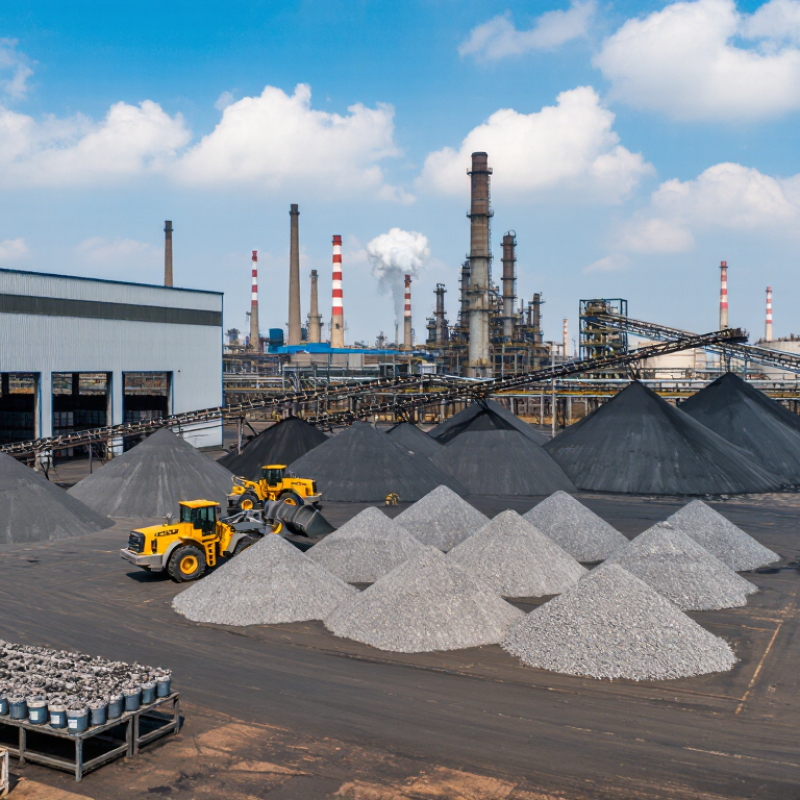
    China Top 10 Petroleum Coke Composition Suppliers

    China’s Top 10 Petroleum Coke Composition Suppliers by Product Capacity

    China’s Top 10 Petroleum Coke Composition Suppliers by Product Capacity

    China’s leading petroleum coke suppliers are best compared by annual product capacity, not trading volume. Public production data from China’s National Bureau of Statistics indicate petroleum coke output exceeded 30 million tonnes in 2023. China Customs data also recorded substantial imports, showing strong demand from aluminum, steel, and carbon-material producers. Capacity remains concentrated near coastal refining and industrial hubs.

    A 2024 market review by Argus Media indicates that Chinese suppliers commonly offer green petroleum coke with sulfur levels below 3%, while premium grades can remain below 1%. The top ten capacity suppliers typically operate units ranging from roughly 300,000 to over 2 million tonnes annually. Their portfolios may include low-sulfur, medium-sulfur, and high-sulfur grades, with ash often controlled below 1%. Calcined petroleum coke capacity is smaller but more specialized.

    Capacity alone can mislead. Some facilities report nameplate output, while actual production changes with refinery maintenance, feedstock quality, and export demand. S&P Global Commodity Insights noted continued pressure on Chinese refining margins during 2024, which affected operating rates. Buyers should verify recent laboratory certificates, fixed-carbon content, moisture, volatile matter, and particle-size consistency. A supplier may look large on paper, yet deliver uneven composition. That detail deserves closer review.

    Petroleum Coke Composition Standards: Sulfur, Ash, Volatile Matter, and Moisture

    When comparing China’s top ten petroleum coke composition suppliers, buyers should examine test data before price. Petroleum coke quality depends on sulfur, ash, volatile matter, and moisture. These values affect furnace stability, carbon yield, emissions control, and handling costs. Green petroleum coke usually contains more volatile matter and moisture. Calcined coke normally shows lower levels.

    Sulfur is reported as a percentage, often on a dry basis. High sulfur can restrict use in sensitive steel, aluminum, or foundry applications. Ash represents inorganic residue after controlled burning. Excessive ash reduces fixed carbon and may increase slag formation. Volatile matter indicates compounds released during heating. It can influence ignition, odor, and calcination performance. Small differences matter.

    Moisture deserves careful attention. A wet shipment weighs more, but it delivers less usable material. Suppliers should provide both as-received and dry-basis results. Ask for recent laboratory reports, sampling procedures, test dates, and the applied ASTM or ISO method. Results from different methods are not always directly comparable. One practical lesson is simple: sample the cargo independently.

    No certificate removes every doubt. Sampling can miss uneven moisture or particle-size variation. Buyers should compare several lots, not one attractive report. A clear specification might include maximum sulfur, ash, volatile matter, and moisture, plus acceptable testing tolerances. The ranking may change after real production trials. That is worth acknowledging. Supplier reliability includes stable composition, traceable records, protected storage, and honest communication when a batch falls outside expectations.

    Supplier Ranking by Calcined Coke Output and Carbon Content Above 98%

    China’s top ten petroleum coke composition suppliers should be ranked by calcined coke output first, then carbon quality. This method reflects real purchasing needs, not only advertised capacity. Public market reviews from Mysteel in 2024 place China among the largest global calcined coke production bases. Reported plant capacities vary widely, from below 100,000 tonnes to above 500,000 tonnes annually. Actual output matters more.

    The ranking should also verify fixed carbon above 98%. Supplier samples should show 98.5–99.5% fixed carbon, low moisture, and stable sulfur levels. The USGS Mineral Commodity Summaries 2024 identifies calcined petroleum coke as a key carbon material for aluminum anodes and metallurgical applications. Customs statistics and independent laboratory certificates can cross-check shipment volume.

    Carbon is not the only concern. Ash, volatile matter, particle size, and calcination consistency affect furnace performance. Small differences become expensive at scale. However, public data remains incomplete. Some suppliers report installed capacity instead of finished output, which can distort the ranking. Buyers should request twelve-month production records and recent third-party test results.

    I would treat any “top ten” list as provisional, especially when carbon claims exceed 99%. A clean certificate helps, but batch history tells more.

    Low-Sulfur Petroleum Coke Grades for Aluminum Anodes and Steelmaking

    China Top 10 Petroleum Coke Composition Suppliers

    Low-sulfur petroleum coke remains important for aluminum anodes, where sulfur, ash, vanadium, nickel, and moisture affect baking performance. The USGS Mineral Commodity Summaries 2024 reported global primary aluminum production at approximately 70 million metric tons in 2023. This scale keeps anode-grade coke specifications under close review.

    For aluminum applications, buyers should examine sulfur consistency, volatile matter, real density, and trace-metal content. A typical low-sulfur grade may contain less than 3% sulfur, but contract limits differ. Calcined petroleum coke requires stable particle sizing and controlled thermal treatment. Small variations can change anode resistivity. That is easy to underestimate.

    Steelmaking adds another demand channel. The World Steel Association recorded about 1.89 billion metric tons of crude steel production in 2023. Low-sulfur coke can support carburizing and furnace operations when fixed carbon is high and impurities remain controlled. However, petroleum coke is not interchangeable across every furnace. Testing matters more than a simple product label.

    A reliable supplier should provide recent certificates of analysis, batch traceability, moisture results, and independent inspection access. Compare at least three shipments, not one attractive sample. China-based sourcing teams often evaluate port handling, covered storage, screening quality, and delivery stability alongside chemistry. The International Energy Agency and USGS both show how energy and materials markets can shift quickly. That creates uncertainty. A stronger purchasing process should include recalculation of sulfur, ash, and metal limits before each contract. Mistakes still happen, especially when laboratory methods differ.

    China Top 10 Petroleum Coke Composition Suppliers - Low-Sulfur Petroleum Coke Grades for Aluminum Anodes and Steelmaking
    Rank Supplier Profile Typical Material Grade Sulfur
    wt.% max.
    Volatile Matter
    wt.%
    Ash
    wt.% max.
    Moisture
    wt.% max.
    Fixed Carbon
    wt.% min.
    Nickel
    ppm max.
    Vanadium
    ppm max.
    Typical Particle Size Primary End Use
    1 Supplier Profile A Low-Sulfur Green Petroleum Coke 0.50 8.0–10.0 0.50 10.0 88.0 200 300 0–5 mm Calcination feedstock for prebaked aluminum anodes
    2 Supplier Profile B Low-Sulfur Green Petroleum Coke 0.70 8.0–11.0 0.60 12.0 87.0 250 350 0–8 mm Anode-grade coke blending and carbon-product manufacturing
    3 Supplier Profile C Low-Sulfur Calcined Petroleum Coke 0.50 1.5–3.0 0.50 0.50 97.0 200 300 0–1 mm; 1–5 mm Aluminum anode production and conductive carbon formulations
    4 Supplier Profile D Low-Sulfur Calcined Petroleum Coke 0.75 1.5–3.5 0.70 0.50 96.5 300 400 1–5 mm; 5–20 mm Prebaked anodes, graphite electrodes and carbon raisers
    5 Supplier Profile E Low-Sulfur Green Petroleum Coke 1.00 8.0–12.0 0.80 12.0 85.5 350 500 0–10 mm Low-sulfur carburizer and blending material for steelmaking
    6 Supplier Profile F Low-Sulfur Calcined Petroleum Coke 1.00 1.5–3.0 1.00 0.50 96.0 400 600 0–3 mm; 3–8 mm Electric arc furnace carburizer and foundry carbon additive
    7 Supplier Profile G Low-Sulfur Green Petroleum Coke 1.20 9.0–12.0 0.80 12.0 85.0 400 600 0–5 mm Steelmaking recarburizer and sintering carbon additive
    8 Supplier Profile H Low-Sulfur Calcined Petroleum Coke 1.20 2.0–3.5 1.00 0.50 95.5 500 700 0–1 mm; 1–5 mm Steelmaking carburizer and electrode-grade carbon blending
    9 Supplier Profile I Low-Sulfur Green Petroleum Coke 1.50 9.0–13.0 1.00 12.0 84.0 500 800 0–10 mm General metallurgical carbon additive and foundry carburizer
    10 Supplier Profile J Low-Sulfur Calcined Petroleum Coke 1.50 2.0–4.0 1.20 0.50 95.0 600 900 0–3 mm; 3–10 mm Foundry carburizer, steelmaking additive and carbon blending
    Note: The figures represent typical commercial specification ranges for low-sulfur petroleum coke grades commonly traded in China. Actual composition may vary by refinery, production lot, calcination conditions and particle-size distribution; the applicable certificate of analysis should be used for purchasing decisions.

    Quality Testing, Traceability, and China’s Petroleum Coke Supply Chain Data

    China Top 10 Petroleum Coke Composition Suppliers

    Evaluating China’s top petroleum coke composition suppliers requires more than comparing listed prices. Buyers should examine sulfur, ash, moisture, volatile matter, fixed carbon, nickel, and vanadium data. These figures influence combustion behavior, handling costs, and downstream process stability. A reliable supplier provides recent laboratory reports for each production lot. Not old averages.

    Quality testing should follow consistent sampling procedures. Technicians may collect several increments from storage piles, loading points, and transport containers. The combined sample better represents the shipment. Independent laboratories can verify moisture and sulfur results through documented methods. Calibration records matter too. Small testing errors can affect purchasing decisions.

    Traceability connects laboratory data with the physical cargo. Strong supply chain records identify the refinery source, production date, storage location, batch number, and transport route. Digital records help buyers compare changes across months. They can also reveal unusual increases in ash or metal content. However, supplier data is not always perfectly aligned. Different laboratories may use different preparation methods. Buyers should request method details and repeat critical tests before approving long-term contracts. China’s petroleum coke supply chain is extensive, but its data quality can still be uneven. That weakness deserves attention.