How to Choose the Best Strong Base Anion Resin for Water Treatment?
Water treatment is a critical process in ensuring clean and safe water for various applications. One of the essential components in this process is the strong base anion resin. These resins play a pivotal role in ion exchange systems, effectively removing contaminants and impurities from water. According to a recent industry report, the demand for strong base anion resins has surged by over 25% in the last five years, highlighting their significance in water purification technologies.
Selecting the right strong base anion resin can be challenging. Factors such as resin type, operational conditions, and specific water contaminants must be carefully considered. There are several choices available, each designed for different applications. However, not all resins perform equally. Some may offer high exchange capacity but lack durability. Others may excel in physical characteristics but fail to meet specific chemical stability requirements. It's essential to evaluate these aspects to avoid potential inefficiencies.
In a complex market filled with varied options, it can be overwhelming. Users may feel uncertain about making the best choice. Missteps in selection can lead to increased operational costs and reduced water quality. Thus, understanding the nuances of strong base anion resin is crucial for achieving optimal results in water treatment processes.
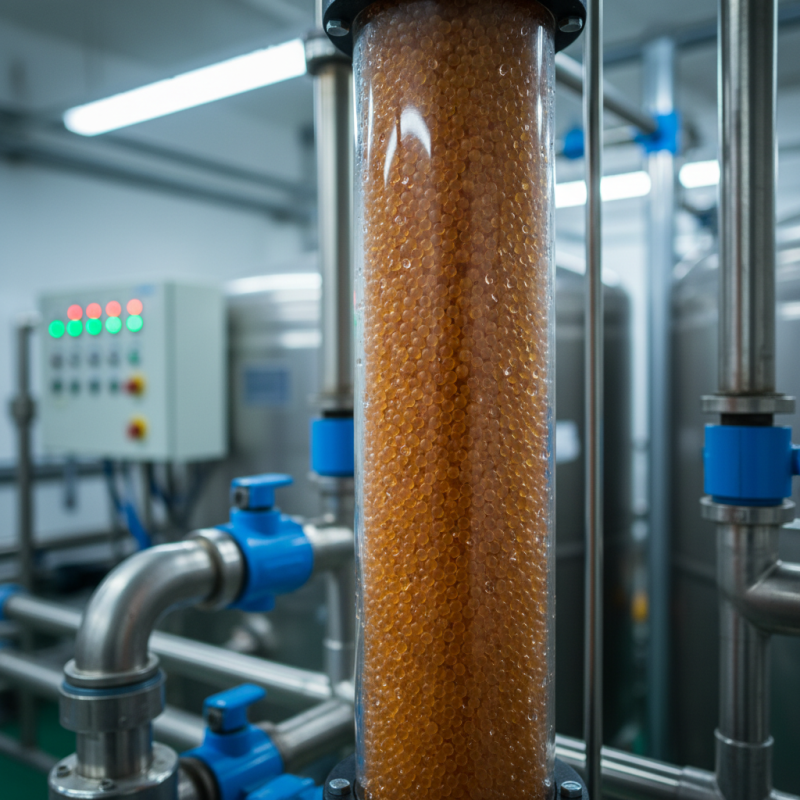
Understanding Strong Base Anion Resins and Their Uses in Water Treatment
Strong base anion resins play a crucial role in water treatment. They are essential for removing contaminants from various water sources. These resins function by exchanging negatively charged ions, making them effective for deionization processes. According to a recent industry report, the global market for ion exchange resins is projected to reach $3.5 billion by 2025. This growth reflects the increasing demand for clean water.
Understanding the different types of strong base anion resins is important. They are classified based on their physical and chemical properties. For example, Type I resins have a higher exchange capacity for weak acids. On the other hand, Type II resins work better at elevated temperatures. It's essential to match the resin type to the specific water treatment needs. Many facilities struggle to optimize resin choice and can end up underperforming.
Selecting the right resin is a complex process. Factors include regeneration frequency, the presence of organic materials, and operational costs. Data shows that improper selection can increase maintenance costs by over 15%. Facilities must evaluate their needs thoroughly. Even with the best data, achieving perfect results can be elusive. Reflecting on past choices may lead to better future decision-making in resin selection.
Key Factors to Consider When Selecting Strong Base Anion Resins
When selecting a strong base anion resin for water treatment, multiple factors come into play. One of the primary considerations is the resin's chemical structure. Different structures may yield varying degrees of efficiency for specific contaminants. Check for functional groups that suit your needs. Some resins work better for certain anions.
Another essential factor is the degree of cross-linking. Higher cross-linking generally provides better stability but can also reduce resin capacity. This trade-off affects performance. You'll want to evaluate the specific application. Consider how the water's temperature and pH will impact the resin's effectiveness.
Capacity and regeneration potential also matter. Resin that cannot be easily regenerated will lead to higher operational costs over time. Spend time on these details. Not every resin is perfect for every situation. Whether due to cost, capacity, or environmental factors, there’s room for re-evaluation. It's vital to conduct thorough tests to ensure your final choice meets the intended purpose.
Comparison of Key Factors in Selecting Strong Base Anion Resins for Water Treatment
This bar chart represents the importance of various factors to consider when selecting strong base anion resins for water treatment. Each factor is rated on a scale from 1 to 10, highlighting their significance in the decision-making process.
Comparing Different Types of Strong Base Anion Resins for Efficiency
Choosing the right strong base anion resin is crucial for effective water treatment. There are several types available, each with unique characteristics and efficiencies. Some resins may excel in removing specific contaminants, while others may perform better under varying conditions. It’s essential to understand these differences for optimum results.
Tips: Evaluate your water source. Test for contaminants. This will guide your resin choice. Consider the operational conditions too. Temperature and pH can significantly impact resin performance.
In practical terms, some resins may easily degrade under harsh conditions. This could lead to a lower efficiency over time. When selecting, think about the longevity and reusability of the resin. Test data and user experiences can be valuable but may not always mirror your specific situation.
Finally, consider cost implications. Cheaper options might not always deliver satisfactory results. Sometimes, investing in a slightly more expensive resin could pay off in the long run. A balance between cost and effectiveness is essential. Do your research, analyze the data, and choose wisely.
Evaluating Resin Performance: Capacity, Selectivity, and Regeneration
When selecting a strong base anion resin for water treatment, performance evaluation is essential. Capacity is a critical factor to consider. It defines how much anions a resin can absorb. High-capacity resins offer longer service life. However, they might come with a higher initial cost. Balancing cost and performance requires careful thought.
Selectivity is another important aspect. Different resins interact differently with various anions. Some resins excel in removing specific contaminants. Others may struggle and produce less effective results. Testing the water source beforehand helps in choosing the right type. This task can be complex, especially when multiple anions are present.
Regeneration of the resin also needs attention. Over time, resins lose efficiency. The regeneration process varies among types. Some resins regenerate easily, while others require more time and resources. Regular monitoring and adjustments are necessary for optimal operation. This ongoing commitment can pose challenges but is crucial for effective water treatment.
How to Choose the Best Strong Base Anion Resin for Water Treatment?
| Resin Type | Capacity (meq/ml) | Selectivity | Regeneration Efficiency | Commercial Availability |
| Type I Strong Base Anion | 1.2 | High for anions like bicarbonate | Excellent | Widely available |
| Type II Strong Base Anion | 1.5 | Moderate for larger anions | Good | Available |
| Ion Exchange Membrane | 0.9 | Specific for certain ions | Variable | Less common |
| Hybrid Anion Resin | 1.1 | Broad range | Good | Readily available |
Best Practices for Implementing Strong Base Anion Resins in Treatment Systems
Choosing the right strong base anion resin can greatly impact water treatment systems. Several best practices can guide this choice. Understanding the specific application is crucial. For example, in removing organics or certain anions, the resin's exchange capacity matters.
When evaluating resins, consider water chemistry. Resins perform variably based on pH, temperature, and the presence of competing ions. According to industry studies, suitable resins can achieve a removal efficiency of over 95% for targeted contaminants. Contaminant profiles can shift, so continuous monitoring is essential.
**Tips:** Always conduct pilot testing before full implementation. This ensures the selected resin meets specific needs. Regular maintenance checks can prevent issues arising from saturation or fouling. Keep in mind that not all resins are created equal. Some may degrade faster, requiring more frequent replacements.
A common mistake is neglecting the compatibility of the resin with other treatment processes. A resin might excel in ion exchange but perform poorly in combination with activated carbon. Reviewing recent case studies could aid in decision-making. Even industry leaders face challenges when integrating new technologies. Each deployment can teach valuable lessons for future projects.
