
Request A Quote

Phone: 416-244-6476
Email:

    How to Choose the Right ATM Replacement Parts Worldwide?

    Choosing the right ATM Replacement Parts is not a simple purchasing task. It affects uptime, transaction security, maintenance costs, and customer confidence across different markets. A compatible card reader may look identical to another model, yet its firmware, connector, or mounting frame can differ significantly. Small mismatches create large problems.

    Mike Lee, a recognized ATM industry voice and former ATMIA chief executive, has stated, “Reliability is the foundation of ATM access.” That principle should guide every replacement decision. Experienced operators check the ATM model, part number, revision, voltage range, and manufacturer documentation before ordering. They also confirm whether the supplier provides traceable inventory, technical support, and clear warranty terms. Guesswork is expensive.

    Global sourcing adds another layer of difficulty. Climate, transport conditions, service networks, and regional certification requirements can influence part performance. A receipt printer used in a humid coastal branch may need different protection than one installed in a dry indoor location. Cash dispensers, keypads, screens, sensors, and power modules require equally careful evaluation. Test the part before full deployment.

    Some choices still go wrong. Even experienced teams can overlook discontinued revisions or shipping delays. That is why a practical replacement plan includes approved alternatives, inspection records, and technician feedback. Reliable suppliers should explain limitations, not hide them. The best decision balances authenticity, compatibility, availability, lifecycle value, and responsible compliance. This guide explores those factors, helping operators choose ATM Replacement Parts with greater confidence worldwide.
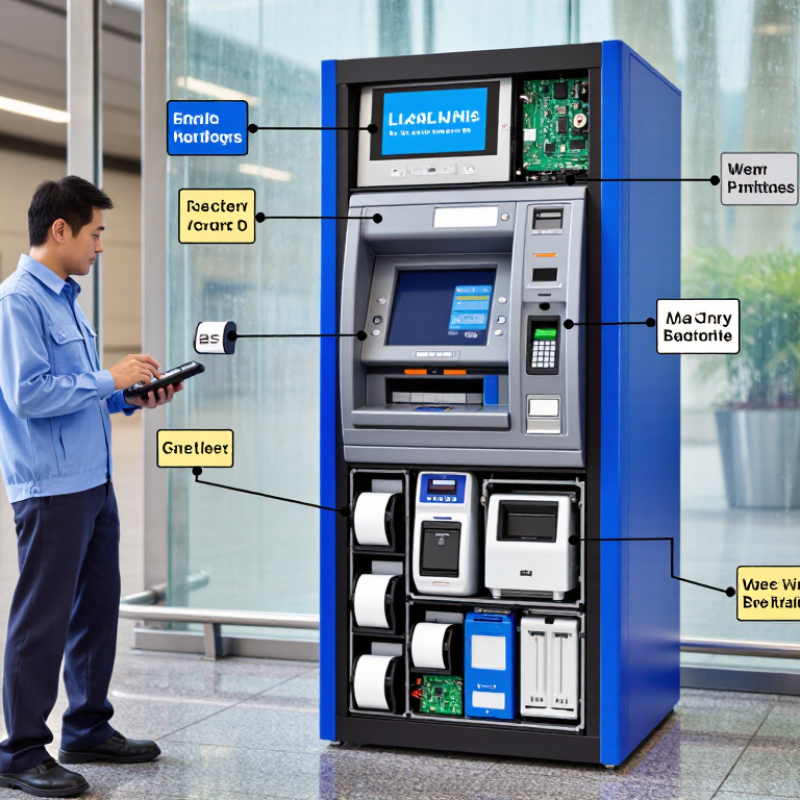
    How to Choose the Right ATM Replacement Parts Worldwide?

    Map the ATM Model: ATMIA Counts 3 Million+ Machines Worldwide

    How to Choose the Right ATM Replacement Parts Worldwide?

    Map the ATM Model: ATMIA Counts 3 Million+ Machines Worldwide

    ATMIA’s global industry figures place the installed ATM base above three million machines. That number makes model identification essential before ordering replacement parts. A dispenser, card reader, or power module may look identical across generations. It may still use different firmware, connectors, or voltage requirements.

    RBR Data Services’ ATM market research highlights significant regional differences in installed equipment and replacement demand. Therefore, record the exact manufacturer model, hardware revision, country configuration, and software version. Photograph the part label. Measure the connector. Check the cassette size and mounting points. Small details matter.

    Field technicians should also compare supplier specifications with the original service manual. Confirm operating temperature, power input, communication protocol, and required safety certifications. A part can fit physically yet fail electrically.

    That shortcut looks efficient. It is not.

    ATMIA’s worldwide count also reveals a practical challenge: one global parts list rarely works. Climate, transaction volume, maintenance history, and local infrastructure affect component life. Dust near a coastal branch may damage sensors differently from heat inside an inland lobby. RBR’s regional analysis supports using local service data alongside international catalogs. The process is slower, perhaps. It is usually safer.

    Verify Standards: EMVCo, PCI DSS 4.0, UL 291, and Local Rules

    When selecting ATM replacement parts worldwide, verify standards before comparing price or delivery. EMVCo requirements matter for card readers, contactless interfaces, and transaction reliability. Ask suppliers for current testing evidence, not a recycled certificate. The document should match the exact part number and revision. Small differences matter. A reader may fit physically but fail during field testing.

    PCI DSS 4.0 affects how replacement components protect payment data. Check secure PIN handling, access controls, logging, and software update procedures. Request installation records and firmware provenance. Avoid vague claims such as “PCI ready.” UL 291 certification can support safe ATM construction and operation, but confirm its exact scope. Certification may not cover every configuration or modification. Local electrical, accessibility, radio, import, and recycling rules also require review. A part approved in one market may need additional evaluation elsewhere.

    I once treated local approval as simple paperwork. That assumption delayed deployment. Build a verification file with photos, serial numbers, declarations, test reports, and supplier quality records. Have a qualified technician inspect grounding, connectors, tamper seals, and enclosure fit after installation. Keep a sample for future comparison. Heat, dust, voltage variation, and poor handling can expose weaknesses that certificates miss. Recheck the documents when specifications change.

    How to Choose the Right ATM Replacement Parts Worldwide? — Verify Standards: EMVCo, PCI DSS 4.0, UL 291, and Local Rules

    Part or decision area Standard or rule to verify What to check before purchase Practical acceptance evidence
    Card reader and payment interface Applicable EMVCo specifications and approval requirements Confirm the reader’s contact and/or contactless capabilities match the ATM configuration, supported card schemes, and deployment market. EMV approval is relevant to the applicable payment device or component, not automatically to every replacement part. Current approval details for the exact device or module, interface and firmware; successful integration and transaction testing in the intended configuration.
    PIN pad and secure payment entry PCI PTS POI requirements, where applicable; PCI DSS 4.0 controls for the payment environment Check whether the exact PIN-entry device model and configuration meet the acquirer’s or payment program’s requirements. PCI DSS applies to the security of the cardholder-data environment; it is not a general product certification for ATM spare parts. Device approval or listing information where required, secure key-management and injection procedures, and documented assessment of the ATM’s impact on the organization’s PCI DSS scope.
    Cash dispenser, safe, and physical security parts UL 291, if required by the buyer, insurer, acquirer, or local authority; applicable physical-security requirements Verify the required safe or equipment classification and whether the replacement preserves the tested assembly’s security characteristics. A component alone does not establish that the complete ATM or safe complies with UL 291. Documentation for the complete rated assembly, installation instructions, and written confirmation that the change does not invalidate a required rating or insurance condition.
    Power supply, cables, and electrical assemblies Electrical safety, electromagnetic compatibility (EMC), and product-marking rules applicable in the destination country Match input voltage, frequency, output ratings, grounding, connector polarity, temperature range, and required approvals. Requirements and accepted conformity routes differ by market. Rated specifications, applicable test or conformity documents, correct local markings, and inspection of the installed assembly.
    Modems, wireless modules, and antennas National radio-equipment and telecommunications regulations Check permitted frequency bands, transmit power, antenna configuration, carrier compatibility, and any equipment registration or import conditions. Approval in one country may not be accepted in another. Destination-market approval or registration evidence where required, plus confirmation that the installed configuration matches the approved configuration.
    Displays, keypads, and accessibility-related parts Local accessibility, consumer protection, language, and operating requirements Confirm visibility, usable controls, required audio or tactile features, supported languages, and any locally mandated screen or transaction notices. Functional checks against the deployment specification and documented accessibility review for the relevant location.
    Firmware-dependent or security-sensitive replacements PCI DSS 4.0 security obligations and the organization’s change-control and vulnerability-management processes Use supported firmware from an authenticated source, verify compatibility, and assess effects on encryption, logging, patching, remote access, and security controls. A replacement part does not by itself make a system PCI DSS compliant. Change record, integrity and version checks, security testing, rollback plan, and updated asset or configuration records.
    Cross-border sourcing and installation Import, customs, environmental, recycling, and product-compliance rules in the destination market Check customs classification, documentation, restricted substances, packaging obligations, and end-of-life requirements. Confirm the part is approved for the exact ATM revision and local operating conditions. Technical datasheet, traceable part and revision details, required declarations, shipping documents, and a locally reviewed installation checklist.

    Requirements vary by country, payment program, and installation. Confirm the currently applicable edition and acceptance criteria with the relevant authority, acquirer, assessor, insurer, or qualified compliance professional before deployment.

    Rank Parts by MTBF, Failure Rates, Compatibility, and Lead Time

    Choosing ATM replacement parts worldwide requires more than matching a product photograph. Rank each candidate by MTBF, field failure rate, compatibility, and lead time. A high MTBF number can still mislead. MTBF is often calculated under controlled conditions, not dusty branches or unstable power. IEC 61709 recommends using defined operating conditions when comparing reliability data. Ask suppliers for test conditions, sample size, and confidence limits.

    Field failure rates should be normalized by operating hours or transaction volume. A part failing twice after 10,000 transactions differs from one failing twice after 2 million transactions. Uptime Institute’s 2024 Annual Outage Analysis reported that 54% of serious outages created costs above $100,000. This supports prioritizing proven components, not merely cheaper inventory. Still, outage data is not ATM-specific. That limitation matters.

    Compatibility should cover the exact terminal model, firmware, voltage, connector layout, mounting points, and diagnostic behavior. Regional variations can make “compatible” too vague. RBR Data’s global ATM market research highlights differing installed bases and service environments, so one universal ranking may be unreliable. Lead time deserves its own score. Record quoted days, actual delivery history, customs exposure, and emergency stock availability. A component with excellent MTBF but a twelve-week lead time may create greater operational risk than a slightly less durable part available within seventy-two hours. Measure twice. Then review the assumptions.

    How to Choose the Right ATM Replacement Parts Worldwide?

    Rank parts by MTBF, failure rates, compatibility, and lead time

    The chart compares planning scores from 0–100; higher is better. MTBF, failure-rate, and lead-time scores use the illustrative assumptions shown in the tooltips. Failure rates are derived from assumed MTBF under a constant-failure-rate model. Compatibility scores are screening estimates and should be checked against the exact ATM model, firmware, and interfaces. These are illustrative planning figures, not measured global averages or guarantees; confirm specifications and delivery dates with suppliers.

    Check OEM Traceability, Warranty Terms, HS Codes, and Customs Rules

    How to Choose the Right ATM Replacement Parts Worldwide?

    Reliable sourcing starts with OEM traceability. Ask for the original part number, revision level, production lot, and equipment compatibility. A clear label should match the invoice and packing list. Request inspection records when the part affects card handling, cash movement, or electrical safety. Photos help, but they are not proof. Documents matter more.

    Warranty terms need careful reading. Check the coverage period, testing requirements, return address, and repair responsibilities. Some warranties exclude installation errors, moisture, or unauthorized modification. Ask who pays freight for a valid claim. The cheapest part can become expensive after international return shipping. Keep test results and delivery photos. They support a dispute.

    HS codes and customs rules can change by destination. Confirm the correct classification with a qualified customs broker before shipment. The code should reflect the part’s actual function, not simply its appearance. Prepare commercial invoices, country-of-origin details, serial records, and accurate values. Duties, taxes, import permits, and restrictions may differ for new, refurbished, or used parts. I once treated customs paperwork as routine, and the shipment still faced a preventable delay. That mistake showed me a practical weakness: supplier advice is useful, but local verification is safer. Customs offices may request extra evidence. Be ready.

    Bench-Test Every Part and Track Field Returns Before Full Deployment

    ATM replacement parts can look identical yet behave differently under load. Before worldwide deployment, test every unit on a controlled bench that matches the machine’s power, connectors, and operating sequence. Check dimensions, cable seating, sensor response, and repeated start-up cycles. Record the test date, part revision, batch number, and measured results. Keep failed units. They can reveal patterns.

    Test motors, card readers, keypads, and receipt mechanisms through normal operating cycles. Include realistic variations, such as brief power interruptions or repeated button presses. Use clear pass-and-fail limits, and save the readings rather than relying on visual checks. A neat fit is not proof of reliable operation. No bench fully recreates a dusty lobby or a fluctuating power supply. Admit that gap.

    Before a broad rollout, install a small, monitored pilot batch. Track each field return by part batch, machine type, location, installation date, and reported symptom. Note operating conditions where available, including heat, dust, and usage frequency. A return count alone says little; compare failure patterns across batches and environments. If one revision repeatedly causes jams, pause that batch and inspect it before expanding deployment. Some early test plans will miss things. Revise them when field evidence shows where.