
Request A Quote

Phone: 416-244-6476
Email:

    How to Choose the Right Metal Front Door?

    Choosing the right Metal Front Door is not only a style decision. It affects security, energy use, weather resistance, and daily comfort. A beautiful door can still disappoint when its frame leaks air or its hinges sag.

    Tom Silva, a longtime builder and This Old House contractor, puts it plainly: “A door is only as good as its installation.” That advice matters. Even a thick steel slab may perform poorly when the threshold is uneven or the weatherstripping is compressed incorrectly.

    Begin with your home’s actual conditions. A coastal entrance needs corrosion-resistant coatings and stainless-steel hardware. A cold climate demands an insulated core, tight seals, and a thermally efficient frame. Measure the opening carefully, including wall thickness, swing direction, and available clearance. Small errors become expensive problems.

    Then examine the door’s construction. Look for welded corners, reinforced lock areas, dependable hinges, and tested finishes. Glass panels should use suitable safety glazing. Decorative details are valuable, but they should not hide weak engineering.

    Security matters, but it should not create a fortress-like entrance. Good design can feel welcoming.

    I have seen homeowners choose oversized doors without checking structural support. It looks impressive at first. Later, movement and alignment problems appear. That is the part many product pages miss.

    A reliable Metal Front Door balances appearance, performance, installation quality, and long-term maintenance. Your climate, budget, and home structure should guide the final choice—not showroom appeal alone.
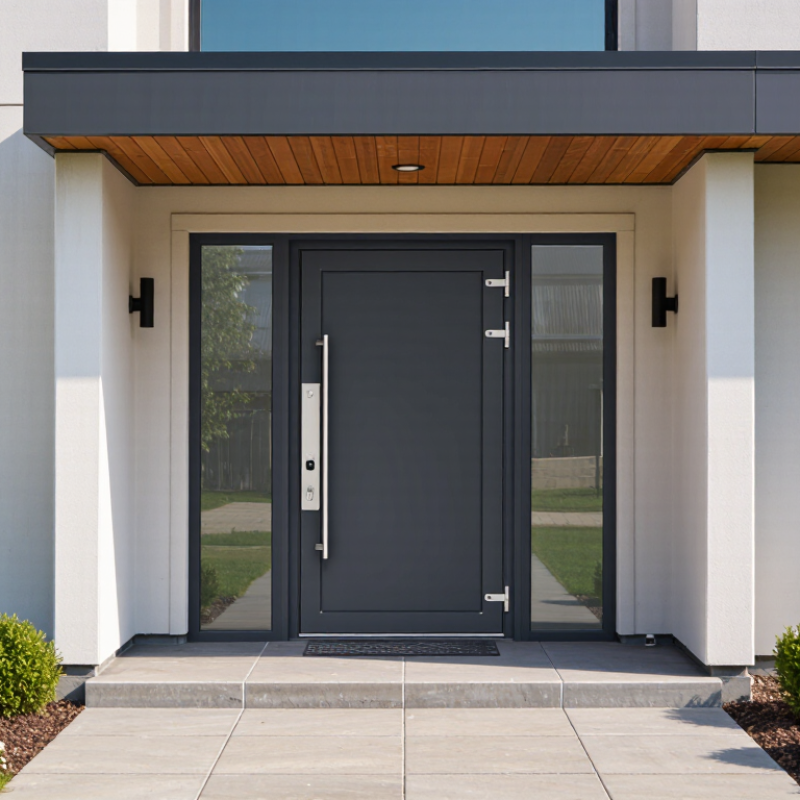
    How to Choose the Right Metal Front Door?

    Define Your Metal Front Door Needs and Priorities

    Before choosing a metal front door, define what the entrance must accomplish. Security, weather control, appearance, maintenance, and budget rarely carry equal weight. Write your top three priorities. Be specific. “Secure” might mean a reinforced frame, a multi-point lock, or better visibility. If winter drafts are the problem, inspect the threshold and weatherstripping first. A heavier slab will not correct a poorly sealed opening. The U.S. Department of Energy’s Energy Saver guidance emphasizes insulation and reduced air leakage when evaluating doors. Ask for documented U-factor and air-leakage performance. NFRC ratings can make competing products easier to compare.

    Your climate should shape the specification. In coastal areas, corrosion-resistant coatings and stainless hardware may matter more than maximum thickness. In cold regions, insulated cores, thermal breaks, and a tight sill deserve attention. For sunny exposures, lighter finishes may reduce surface heating, although color is not an energy rating. Measure the rough opening carefully. Small errors can create expensive trim work and uneven seals. The 2024 Cost vs Value report recorded an average 188.1% cost recoupment for steel entry-door replacement. That figure is an average, not a promise.

    Request installation details before paying a deposit. Confirm frame material, hinge reinforcement, glass performance, finish warranty, and drainage design. Open and close the sample door several times. Listen for rubbing. A common mistake is prioritizing a dramatic finish while overlooking the sill. I would also question oversized glass if privacy and security rank highly. Priorities change when real weather arrives.

    How to Choose the Right Metal Front Door?

    Define Your Metal Front Door Needs and Priorities

    These planning weights reflect the practical factors most homeowners should evaluate when choosing a metal front door. Prioritize security and weather resistance first, then compare energy performance, maintenance requirements, appearance, and budget according to your home’s location and daily needs.

    Compare Metal Types, Strength, and Weather Resistance

    How to Choose the Right Metal Front Door?

    Steel, aluminum, and iron offer different balances of strength and weather resistance. Steel provides excellent security and resists dents better than most lighter metals. However, exposed scratches can develop rust, especially near coastal areas. A galvanized core and durable powder coating can slow corrosion. Check the coating around the lower edge. Water often collects there.

    Aluminum is lighter and naturally resistant to rust, making it useful in humid or salty climates. It may dent more easily, though reinforced panels improve impact resistance. Look for thermal breaks inside the frame. They reduce cold transfer and help prevent indoor condensation. Aluminum can still feel less substantial. That is not always a weakness.

    Iron, including wrought iron designs, offers impressive rigidity and a distinctive appearance. Its open patterns may improve ventilation but provide less privacy and insulation. Painted iron requires regular inspection because small chips can expose bare metal. A well-sealed threshold matters as much as the door slab. Wind-driven rain can enter through small gaps.

    A thicker door is not automatically better. Hinges, locks, frame anchoring, and weather seals also control real-world performance. In practice, installation quality often decides whether a strong door remains secure and dry. I used to focus mainly on metal thickness. That was too narrow. Climate, maintenance habits, and the home’s insulation should shape the final choice. Ask for corrosion protection details, tested air leakage, and warranty conditions before ordering.

    How to Choose the Right Metal Front Door? Compare Metal Types, Strength, and Weather Resistance

    General comparison of common metal front-door materials. Actual performance depends on door construction, finish quality, installation, climate, and maintenance.
    Metal Type Strength & Security Weather Resistance Corrosion Resistance Thermal Performance Maintenance Needs Typical Advantages Potential Limitations Best Suited For
    Galvanized Steel ★★★★★
    Very high resistance to forced entry when paired with a reinforced frame, quality locks, and secure hinges.
    ★★★★☆
    Performs well in rain, wind, and temperature changes when the coating and edges remain intact.
    ★★★★☆
    Zinc coating helps protect the steel, but scratches, cut edges, and damaged finishes can eventually rust.
    ★★★★☆
    Insulated steel doors can provide good energy efficiency; uninsulated steel transfers heat and cold readily.
    Inspect the finish periodically, clean with mild soap, and repair exposed areas promptly to prevent rust. Excellent strength, broad availability, good value, and compatibility with insulated cores. Can dent; damaged or poorly protected surfaces may corrode. Thermal movement can cause minor operational changes. Security-focused homes and regions with varied temperatures, provided the finish is maintained.
    Stainless Steel ★★★★★
    High structural strength and strong resistance to impact and wear, depending on grade and construction.
    ★★★★★
    Handles moisture and demanding exposure well when the correct stainless-steel grade is selected.
    ★★★★★
    Chromium in the alloy forms a protective passive layer; coastal salt and contaminants still require cleaning.
    ★★★☆☆
    Metal itself conducts heat; insulation and thermal breaks are important for efficient door assemblies.
    Regular cleaning removes salt, dirt, and deposits. Avoid carbon-steel tools or cleaners that can cause surface contamination. Premium durability, clean appearance, and strong resistance to rust and staining. Usually more expensive and heavier than many alternatives; fingerprints and surface marks may be visible. Coastal, humid, commercial, or high-traffic locations where long-term corrosion resistance matters.
    Aluminum ★★★☆☆
    Moderate strength; reinforced profiles and multi-point hardware can improve security.
    ★★★★★
    Does not rust and performs well in wet climates when the finish and hardware are properly specified.
    ★★★★☆
    Forms a protective oxide layer, although coastal salt and contact with dissimilar metals can cause localized corrosion.
    ★★★☆☆
    High thermal conductivity makes thermal breaks and insulated panels important for comfort and efficiency.
    Low maintenance; wash periodically and check coatings, seals, drainage paths, and hardware. Lightweight, corrosion-resistant, design-flexible, and easy to operate on large openings. More vulnerable to dents and deformation than steel; standard aluminum profiles may transmit heat and sound. Wet or coastal climates, contemporary designs, and entrances requiring lighter door operation.
    Wrought Iron ★★★★★
    Very strong and rigid when properly fabricated, with substantial visual and physical presence.
    ★★★☆☆
    Can withstand harsh weather, but exposed surfaces and joints need a continuous protective coating.
    ★★☆☆☆
    Iron-based surfaces can rust if paint, powder coating, or other protection is breached.
    ★★☆☆☆
    Often has open or thin sections; insulated panels, storm doors, or thermal breaks may be needed.
    More demanding; remove rust early, maintain the coating, lubricate hardware, and keep drainage areas clear. Distinctive appearance, high rigidity, custom detailing, and excellent resistance to heavy impact. Heavy, costly to fabricate, and susceptible to rust without disciplined maintenance; may offer limited insulation. Traditional, architectural, or security-oriented entrances where appearance and rigidity are priorities.
    Weathering Steel ★★★★☆
    Strong structural material, although door performance depends heavily on frame, hinges, locks, and fabrication.
    ★★★☆☆
    Develops a protective patina in suitable conditions, but persistent moisture can prevent stable protection.
    ★★★☆☆
    Patina can reduce further corrosion in alternating wet-and-dry conditions; it is less suitable for constantly wet or salty exposure.
    ★★☆☆☆
    Metal conducts heat; insulation and thermal detailing are required for better indoor comfort.
    Monitor runoff, seams, and concealed areas; remove standing water and confirm that surrounding surfaces can tolerate rust-colored runoff. Unique natural finish, strong construction, and a low-paint aesthetic when the environment is suitable. May stain adjacent masonry or paving; performance is less predictable in humid, marine, or poorly ventilated locations. Dry or seasonally wet climates with a design that intentionally uses a natural oxidized appearance.
    Selection tip: For most homes, compare the complete door system—not only the metal. Check the core insulation, frame reinforcement, weatherstripping, threshold drainage, hinge design, lock quality, finish warranty, and local exposure to salt, rain, sun, and temperature extremes.

    Select the Right Door Style, Size, and Opening Configuration

    How to Choose the Right Metal Front Door?

    Select the Right Door Style, Size, and Opening Configuration

    A metal front door should match your home's architecture and daily routine. A flush panel creates a clean, modern appearance, while glass panels add daylight and visual connection. Decorative grilles can strengthen a traditional design, but they may require more cleaning. Consider how the door looks from the street and from inside the entry hall.

    Measure the opening carefully before choosing a size. Record the rough opening, finished floor height, wall thickness, and swing clearance. Do not measure only the existing slab. The frame may hide irregular construction. I once saw a replacement door ordered from slab dimensions alone. It arrived correctly sized, yet the frame needed costly adjustments. Small errors matter. Measure twice.

    Choose the opening configuration around movement patterns. An inswing door usually protects the exterior hinges and suits many sheltered entrances. An outswing door can preserve interior floor space, but check steps, walkways, and local requirements. Single doors work well in compact entries. A single door with a sidelight can improve light without requiring a full double-door opening. Double doors create a generous entrance, though both leaves need accurate alignment and stronger hardware. Before installation, confirm the threshold height, handle position, and nearby furniture clearance. A beautiful door can still feel inconvenient when its swing blocks a bench or catches a narrow passage.

    Evaluate Insulation, Security Features, Hardware, and Maintenance

    How to Choose the Right Metal Front Door?

    A metal front door should begin with insulation, not appearance. Steel and aluminum can feel cold without a thermal break or insulated core. Ask for tested U-values and air-leakage results before comparing finishes. A tight weather seal matters around the frame, sill, and threshold. In winter, I check for drafts with a thin tissue near the edges. It is simple, but revealing.

    I once chose a beautiful door with weak insulation. The hallway stayed noticeably colder.

    Tips: Bring a tape measure. Check the rough opening, threshold height, and swing direction. Press the weatherstripping gently. It should compress evenly, without gaps. Independent test documents are more useful than vague sales claims.

    Security depends on the complete door system.

    Look for a reinforced frame, a strong strike plate, protected hinges, and a quality multi-point locking mechanism. If the door includes glass, laminated construction can improve resistance to impact. Hardware also affects daily comfort. A lever should move smoothly, and the lock should engage without forcing it. Small friction may become a larger problem later.

    Maintenance is usually manageable.

    Clean metal surfaces with mild soap and water, then dry them carefully. Inspect seals, hinges, and drainage holes twice a year. Touch up scratches early, especially near the bottom edge. I sometimes forget this inspection myself, which proves that low maintenance still requires attention. A qualified installer can also check alignment and prevent premature wear.

    Set a Budget and Verify Installation Requirements

    A metal front door can look substantial, but its price includes more than the slab. Set a complete budget before choosing a finish, glass panel, lockset, threshold, and labor. The 2024 Cost vs. Value Report estimated a steel entry-door replacement at about $2,355, with an average resale value near $4,430. Treat that figure carefully. Regional labor and framing conditions can change the result sharply. A low quote may exclude disposal, trim repairs, or weather sealing.

    Verify installation requirements before ordering. Measure the rough opening, wall thickness, swing direction, and threshold height. Ask whether the existing frame is square and structurally sound. The U.S. Department of Energy advises checking door U-factor and air-leakage information, not just the material. A metal door can still perform poorly when the frame leaks. The National Fenestration Rating Council explains that certified ratings help compare energy performance across products. This matters near a cold floor or a brightly heated entryway.

    Tips: Keep 10–15% of the budget for surprises. Request a written installation scope. Confirm flashing, shims, insulation, and perimeter sealant. Ask who corrects alignment problems. I once underestimated trim damage around an old opening; the door fit, but the final seal was disappointing. Measure twice. A professional installer should also confirm local egress, safety-glazing, and weather-resistance requirements before work begins.