
Top 10 Electric Motor Projects for Global Buyers
A strong Electric Motor Project begins with the load, not the catalogue. A pump moving water through a long pipe has different demands from a conveyor starting under a full pallet load. For global buyers, the right choice depends on torque, speed, duty cycle, efficiency, controls, and the conditions at the installation site. A motor that looks suitable on paper may struggle with frequent starts, heat, dust, or an undersized power supply.
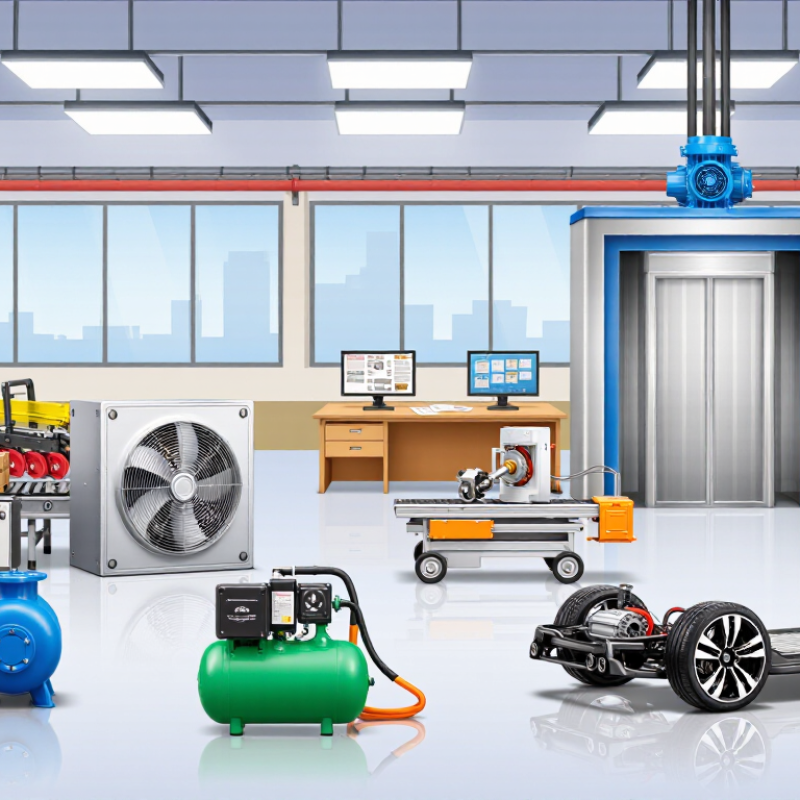
This guide explores ten project types, including pump systems, conveyors, HVAC fans, compressors, agricultural machinery, machine tools, elevators, and electric vehicle traction. It highlights practical questions buyers can ask: What does the load require at startup? How often will the motor run? Can local technicians service the drive? What information is missing from the supplier’s specification? Small details matter. A nameplate, a wiring diagram, and a clear duty profile can prevent costly mismatches.
Austin Hughes, author of Electric Motors and Drives, is a relevant engineering reference for understanding motor selection and control. A practical editorial takeaway inspired by his work is: “Match the motor and drive to the real load, operating cycle, and site conditions.” This is a guiding principle, not a verified direct quotation. The ten projects offer a useful starting point, not a universal ranking. Some comparisons will still depend on incomplete data. Buyers should verify performance claims against project requirements and request technical documentation before choosing a system.
How Electric Motor Projects Are Defined and Classified
Top 10 Electric Motor Projects for Global Buyers
How Electric Motor Projects Are Defined and Classified
Electric motor projects are not defined by motor size alone. Buyers can classify them by required work, operating conditions, and expected outcomes. A replacement project may involve matching shaft dimensions, voltage, speed, mounting, and control signals. An upgrade may add variable-speed control, improved cooling, or condition monitoring while retaining existing equipment. A new installation usually requires broader checks, including foundation loads, cable routes, ventilation, and integration with driven machinery.
Application is another useful category. Pumps, fans, conveyors, compressors, and machine tools create different load patterns. A motor running continuously beside a dusty process line needs different protection and service planning from one used intermittently indoors. Buyers should record rated power, torque, starting method, duty cycle, ambient temperature, and available supply. These details help make quotations comparable and expose missing assumptions.
Project scope can also be classified by lifecycle stage: specification, procurement, installation, commissioning, or maintenance. Some assignments cover motor supply alone; others include controls, alignment, testing, and operator handover. Ask which measurements and acceptance records are included. Small omissions matter. A misread duty cycle or overlooked baseplate can delay startup. Categories help organize decisions, but they are not rigid. Real sites blur boundaries, and project descriptions may need revision after a physical survey. That is not failure; it is part of reliable engineering.
Core Motor Technologies Used Across Industrial Applications
Electric motor projects often combine several technologies, not just a motor and a load. Induction motors remain common in pumps, fans, and conveyors because they are rugged and straightforward to maintain. Synchronous motors can offer precise speed control, while permanent-magnet designs provide high torque in compact packages. Reluctance motors avoid rotor magnets, but their controls and operating noise need careful review.
Power electronics shape how these motors perform. Variable-frequency drives adjust motor speed to match changing process demand, reducing throttling losses in suitable applications. The International Energy Agency’s 2011 report, Energy Efficiency Policy Opportunities for Electric Motor-Driven Systems, estimates that these systems use about 46% of global electricity. That figure makes motor selection an energy decision, not merely a purchasing choice. Heat matters.
For global buyers, compare duty cycle, starting torque, enclosure, supply frequency, and local service capability. A dusty cement conveyor and a clean-water pump may need very different protection and cooling. Efficiency labels help, but they do not predict every real-world saving; part-load behavior and drive settings matter too. Small details matter. A commissioning record with measured current, vibration, and temperature can expose problems early. The uncomfortable part: specifications are sometimes incomplete, and a perfect spreadsheet cannot replace checking the actual load on site.
Top 10 Electric Motor Projects for Global Buyers - Core Motor Technologies Used Across Industrial Applications
The chart shows IEC IE3 minimum efficiency benchmarks for 4-pole motors at 50 Hz across ten commonly used rated power sizes. These standardized figures are a useful reference for industrial motor project planning; actual efficiency depends on the motor design and operating conditions.
Ten Electric Motor Projects Shaping Global Markets
Electric motor projects are shifting from simple equipment purchases toward measurable system improvements. Demand is growing for efficient industrial drives, electric vehicle traction motors, and compact motors for warehouse robots. Pump and fan upgrades matter too, especially in factories with long operating hours. Wind turbine pitch systems, marine propulsion, agricultural machinery, mining equipment, and building ventilation round out the field. These projects share a practical goal: reliable motion with less wasted energy. Demand is shifting. Yet a new motor alone cannot fix poor controls, undersized cables, or an unsuitable load.
Buyers should compare complete operating conditions, not just rated power. A pump running against a partly closed valve may need a different solution than one facing changing water demand. Check duty cycles, ambient heat, vibration, service access, and available electrical supply. Ask suppliers for test data and clear efficiency assumptions. A weak point in many plans is maintenance: teams sometimes budget for installation but overlook spare parts and staff training. That deserves a second look.
Tips: Record load and operating hours before choosing a motor. Confirm that protection, controls, and mounting suit the site. Keep commissioning readings; small differences can reveal problems early.
How Buyers Compare Performance, Suppliers, and Standards
Global buyers comparing electric motor projects should begin with the duty cycle, not a headline efficiency figure. The International Energy Agency’s 2011 report, Energy-Efficiency Policy Opportunities for Electric Motor-Driven Systems, estimated that motor-driven systems use about 45% of global electricity. That scale makes small efficiency gaps worth checking. Yet a motor rated for a steady factory load may perform differently under frequent starts, variable speed, dust, or heat. Ask suppliers for efficiency curves at your actual operating points.
Standards help make bids comparable. IEC 60034-30-1 defines efficiency classes for many line-operated motors, while IEC 60034-2-1 specifies methods for determining losses and efficiency. Check that quotations state the applicable edition, test method, rated voltage, frequency, and efficiency class. Then compare the complete system: motor, drive, controls, cooling, and expected maintenance. Check the curve. A low purchase price can hide higher energy use, but an oversized premium motor can also miss its promise when poorly matched.
Supplier evidence matters as much as the nameplate. Request test reports, dimensional drawings, spare-parts lead times, and written confirmation of the proposed operating range. For a pump project, for example, compare motor performance at the pump’s normal flow, not only at rated output. Ask who handles commissioning and what measurements will verify results. Still, paperwork is not field performance. Buyers should specify acceptance checks and record actual load, power, and temperature after installation; otherwise, comparisons remain a little too tidy.
| Project | Typical motor configuration | Indicative project range | Performance comparison | Standards and checks | Supplier evidence to request |
|---|---|---|---|---|---|
| 1. Municipal water pumping | Three-phase squirrel-cage induction motor; usually fixed-speed or inverter-duty for variable flow. | About 5.5–1,000 kW; commonly 4- or 6-pole at 50 Hz, or 60 Hz equivalents. | Compare efficiency at the expected load, starting current, torque margin, vibration, and compatibility with the pump duty point. | IEC 60034 series; check IEC 60034-30-1 efficiency class where the motor is within its scope, and IEC 60034-5 ingress protection rating. | Efficiency test reports, rated-load data, motor-pump operating-point review, bearing and seal details, and a clearly stated warranty. |
| 2. Wastewater treatment and aeration | Induction motor for blowers, mixers, or pumps; inverter operation is common for process control. | About 0.75–500 kW; speed and pole count depend on the driven equipment. | Compare continuous-duty thermal capacity, low-speed cooling, overload capability, corrosion protection, and tolerance of frequent starts. | IEC 60034 series and IEC 60034-5 for enclosure protection. Use IEC 60079 requirements only where the site is formally classified as a hazardous area. | Written hazardous-area suitability when applicable, coating specification, temperature-rise data, inverter operating limits, and inspection records. |
| 3. HVAC fans and cooling systems | Three-phase induction motor, often paired with a variable-frequency drive for airflow control. | About 0.75–500 kW; commonly 2-, 4-, or 6-pole designs. | Compare part-load efficiency, sound level, vibration, speed range, and motor temperature at reduced-speed operation. | IEC 60034 series; IEC 60034-25 provides guidance for AC motors used with converters. Check IEC 61800-3 for relevant drive-system EMC requirements. | Part-load and rated-load data, acoustic and vibration data, inverter-duty insulation details, and confirmation of the supplied drive/motor interface. |
| 4. Industrial air and gas compressors | High-efficiency induction or synchronous motor; direct-on-line, soft-start, or variable-speed arrangements. | About 7.5–1,000 kW; speed and power depend on compressor type and process conditions. | Compare starting torque, acceleration time, load profile, service factor, bearing arrangement, and efficiency over the actual operating range. | IEC 60034 series, including IEC 60034-2-1 for efficiency testing. Apply project-specific industry or hazardous-area requirements where specified. | Starting study, load and efficiency curves, rotor and bearing data, test certificates, and documented interface requirements with the compressor package. |
| 5. Mining and bulk-material conveyors | Rugged induction motor, often used with a gearbox or variable-frequency drive; multiple motors may be coordinated on long conveyors. | About 15–1,000 kW per motor; final selection depends on conveyor length, incline, and starting load. | Compare breakaway torque, overload capacity, thermal margin, dust and moisture protection, and performance during controlled starting. | IEC 60034 series and IEC 60034-5. IEC 60079 requirements apply where the area classification requires equipment for explosive atmospheres. | Torque-speed curves, conveyor start-up study, environmental and enclosure ratings, maintenance access details, and spare-parts availability. |
| 6. Crane and hoist systems | Duty-rated induction motor, commonly paired with a brake and a drive for lifting, trolley, or bridge motion. | About 1.5–250 kW per motor; duty and starts per hour are key selection inputs. | Compare starting and braking torque, acceleration control, thermal capacity, brake response, and suitability for the declared duty cycle. | IEC 60034 series; IEC 60204-32 addresses electrical equipment of hoisting machines. Confirm applicable local lifting-equipment rules. | Duty-cycle calculations, brake and motor coordination data, thermal limits, test documentation, and service support for the installed location. |
| 7. Marine propulsion and onboard auxiliaries | Induction or synchronous motor; propulsion systems may use variable-speed drives, while auxiliary motors are selected for vessel services. | Auxiliary motors range from small fractional-kilowatt units to several hundred kilowatts; propulsion ratings are vessel-specific. | Compare space and weight, cooling arrangement, vibration resistance, insulation system, and performance across the vessel’s operating profile. | IEC 60034 series and applicable IEC 60092 shipboard electrical installation requirements; confirm any vessel classification and flag-state requirements. | Marine-use documentation, environmental test information, cooling and mounting details, classification approvals where required, and onboard service arrangements. |
| 8. Irrigation and agricultural pumping | Induction motor for surface or submersible pump; fixed-speed and solar-powered variable-speed systems are both used. | About 0.75–500 kW; motor selection depends on pump head, flow, supply, and installation type. | Compare efficiency at the seasonal duty point, voltage tolerance, starting method, cooling, and protection against dust or water exposure. | IEC 60034 series and IEC 60034-5; check local electrical and water-system requirements for the installation market. | Pump duty-point review, protection and cooling details, supply-voltage limits, solar-drive compatibility where relevant, and clear installation instructions. |
| 9. Industrial mixers and process agitators | Induction motor with gearbox or variable-frequency drive; special mounting or shaft arrangements may be required. | About 1.5–500 kW; output speed is set by process needs and the gearbox or drive arrangement. | Compare continuous torque, starting under loaded conditions, speed-control range, thermal capacity, and resistance to process-related corrosion. | IEC 60034 series; IEC 60034-25 is relevant guidance for converter-fed AC motors. Check IEC 60079 only if required by area classification. | Process torque profile, gearbox and shaft interface drawings, coating and material details, inverter limits, and documented operating-temperature range. |
| 10. Solar photovoltaic tracking systems | Low-power gearmotor or actuator drive for tracker movement; control architecture and backup strategy are project-specific. | Typically tens of watts to a few kilowatts per drive; output speed is low and selected for the tracker mechanism. | Compare output torque, positioning accuracy, holding behavior, energy use, weather resistance, and performance over the expected operating life. | Use applicable motor and drive requirements for the destination market; specify enclosure protection and project-defined environmental testing. | Torque and positioning data, environmental test results, corrosion protection, control-system interface, maintenance plan, and expected service-life assumptions. |
Note: Power, speed, and configuration figures are indicative selection ranges, not guaranteed specifications. Final motor selection depends on the load profile, supply frequency and voltage, installation conditions, applicable regulations, and the project’s technical specification. IEC 60034-30-1 efficiency classes apply only to motors within that standard’s scope; verify the declared class and test basis for each offer.
Procurement, Installation, and Lifecycle Planning for Global Buyers
For global buyers, an electric motor project starts with the duty, not the catalog. Record load, operating hours, start frequency, ambient temperature, and supply conditions before requesting quotations. A motor running beside a dusty kiln faces different demands from one serving a chilled-water pump. Ask suppliers for efficiency data, insulation details, enclosure ratings, and test records. Keep the specifications comparable. Otherwise, the lowest price may hide different assumptions.
Plan installation while comparing offers. Check mounting dimensions, shaft alignment, cable access, lifting points, and available space around the motor. A few centimeters can complicate maintenance later. Confirm that local technicians can access suitable tools and replacement parts. During commissioning, record vibration, temperature, current, and alignment readings as a baseline. Small details matter. We have seen planning documents look complete while omitting the route for moving equipment through a narrow doorway. That is worth checking twice.
Lifecycle planning should include maintenance intervals, energy use, spare-part lead times, and end-of-life handling. Estimate total cost across expected operating years, not just purchase and freight. Conditions can change, and forecasts are imperfect. Review actual performance after startup, then adjust service plans using measured data. A careful handover, with clear drawings and fault records, gives the next maintenance team a better starting point.
