10 Essential Tips for Choosing a Well Water Pump for Your Home
When selecting a well water pump for your home, it's crucial to navigate the myriad options available on the market. With the expertise of Dr. Emily Harrison, a leading specialist in groundwater management, she emphasizes, "The right well water pump can not only ensure a consistent water supply but also enhance the efficiency of your entire water system." Understanding the unique requirements of your home's water needs is the first step in making an informed choice.
Choosing a well water pump involves considering various factors, including the depth of the well, the amount of water required by your household, and the pump type that best suits your situation. Dr. Harrison advises homeowners to evaluate their specific needs carefully, stating, "Every home is different, and a one-size-fits-all approach can lead to inefficiencies and unnecessary expenses." By taking into account these essential aspects and learning how to match the pump's capabilities with your water requirements, you can ensure a reliable and effective water supply for years to come.
As you embark on this process, remember that making a well-informed decision today will result in significant benefits for your home’s water supply system. With expert guidance and the right knowledge, selecting the ideal well water pump becomes a manageable and rewarding endeavor.
Understanding the Different Types of Well Water Pumps Available
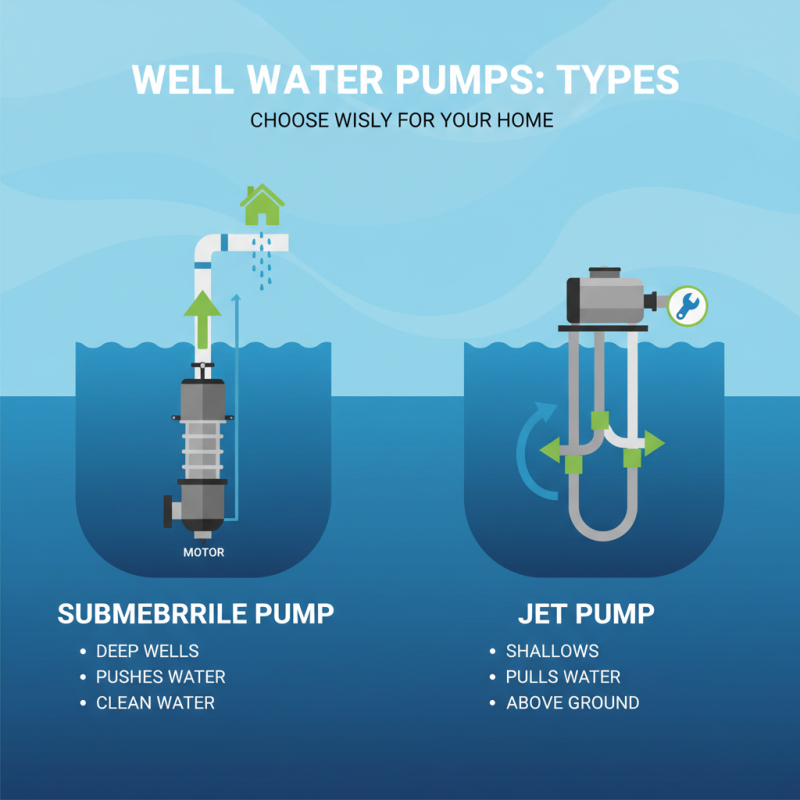
When selecting a well water pump for your home, understanding the different types available is crucial. The primary categories of well water pumps are submersible pumps and jet pumps. Submersible pumps are designed to be immersed in the water within the well. They are typically more efficient for deep wells, as they push water to the surface, which makes them ideal for lifting water from significant depths. Their sealed design also minimizes the risk of contamination, ensuring that the water remains clean and safe for household use.
On the other hand, jet pumps are commonly used for shallower wells, where they can pull water up from a depth of around 25 feet or less. These pumps operate by creating a vacuum that draws water into the pump, making them a suitable choice for homes with shallow water supplies. They can be installed above ground and are often easier to maintain compared to submersible pumps. However, in very deep applications, their efficiency diminishes, which may require the installation of a pressure tank to maintain water pressure in the house. Understanding these differences allows homeowners to make informed decisions based on their unique water needs and well characteristics.
Assessing Your Home's Water Needs and Demand
When considering a well water pump for your home, the first step is to assess your water needs and demand. Understanding how much water your household uses on a daily basis is crucial in selecting a pump that can effectively serve your requirements. Take into account the number of occupants in your home, the appliances that rely on water, and your gardening or outdoor usage. This comprehensive evaluation helps in determining the flow rate and volume of water needed, ensuring you choose a pump that guarantees an uninterrupted supply without overworking the system.
One essential tip is to calculate the peak demand periods in your household. For instance, mornings and evenings often see a surge in water usage when everyone is preparing for the day or winding down. By identifying these times, you can select a pump with sufficient capacity to meet high-demand intervals. Additionally, consider factors like the distance the water must travel from the well to your home, as this can influence the pump type and specifications needed.
Another important factor is the depth of your well. A deeper well requires a pump that can reach further down, often necessitating a submersible pump rather than a surface pump. Knowing the depth will ensure that the pump you select is capable of drawing water efficiently, maintaining a steady supply throughout the year. Make sure to assess your needs carefully to avoid potential issues down the road.
10 Essential Tips for Choosing a Well Water Pump for Your Home - Assessing Your Home's Water Needs and Demand
| Tip | Description | Considerations | Estimated Cost |
|---|---|---|---|
| 1. Determine Water Demand | Calculate the total water needs based on household size and usage. | Consider peak usage times and total daily consumption. | $10 - $50 for calculations. |
| 2. Assess Water Source | Evaluate the depth and quality of your well. | Test for contaminants and water level. | $20 - $100 for water testing. |
| 3. Pump Type | Choose between submersible or jet pumps based on well depth. | Submersible pumps are ideal for deep wells. | $200 - $1,000 based on type. |
| 4. Pump Capacity | Select a pump with adequate gallons per minute (GPM) rating. | Consider future water needs as family grows. | $50 - $300 based on capacity. |
| 5. Pressure Switch | Ensure the pump has an adjustable pressure switch. | This will optimize pressure settings based on usage. | $30 - $100 for quality switches. |
| 6. Energy Efficiency | Look for energy-efficient models. | Consider long-term electricity costs. | $20 - $200 premium for efficient models. |
| 7. Noise Levels | Check the decibel level of the pump. | Quieter pumps reduce noise pollution in homes. | Cost varies; consider noise features. |
| 8. Installation Requirements | Understand the installation complexity. | Some installations may require professional help. | $150 - $500 for professional installation. |
| 9. Warranty and Support | Choose a pump with a solid warranty. | Longer warranties often indicate better quality. | Cost may be included in initial purchase. |
| 10. Local Regulations | Check local laws regarding well pumps. | Ensure compliance with regulations to avoid issues. | Cost may vary based on permits. |
Evaluating Pump Depth and Well Specifications
When selecting a well water pump, understanding the pump depth and well specifications is crucial to ensure optimal function and longevity. The depth of the well directly influences the type of pump that is suitable for your needs. If your well is deep, a submersible pump may be necessary, as it can operate efficiently at greater depths and is designed to push water to the surface from considerable distances. Conversely, shallower wells might only require a jet pump, which is generally easier to install and maintain.
In addition to considering well depth, it’s important to evaluate the overall well specifications, including diameter and water yield. The diameter of the well will determine which pumps can fit, while the water yield or flow rate informs how much water you can expect to extract. A pump that matches these specifications will not only work more effectively but also reduce wear and tear, ensuring a longer lifespan.
Before making a final decision, it’s advisable to measure the static water level and consult local guidelines to ensure that the selected pump meets both your household needs and the requirements of your well system.
Considering Energy Efficiency and Operating Costs
When selecting a well water pump for your home, one of the most critical factors to consider is energy efficiency alongside operating costs. According to the U.S. Department of Energy (DOE), water pumps account for approximately 15% of residential energy usage. Therefore, choosing an energy-efficient model can significantly reduce your monthly utility bills and provide long-term savings. For instance, pumps that are rated with the Energy Star label typically consume 20-30% less energy than standard models, making them a smart choice for both budget-conscious homeowners and environmentally aware individuals.
Operating costs extend beyond just the initial purchase price of the pump. Factors such as the pump's horsepower, the depth of the well, and the gallons per minute (GPM) it pumps will greatly influence energy consumption. A study by the American Water Works Association (AWWA) indicates that optimizing the pump size to match your household’s demand can lead to an average annual savings of $200 to $300. Additionally, routine maintenance minimizes wear on the pump, ensuring its efficiency and longevity, which in turn helps keep operating costs lower over time. By focusing on energy efficiency and being mindful of operating costs, homeowners can make informed decisions that benefit both their finances and the environment.
Importance of Professional Installation and Maintenance Services
When selecting a well water pump for your home, the significance of professional installation and maintenance cannot be overstated. According to data from the National Ground Water Association (NGWA), improper installation can lead to a range of issues, including reduced efficiency and premature pump failure—potentially costing homeowners thousands in repairs. A study revealed that homes with professionally installed pumps experienced a 20% increase in efficiency, highlighting the crucial role that expertise plays in ensuring optimal performance.
Moreover, regular maintenance services are essential for the longevity and reliability of your well water pump. The American Water Works Association (AWWA) estimates that routine check-ups can extend the life of a pump by up to 50%. Regular maintenance not only prevents unexpected breakdowns but also ensures that the water quality remains safe and consistent, which is paramount for household health. Engaging with certified professionals who understand the specific needs of well systems can save homeowners significant costs in the long run while enhancing their water supply experience.
Related Posts
-
How to Choose the Right PVC Pipe for Your Home Project
-

2025 How to Find the Best PVC Supplies for Your Projects
-
Essential Water Well Supplies: Ensuring Sustainable Water Access with 87% Efficiency in Groundwater Usage
-
10 Essential Well Pump Supplies You Need for Optimal Water System Performance
-

Unlocking the Secrets of Sustainable Water Solutions with Advanced Well Drilling Supplies Leading the Market Transition
-
Why Choose Plastic Pipe for Your Plumbing Needs and Benefits Explained