
Top Floor Mat Carpet Manufacturers for Global Buyers
Floor mats rarely look complicated: a ribbed entrance mat, a soft carpet runner, or a molded-backed mat beside a workbench. Yet small differences in fiber, pile height, backing, and edge finishing can change durability, cleaning needs, and shipping costs. For global buyers, choosing a Floor Mat Carpet manufacturer means checking both the product and the production process.
Grand View Research’s Carpet and Rugs Market Size, Share & Trends Analysis Report estimated the global carpet and rugs market at approximately US$51.3 billion in 2023, with projected growth from 2024 to 2030. This broad category is not a dedicated floor-mat market, so the figure should not be treated as mat-specific demand. Still, it signals a large and evolving flooring sector. Buyers must connect that wider context to their own product requirements.
A useful manufacturer comparison starts with tangible questions. Can the supplier provide construction details, material specifications, and relevant test documentation? Are samples consistent in color, backing thickness, and edge binding? Ask about minimum order quantities, customization, production lead times, and export packaging. Small details matter. A polished sample may not reflect every production run, and a low quote may exclude important quality checks. No supplier is perfect. Compare documented capabilities with your intended use, then confirm key specifications in writing before placing an order.
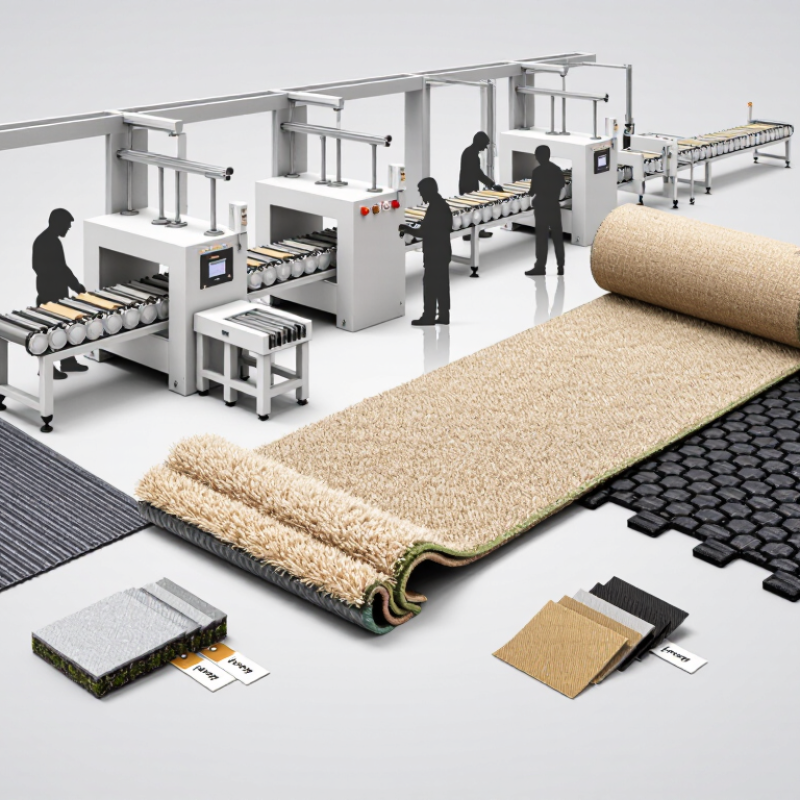
Understanding Floor Mat Carpets and Their Main Applications
Floor mat carpets are compact textile floor coverings designed to catch dirt, absorb moisture, and add comfort underfoot. They usually combine a carpeted surface with a backing that helps limit movement. Fiber, pile height, and backing material affect how a mat performs and how easily it can be cleaned. Small details matter.
At building entrances, coarse or textured surfaces help remove grit from shoe soles, while absorbent fibers manage light moisture. In offices, hotels, and retail spaces, carpet mats can soften footsteps and define reception areas or walkways. Homes often use them near sinks, doors, and beds, where comfort and easy washing may matter more than heavy-duty dirt removal. Different settings need different mats.
Selection should reflect foot traffic, likely spills, floor type, and cleaning routines. A low-profile edge can reduce catching and curling, but even a well-made mat needs regular inspection. Vacuuming removes dry soil; washing requirements depend on the fiber and backing. There is no perfect mat for every doorway. A specification may look sound on paper, yet prove awkward when a busy entrance stays damp or cleaning staff cannot move it easily. Checking the actual site conditions is often more useful than choosing by appearance alone.
Common floor mat formats vary by supplier and market. These representative dimensions, shown in centimeters, illustrate how mats are often sized for different applications; they are not market-share figures or fixed industry standards.
How Floor Mat Carpets Are Designed and Manufactured
Designing a floor mat carpet starts with its job: catching grit at an entrance, cushioning a work area, or adding warmth beside a bed. Designers choose fiber type, pile height, surface pattern, and backing to suit foot traffic and cleaning needs. A low, dense pile can trap dirt without making the mat difficult to vacuum. A textured underside helps limit movement on smooth floors. Small details matter.
In production, yarn is dyed or selected in color, then tufted, woven, or needle-punched into a surface. Manufacturers trim the pile, attach backing, and bind the edges to reduce fraying. Quality checks can include dimensions, color consistency, backing adhesion, and abrasion performance. Textile Exchange’s Materials Market Report 2024 estimates global fiber production reached 124 million tonnes in 2023. This broad industry figure is not carpet-specific, but it underscores why buyers should ask about fiber content and recycled-material claims. No single specification suits every doorway; that is easy to overlook.
Tips: Request a sample and test it under actual lighting. Check the backing on your floor type, and ask how the mat should be cleaned. Test the edge. A beautiful pattern can still disappoint if it curls or sheds.
Leading Floor Mat Carpet Manufacturers Serving Global Markets
Leading floor mat carpet manufacturers serving global markets must balance durability, design, and dependable delivery. Grand View Research estimated the global carpets and rugs market at USD 72.39 billion in 2023, with projected growth through 2030. That scale creates opportunity, but buyers still need to check specifications closely. A dense pile may suit a hotel entrance, while a low-profile surface can work better beneath rolling carts.
Experienced manufacturers should explain fiber composition, backing, pile height, and test methods in clear terms. Ask for abrasion and colorfastness results, plus samples that show edges and backing—not just the face. Small details matter. A mat that curls at a doorway can become a maintenance problem, even when its surface looks excellent. Lead-time estimates also deserve scrutiny; production capacity means little if export packing and shipment schedules remain unclear.
Material choices carry wider implications. The OECD’s Global Plastics Outlook (2022) estimated that only 9% of plastic waste was recycled globally in 2019. This figure is not specific to floor coverings, but it highlights why buyers should request verifiable recycled-content claims and end-of-life information for synthetic backings. Some supplier data may be incomplete. Treat that as a reason to ask better questions, not as proof of poor quality. Compare test reports, batch consistency, and replacement support before placing large orders.
Top Floor Mat Carpet Manufacturers for Global Buyers Leading Floor Mat Carpet Manufacturers Serving Global Markets
| Manufacturer Segment | Typical Products | Common Materials | Typical Manufacturing Process | Suitable Applications | Buyer Checks |
|---|---|---|---|---|---|
| Tufted textile mat and carpet manufacturers | Entrance mats, carpet tiles, area rugs, and cut-pile or loop-pile mats | Polypropylene, polyester, nylon, and other synthetic fibers; backing may include latex or thermoplastic materials | Yarn is tufted through a primary backing; the pile is secured with a secondary backing or coating and then finished to size | Homes, offices, hotels, retail spaces, and commercial entrances | Check pile construction, backing adhesion, edge finishing, color consistency, and relevant test reports for the intended use |
| Needle-punched nonwoven mat manufacturers | Utility mats, exhibition flooring, automotive mats, and commercial entrance products | Polypropylene, polyester, recycled fibers, and blended fibers | Fiber webs are mechanically entangled with barbed needles; products may be dyed, printed, coated, or cut to shape | Exhibitions, workplaces, vehicles, temporary flooring, and high-traffic areas | Confirm fiber composition, thickness, backing or coating, dimensional stability, and suitability for the expected traffic level |
| Molded rubber mat manufacturers | Anti-fatigue mats, drainage mats, scraper mats, and heavy-duty floor mats | Natural rubber, synthetic rubber, and rubber compounds; some products use recycled rubber content | Rubber compounds are shaped in molds and cured; surface patterns and drainage openings can be formed during molding | Industrial workstations, workshops, commercial kitchens, entrances, and wet areas | Ask for material composition, slip-resistance test conditions, cleaning guidance, temperature limits, and applicable chemical-resistance data |
| PVC and vinyl mat manufacturers | Coil mats, anti-slip mats, entrance mats, and interlocking floor matting | Polyvinyl chloride (PVC), plasticizers, stabilizers, and optional textile or foam components | Extrusion, calendaring, molding, or lamination is used depending on the product construction | Retail, healthcare, food-service areas, workshops, and covered outdoor entrances | Verify product composition, dimensions, slip performance, fire-test requirements where applicable, and destination-market chemical requirements |
| Coir and natural-fiber mat manufacturers | Scraper mats, entrance mats, woven mats, and natural-fiber rugs | Coir fiber from coconut husks, jute, sisal, and other plant fibers | Fibers are spun, woven, tufted, or bonded; mats may be trimmed and fitted with a backing | Residential entrances, covered porches, hospitality spaces, and decorative interiors | Check fiber origin, fiber shedding, backing material, moisture exposure limits, edge durability, and packaging protection |
| Woven and outdoor mat manufacturers | Outdoor rugs, patio mats, flatwoven floor coverings, and washable utility mats | Polypropylene, polyester, cotton, and blends selected for the intended environment | Fibers or yarns are woven or flatwoven; products may be heat-set, coated, cut, or edge-bound | Patios, balconies, campsites, casual living areas, and covered outdoor spaces | Confirm UV and moisture performance claims with test data, along with colorfastness, drainage, cleaning instructions, and finished-size tolerances |
These entries describe common product segments and manufacturing methods, not named suppliers or guaranteed capabilities. Specifications, certifications, test results, and compliance requirements vary by product and destination market; buyers should verify them directly with each prospective manufacturer.
How Global Buyers Can Evaluate Manufacturers and Products
Global buyers should assess a floor mat carpet manufacturer beyond a polished sample book. Request specifications for pile height, backing material, edge binding, and stated size tolerance. Ask how measurements are checked during production, not only before shipment. A sample may feel dense in a showroom yet flatten under repeated foot traffic. Test it under conditions close to its intended use. Small details matter. Compare colors under daylight and cool warehouse lighting, and inspect cut edges for loose yarns. A low price may reflect a thinner backing, but not always.
Review quality records, production capacity, and communication habits together. Ask for recent inspection reports, batch traceability details, and clear procedures for handling defects. Confirm whether custom dimensions affect lead times or minimum order quantities. If possible, order a pilot batch and check several pieces for thickness, odor, curling, and size variation after unpacking. Keep notes. Ideal samples do not always represent full production. Batches can vary slightly, especially across colors or production dates. Variation is not automatically a quality failure, but unexplained differences deserve questions. Shipping protection matters, too: a clean mat can arrive curled or damp if packaging is weak. Compare the manufacturer’s evidence with the product in hand.
Key Considerations for International Sourcing and Supplier Partnerships
International buyers should compare floor mat and carpet manufacturers on more than unit price. Ask for material composition, pile height, backing type, dimensional tolerances, and test methods in writing. Samples should match the production specification, not just look similar under showroom lighting. Check colorfastness, abrasion resistance, slip performance, and odor under relevant conditions. Test reports need dates, sample identification, and laboratory details. Small omissions matter.
Logistics deserve equal attention. The World Bank’s 2023 Logistics Performance Index reports that the average international shipment journey from the exporter’s warehouse to the importer’s warehouse takes 44 days. Build that lead time into launch schedules, and ask suppliers how they handle peak-season delays, packaging damage, and replacement orders. UNCTAD’s Review of Maritime Transport 2024 notes that maritime trade grew 2.4% in 2023, amid ongoing disruption to shipping routes. A low quote can become expensive when cartons arrive late or damp.
Supplier partnerships work better when responsibilities are explicit. Agree on inspection points, defect limits, packaging tests, document formats, and response times before production begins. Request evidence of factory quality controls and traceability for key fibers and backing materials. Keep a signed “golden sample” for comparison. It helps, though it cannot prevent every mismatch. A visit or third-party audit can reveal practical details that paperwork misses, such as storage conditions and how rejected rolls are separated.
