
Top PVC Tubes Manufacturers for Global Buyers
Choosing reliable pvc tubes manufacturers requires more than comparing prices on a polished catalog. Global buyers need consistent dimensions, suitable materials, verified production capacity, and clear communication. A tube that looks perfect in a sample box may crack during pressure testing or change size after storage. Small details matter.
This guide examines manufacturers serving different industries, including plumbing, irrigation, medical equipment, packaging, and industrial systems. It considers resin quality, extrusion technology, wall-thickness control, surface finish, and customization options. Factory audits, material documentation, inspection records, and independent testing can reveal how dependable a supplier really is. Experience also matters. Manufacturers with stable export routines often understand packaging, lead times, labeling, and destination-market requirements more clearly.
No supplier is perfect. Even experienced factories may face delays, tooling limits, or inconsistent communication during busy seasons. Buyers should ask practical questions before placing an order. Can the manufacturer provide samples from current production? Are batch records available? How are defects handled? Does the quoted price include testing, packaging, and export preparation? These questions may seem basic, but they prevent expensive surprises. The companies discussed here are evaluated through a balanced lens, not promotional claims alone. Their strengths, limitations, production capabilities, and service practices deserve equal attention. Use this overview as a starting point, then confirm technical data and compliance documents directly with each manufacturer. Reliable sourcing is built through evidence, careful comparison, and repeated communication.
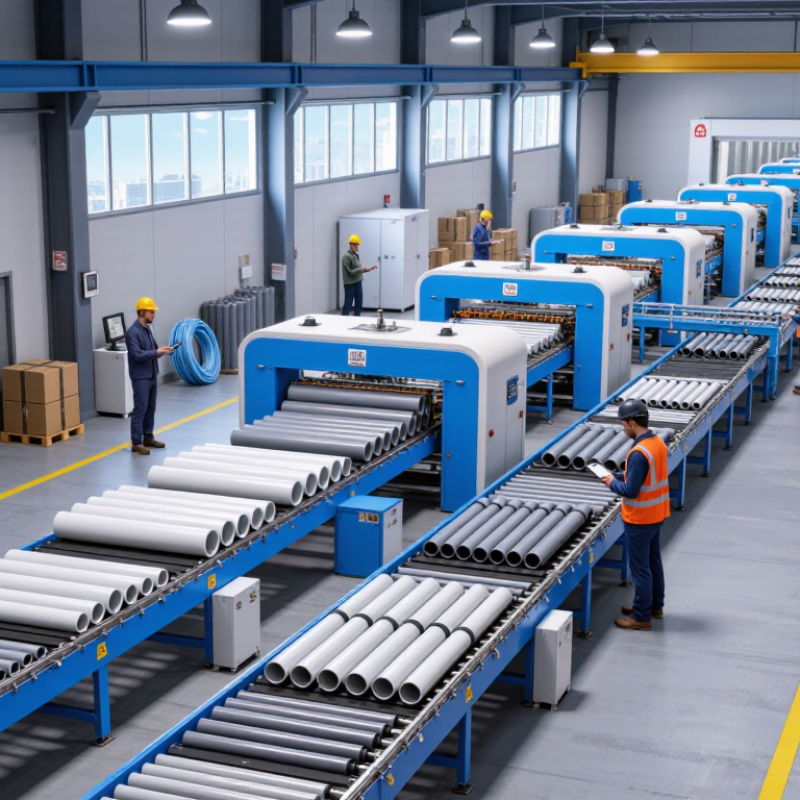
PVC Tubes: Definition, Types, and Key Industry Applications
PVC tubes are hollow products made from polyvinyl chloride, a thermoplastic shaped by extrusion. They carry liquids, gases, cables, or protect components. Their smooth inner wall can reduce deposits and cleaning effort. Weight stays low. Chemical resistance is useful in controlled industrial settings. Heat remains a limitation, especially during pressure service. A tube that looks robust may soften sooner than expected.
Rigid PVC tubes hold their shape in drainage, conduit, and structural protection. Flexible grades bend around equipment and tolerate repeated routing, but may kink under tight curves. Clear tubing helps operators inspect flow and sediment. Reinforced tubes use textile or spiral layers for higher pressure stability. Sizes vary by inside diameter, outside diameter, wall thickness, and tolerance. These details matter more than a generic “industrial” label. Some formulations include plasticizers, so buyers should verify suitability for contact, temperature, and chemical exposure.
In agriculture, PVC tubes support irrigation lines and dosing systems. Workshops use them for air lines, extraction, and coolant transfer when the grade is approved. Laboratories may select clear, flexible tubing for low-pressure handling. Electrical projects use rigid tubes as cable protection. Global buyers should request pressure data, temperature ranges, UV performance, fitting dimensions, and batch traceability. Independent test reports strengthen supplier claims. Certification names alone are not enough; documents must match the exact grade and production batch. I would also inspect samples under bending and heat. A small mismatch can stop installation.
Top PVC Tubes Manufacturers for Global Buyers - PVC Tubes: Definition, Types, and Key Industry Applications
| PVC Tube Type | Definition and Construction | Typical Form | Key Properties | Common Industry Applications | Relevant Standards or Tests | Main Buyer Considerations |
|---|---|---|---|---|---|---|
| Rigid PVC Tube | Unplasticized PVC formed into a stiff tube with limited flexibility at room temperature. | Straight lengths; solvent-weldable or mechanically connected systems. | Good corrosion resistance, electrical insulation, dimensional stability, and low moisture absorption. | Water distribution, drainage, conduit, protective sleeves, laboratory systems, and industrial fluid handling. | Dimensional checks, hydrostatic pressure testing, impact testing, and applicable regional pipe standards. | Outside and inside diameter, wall thickness, pressure class, temperature range, connection method, and UV exposure. |
| Flexible PVC Tube | PVC compounded with plasticizers to produce a bendable tube suitable for routing around equipment. | Coils or cut lengths; clear, translucent, or colored options. | Flexible, lightweight, weldable or clampable, and resistant to many dilute chemicals and aqueous fluids. | Air and water lines, low-pressure fluid transfer, pneumatic equipment, irrigation, and general industrial use. | Hardness testing, tensile and elongation testing, pressure testing, and chemical compatibility evaluation. | Plasticizer type, flexibility at low temperature, working pressure, extractables, odor, and kink resistance. |
| Clear PVC Tube | Transparent or translucent PVC tubing designed to allow visual inspection of flow and contamination. | Usually flexible; available in coils and cut lengths. | Flow visibility, lightweight construction, smooth internal surface, and resistance to moisture and selected chemicals. | Water treatment, laboratory equipment, food-processing support systems, aquariums, and fluid-level observation. | Visual inspection, dimensional tolerance, pressure testing, and application-specific food-contact or hygiene requirements. | Clarity retention, discoloration resistance, internal diameter, cleaning method, and regulatory suitability. |
| Braided PVC Tube | Flexible PVC tube reinforced with a textile or polymer braid embedded between PVC layers. | Flexible hose or tube supplied in coils and cut lengths. | Higher pressure capability than unreinforced flexible tubing, improved burst resistance, and good flexibility. | Compressed air, water transfer, agricultural equipment, pneumatic tools, and low-to-medium pressure machinery. | Hydrostatic pressure, burst pressure, tensile strength, bend-radius, and temperature-cycle testing. | Reinforcement material, pressure rating, burst factor, minimum bend radius, fittings, and operating temperature. |
| Spiral-Reinforced PVC Tube | Flexible PVC tube reinforced with a helical PVC or polymer spiral to support suction and moderate pressure service. | Helically reinforced hose, commonly supplied in coils. | Good crush resistance, flexibility, suction performance, and resistance to collapse under vacuum. | Pumping, irrigation, sludge transfer, ventilation, dust collection, and industrial material handling. | Vacuum-collapse testing, abrasion testing, bend testing, pressure testing, and dimensional inspection. | Vacuum rating, abrasion resistance, helix spacing, internal smoothness, bend radius, and coupling compatibility. |
| Medical-Grade PVC Tube | PVC tubing manufactured with controlled materials and processes for specified medical or healthcare applications. | Flexible, clear or translucent tubing; supplied sterile or non-sterile depending on the product. | Controlled biocompatibility profile, clarity, weldability, flexibility, and compatibility with selected sterilization methods. | Fluid administration sets, drainage systems, blood-processing equipment, respiratory accessories, and laboratory diagnostics. | ISO 10993 biological evaluation, ISO 8536 for infusion equipment where applicable, sterility validation, and extractables testing. | Biocompatibility, DEHP or alternative plasticizer status, sterilization method, particulate limits, traceability, and cleanroom controls. |
| Food-Contact PVC Tube | PVC tubing formulated and manufactured for contact with specified food or beverage materials. | Flexible, clear, translucent, or reinforced tubing. | Cleanable interior, odor control, flexibility, and resistance to selected water-based or non-oily food products. | Liquid food transfer, beverage dispensing, dairy-support equipment, and processing-line connections. | Applicable food-contact regulations, migration testing, hygienic design review, and cleaning-compatibility testing. | Destination-market compliance, food type, temperature, cleaning chemicals, migration limits, and documentation. |
| Electrical-Conduit PVC Tube | Rigid PVC tube designed to protect and route electrical cables and wiring. | Straight conduit lengths with compatible bends, couplers, and fittings. | Electrical insulation, corrosion resistance, lightweight installation, and resistance to moisture and many salts. | Building wiring, telecommunications, underground cable protection, industrial control panels, and solar installations. | Applicable electrical conduit standards, flame testing, impact testing, compression testing, and insulation requirements. | Conduit classification, flame performance, impact resistance, UV rating, installation temperature, and fitting system. |
| Heat-Shrink PVC Tube | PVC tube designed to contract when heated, creating a close-fitting protective covering around components. | Flat or round tubing supplied in rolls or cut pieces. | Electrical insulation, abrasion protection, bundling capability, and controlled shrink ratio. | Wire harnesses, cable identification, component protection, battery assemblies, and electronic equipment. | Shrink-ratio verification, dielectric strength, tensile testing, flammability testing, and dimensional recovery testing. | Shrink ratio, recovered wall thickness, shrink temperature, flame rating, dielectric performance, and color stability. |
Buyer note: Pressure ratings, temperature limits, dimensions, regulatory status, and chemical compatibility vary by formulation, reinforcement, manufacturing process, and applicable regional standards. Buyers should confirm the technical datasheet and compliance documentation for the intended service.
Related Posts
-

How to Choose the Right PVC Pipe for Your Home Project
-
Best Water Well Supplies for Your Needs?
-
Top 10 Types of Well Casing Pipe You Should Know About?
-
10 Best Well Pipe Suppliers for Global Buyers?
-
Top 10 Best Well Caps for Your Property Protection and Water Quality
-
Top 10 Best Water Well Pipes: Durable Solutions for Your Water Supply Needs