
Request A Quote

Phone: 416-244-6476
Email:

    What Is Rolled Metal and What Types Are Available?

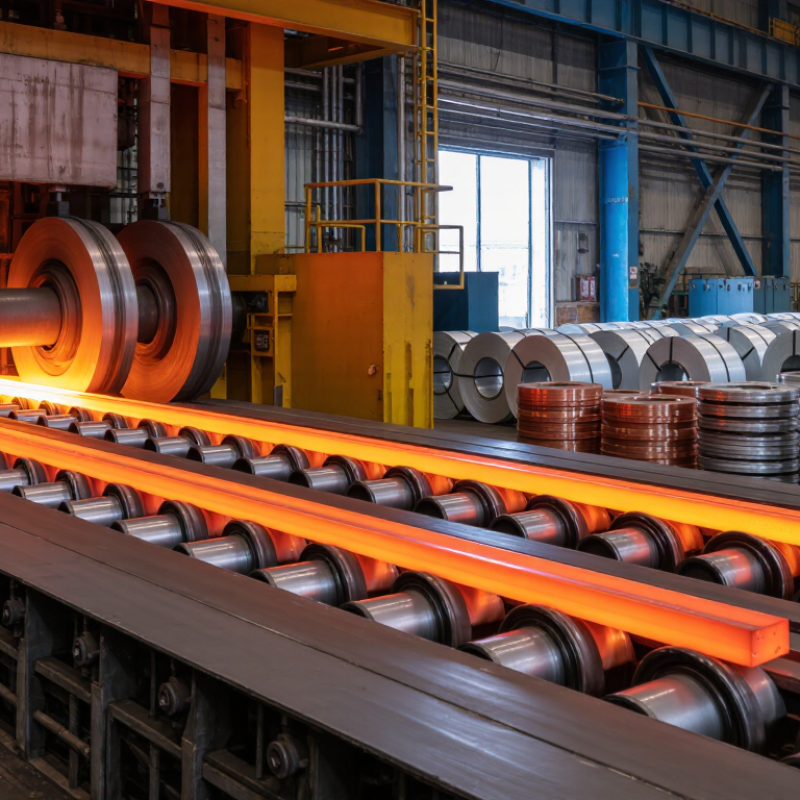
    Rolled Metal is produced by passing heated or cold metal through rotating rolls. The pressure reduces thickness and improves dimensional consistency. This process creates sheet, plate, strip, coil, and several structural forms. Steel, aluminum, copper, brass, and titanium are common choices. Each material behaves differently under rolling, forming, welding, and corrosion exposure.

    The market scale explains its importance. The World Steel Association reported approximately 1.89 billion tonnes of crude steel production in 2023. The International Aluminium Institute recorded about 70.6 million tonnes of primary aluminum production during the same year. These figures do not represent rolled output directly. However, they show the industrial foundation behind rolled products. Manufacturing lines, building facades, vehicle panels, food cans, and heat exchangers all depend on controlled metal thickness.

    Choosing the correct type requires more than comparing appearance or price. Hot-rolled steel offers practical strength and lower processing costs. Cold-rolled steel usually provides tighter tolerances and a smoother surface. Aluminum rolled products reduce weight and resist atmospheric corrosion. Copper strip supports electrical conductivity and thermal transfer.

    The boundary is not always tidy.

    Terminology also varies between suppliers and regions. A “plate” in one specification may resemble “heavy sheet” elsewhere. Buyers should verify alloy grade, temper, thickness tolerance, surface finish, and test documentation. ASTM standards, EN specifications, and mill certificates help establish reliability. Still, paperwork cannot replace application knowledge. A material that performs well indoors may fail near saltwater. This guide examines what Rolled Metal means, how rolling changes its properties, and which types suit different engineering demands. Some comparisons remain simplified, because real performance depends on processing history, design loads, and service conditions.
    What Is Rolled Metal and What Types Are Available?

    Definition and Basic Principles of Rolled Metal

    Rolled metal is metal shaped by passing it between rotating rolls. The rolls apply pressure and reduce the material’s thickness. This process can also change its width, surface, and internal structure. The basic principle is controlled deformation, not cutting. The metal remains continuous as it moves through the rolling mill.

    Hot rolling happens above the metal’s recrystallization temperature. Heat makes the material easier to deform and supports large thickness reductions. Steel slabs may leave the mill as plates, sheets, or long structural sections. Aluminum and copper can also be hot rolled. The finished surface may show scale or mild unevenness. It is practical, but rarely perfect.

    Cold rolling occurs below the recrystallization temperature, often near room temperature. It produces thinner gauges, tighter dimensions, and a smoother surface. However, the metal becomes harder and less ductile as deformation increases. Annealing may restore some flexibility. That matters. Common rolled forms include sheet, plate, strip, foil, bar, and coil. Their names describe shape and size, not automatically quality. In real production, roll pressure, temperature, lubrication, and speed must work together. A simple diagram can hide these variables. Even experienced operators may need to adjust settings after inspecting edge cracks, waviness, or thickness readings.

    How Metal Rolling Processes Work

    Rolled metal is shaped by passing steel, aluminum, copper, or other alloys between rotating rolls. The rolls apply controlled pressure and reduce the material’s thickness. It sounds simple. It is not.

    In hot rolling, the metal is heated above its recrystallization temperature before entering the mill. This heat makes thick slabs easier to deform and helps produce plates, structural sections, and large coils. Operators monitor temperature, roll speed, pressure, and cooling water during each pass. A small temperature change can affect thickness and surface quality. The metal may pass through several roll stands, with each stand applying a measured reduction.

    Cold rolling happens after the metal cools. Room-temperature processing creates thinner sheet, tighter dimensions, and a smoother surface. However, it also increases hardness and internal stress. Annealing may restore ductility when further forming is needed. Common rolled products include hot-rolled plate, cold-rolled sheet, foil, strip, and rolled bars. Some mills use reversing rolls, while others use continuous tandem mills for higher output.

    Quality checks can include ultrasonic testing, dimensional gauges, surface inspection, and tensile testing. Even well-controlled rolling can leave waviness, edge cracks, or uneven thickness. These defects often reveal issues with alignment, lubrication, or roll wear. The process requires experience, not only formulas. A reliable specification should state alloy, temper, thickness, width, surface condition, and permitted tolerances.

    What Is Rolled Metal and What Types Are Available? — How Metal Rolling Processes Work
    Rolling Type or Product How the Process Works Common Metals Typical Product Form Key Characteristics Typical Applications
    Hot-Rolled Sheet and Plate Metal is passed through rotating rolls while it is above its recrystallization temperature. Repeated passes reduce thickness and alter the cross-sectional shape. Carbon steel, stainless steel, aluminum, copper, and nickel alloys Sheet, plate, strip, and coil Lower forming forces, high production efficiency, and a surface that may contain oxide scale. Dimensional tolerances are generally less precise than those of cold-rolled products. Structural components, machinery, bridges, pressure equipment, storage tanks, and heavy fabrication
    Cold-Rolled Sheet and Strip Previously hot-rolled material is rolled below its recrystallization temperature, usually through several controlled passes. Low-carbon steel, stainless steel, aluminum, copper, and brass Sheet, strip, and coil Improved thickness control, smoother surface finish, and increased strength or hardness caused by work hardening. Further annealing may restore ductility. Appliance panels, automotive components, electrical enclosures, precision parts, and formed products
    Metal Plate Thicker slabs are reduced by hot rolling, often with controlled passes and cooling to achieve the required mechanical properties. Carbon steel, alloy steel, stainless steel, aluminum, and titanium Flat rectangular plate Designed for load-bearing and structural service. Thickness, strength, toughness, and weldability depend on the alloy and processing route. Construction, shipbuilding, pressure vessels, heavy equipment, wind-turbine towers, and industrial machinery
    Metal Foil Thin strip is reduced through multiple rolling passes, often with intermediate annealing to control work hardening and ductility. Aluminum, copper, tin, nickel, and stainless steel Very thin foil in rolls or sheets Low thickness, low weight, and high surface-area-to-volume ratio. Final thickness depends on alloy, mill capability, and required tolerances. Electrical conductors, heat exchangers, packaging, shielding, batteries, and insulation systems
    Cold-Rolled Bar Bars are passed through rolls at or near room temperature to reduce size and improve dimensional accuracy and surface quality. Carbon steel, alloy steel, stainless steel, aluminum, and brass Round, square, hexagonal, and flat bar Closer dimensional tolerances and better surface finish than many hot-rolled bars. Cold working can increase strength and reduce ductility. Fasteners, shafts, machined parts, pins, precision components, and general engineering products
    Hot-Rolled Bar Billets or blooms are heated and reduced between rolls to produce the required bar size and profile. Carbon steel, alloy steel, stainless steel, aluminum, and copper alloys Round, square, rectangular, flat, and hexagonal bar Suitable for large reductions and high-volume production. The surface may retain scale and the tolerances are typically broader than for cold-finished bar. Construction frames, axles, agricultural equipment, machine parts, and welded fabrications
    Rolled Structural Sections Heated billets are passed through shaped grooves in rolls that progressively form a consistent cross-sectional profile. Structural carbon steel, low-alloy steel, and stainless steel Beams, channels, angles, tees, and rails Efficient load distribution and consistent profiles. Section dimensions and mechanical properties are specified by applicable standards. Buildings, bridges, platforms, rail systems, towers, and industrial frames
    Ring-Rolled Products A thick-walled ring is rotated while radial and axial rolls reduce its wall thickness and increase its diameter. Carbon steel, stainless steel, nickel alloys, titanium, and aluminum alloys Seamless rings with circular or custom cross-sections Produces circumferential grain flow and large-diameter rings with no welded seam in the rolled body. Bearings, gears, flanges, pressure vessels, aerospace components, and power-generation equipment
    Two-High Rolling Mill Two opposing rolls rotate in opposite directions and draw the workpiece through the roll gap. Steel, aluminum, copper, brass, and other ductile metals Sheet, plate, strip, bar, and simple profiles Simple mill configuration that can be used for reversing or continuous rolling, depending on the equipment design. Primary reduction, laboratory processing, plate rolling, and general metal production
    Four-High Rolling Mill Two smaller work rolls contact the metal while two larger backup rolls support them and limit bending. Steel, aluminum, copper, brass, and specialty alloys Thin sheet and strip Improved control of roll deflection and thickness uniformity compared with a basic two-high arrangement. Precision sheet, electrical strip, stainless steel strip, and thin-gauge products
    Cluster or Sendzimir-Type Mill Small work rolls are supported by multiple backup rolls, allowing thin and hard materials to be reduced without excessive roll bending. Stainless steel, silicon steel, nickel alloys, titanium, and other high-strength alloys Thin strip and precision foil Suitable for high-strength materials and tight gauge control. The compact work rolls support substantial reductions in thickness. Electrical steel, precision stainless strip, specialty alloys, and high-performance components
    Continuous Rolling The material passes through multiple rolling stands arranged in sequence, with each stand performing part of the total reduction. Steel, aluminum, copper, brass, and other ductile alloys Long strip, sheet, wire rod, and bar products High productivity, consistent dimensions, and efficient processing of long products. Coiled sheet, automotive strip, packaging stock, wire rod, and construction materials
    Reversing Rolling The workpiece travels back and forth through the same roll stand, with the roll gap adjusted between passes. Steel, aluminum, copper, titanium, and specialty alloys Plate, thick strip, and smaller production batches Flexible for varying sizes and alloys, although it generally has lower throughput than a continuous mill. Heavy plate, specialty metals, prototype production, and low-volume manufacturing
    Key Process Variables Final results are controlled by roll gap, reduction per pass, rolling speed, temperature, lubrication, tension, roll diameter, and cooling conditions. Applicable to all rolled metals All rolled forms These variables influence thickness, flatness, surface finish, strength, hardness, residual stress, and dimensional accuracy. Process design, quality control, material selection, and product specification

    Main Types of Rolled Metal Products

    Rolled metal is shaped by passing heated or cold stock through rollers. The process controls thickness, surface quality, and mechanical performance. The World Steel Association reported about 1.88 billion tonnes of crude steel production in 2023. That scale explains why rolled steel remains central to construction, transport, energy, and machinery.

    Hot-rolled steel is processed above its recrystallization temperature. It suits beams, rails, plates, and structural frames. Its surface usually carries mill scale, and its dimensions are less precise. Cold-rolled steel starts with hot-rolled material, then passes through rollers at room temperature. It offers tighter tolerances, a smoother finish, and better appearance. Typical uses include appliance panels, furniture, and automotive body parts. It can be stronger, but forming may become less forgiving. Small details matter.

    Coated steel adds protection through zinc, aluminum, or other metallic layers. Roofing sheets and exterior panels commonly use this type. Stainless rolled sheet resists corrosion through its chromium content, although it is not maintenance-free. Aluminum sheet and foil provide low weight and strong corrosion resistance. The U.S. Geological Survey estimated global primary aluminum production at about 70 million tonnes in 2023. That figure reflects aluminum’s growing industrial role, but recycled supply complicates the comparison. In practice, “best” depends on thickness, forming method, environment, and finish—not merely tensile strength.

    Differences Between Hot-Rolled and Cold-Rolled Metal

    Rolled metal is produced by passing steel through rotating rolls, reducing thickness and shaping it into sheets, plates, strips, or bars. The process supports construction, transport, machinery, and energy equipment.

    The scale is substantial: the World Steel Association reported 1,888.2 million tonnes of global crude steel production in 2023. Much of this steel enters rolling operations.

    Hot-rolled metal is shaped above its recrystallization temperature. It leaves the mill with a dark oxide scale, visible grain variation, and broader dimensional tolerances. Its lower processing cost suits beams, brackets, rails, and heavy plates.

    Cold-rolled metal usually starts as hot-rolled steel. Pickling removes scale before further rolling at room temperature. The result is a smoother surface, tighter thickness control, and higher yield strength from work hardening.

    USGS Mineral Commodity Summaries 2024 placed global steel production near 1.9 billion metric tonnes, showing why these efficiency differences matter.

    A practical check is simple: inspect the surface, measure thickness at several points, and review the mill certificate.

    Cold rolling is not automatically stronger for every design. Residual stress can complicate forming, while hot-rolled material may offer better ductility. I have seen specifications oversimplify this choice. That is risky.

    Final selection should match forming, welding, corrosion, and appearance requirements, with applicable ASTM or EN testing confirmed.

    Common Applications and Selection Considerations

    Rolled metal is produced by passing metal through rollers to reduce thickness or shape the section. In practice, it arrives as coils, sheets, plates, or narrow strips.

    Hot-rolled steel suits frames, beams, brackets, and heavy equipment because its surface and dimensions can tolerate less precision. Cold-rolled material offers tighter tolerances and a cleaner finish for cabinets, furniture, and visible panels. Stainless steel resists moisture, while aluminum reduces weight in transport components and building façades.

    Application conditions should guide the choice, not appearance alone. A warehouse roof may need coated steel for rain and condensation. A kitchen panel may require stain resistance, smooth finishing, and easy cleaning.

    For a bent enclosure, check elongation and minimum bend radius before ordering. High strength can sound attractive, but it may increase forming force and springback. That trade-off is easy to underestimate.

    In shop reviews, I check thickness, width tolerance, surface marks, edge quality, and flatness. These details affect cutting, welding, painting, and assembly time.

    Confirm the required strength, corrosion resistance, finish, and delivery form with the supplier. Ask for material certificates and test data when the component carries structural loads. I have seen projects select metal by price alone, then pay more for rework. That mistake still deserves closer attention.