
10 Tips for Buying Alloy Steel Round Bar?
Buying Alloy Steel Round Bar is not a simple matter of choosing diameter, price, and delivery time. The correct grade must match the load, temperature, machining process, and service environment. A bar for a high-strength shaft may need different chemistry and heat treatment than one used for a bearing pin. Small differences matter. Carbon content, chromium, molybdenum, and nickel can change hardness, toughness, weldability, and fatigue performance.
Industry data shows why careful sourcing matters. The World Steel Association reported approximately 1.89 billion metric tons of crude steel production worldwide in 2023, proving the market’s enormous scale. Yet broad production figures cannot confirm one supplier’s consistency. The U.S. Geological Survey’s Mineral Commodity Summaries also highlights steel’s dependence on global raw-material and energy conditions. Prices can move quickly. Certification should not be treated as decoration. ASTM A29/A29M provides general requirements for carbon and alloy steel bars, while ASTM E112 and related testing standards support measurable quality control.
Look beyond the bright surface. Ask for the material test certificate, heat number, chemical composition, mechanical results, dimensional tolerances, and heat-treatment details. Check whether the certificate matches the actual bundle. That simple step is often missed. Consider ultrasonic inspection when internal flaws could create costly failures. Confirm whether the bar is hot-finished, cold-finished, peeled, or ground. Surface appearance can mislead. This guide presents ten practical tips for selecting Alloy Steel Round Bar with greater confidence, while acknowledging an uncomfortable truth: even experienced buyers can overlook traceability, tolerances, or application-specific risks. Better questions usually prevent expensive corrections later.
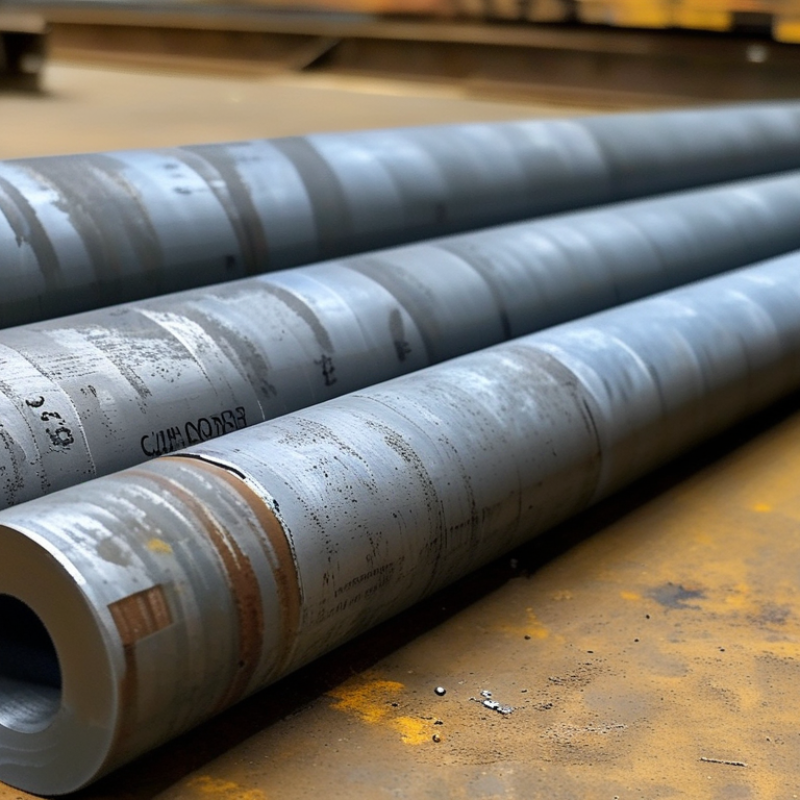
Understanding Alloy Steel Round Bar Grades and Applications
Buying alloy steel round bar requires more than choosing a familiar grade. Start with the application, load, temperature, and machining method. Grade 4140 suits many shafts, bolts, and gears because chromium and molybdenum improve strength and hardenability. Grade 4340 offers higher toughness for heavily stressed components. Grade 8620 is often selected for carburized gears and pins. These choices are not interchangeable.
Check the required diameter, length, tolerance, and surface condition before requesting a quotation. Confirm the material certificate, heat number, chemical analysis, and mechanical test results. Ask whether the bar is hot rolled, cold drawn, annealed, normalized, or quenched and tempered. Heat treatment changes hardness and machinability significantly. A polished surface may look attractive, but it cannot correct an unsuitable internal structure. Inspect straightness and visible seams under good lighting.
Match hardness to the actual service condition. Excessive hardness can complicate drilling and increase cracking risk. Insufficient hardness may cause early wear. Discuss welding carefully, especially with higher-carbon grades. Preheating and controlled cooling may be necessary. Storage also matters; moisture can create rust before fabrication begins. My workshop experience shows that small tolerance errors become expensive during turning. I once focused too heavily on tensile strength and overlooked impact toughness. That mistake changed the final grade selection. Review the standard, test data, and supplier traceability together. A perfect choice is rare. Reliable decisions come from measured requirements, not assumptions.
10 Tips for Buying Alloy Steel Round Bar? - Understanding Alloy Steel Round Bar Grades and Applications
| Tip | Buying Dimension | What to Verify | Representative Grade | Typical Characteristics | Common Applications | Relevant Standard or Requirement |
|---|---|---|---|---|---|---|
| 1 | Define the service conditions | Identify operating load, impact, wear, temperature, corrosion exposure, and fatigue requirements before selecting a grade. | Grade selection depends on service conditions | Alloy steel grades provide different combinations of strength, toughness, hardenability, and wear resistance. | Shafts, gears, pins, axles, bolts, tool holders, and structural machine parts. | Use the engineering design specification and applicable material standard, such as ASTM A29/A29M. |
| 2 | Match the grade to the required strength | Check the specified tensile strength, yield strength, hardness, and heat-treatment condition. | AISI/SAE 4140 | Chromium-molybdenum steel with good hardenability and a useful balance of strength and toughness after heat treatment. | Transmission shafts, axles, bolts, studs, crankshafts, and pressure-containing components. | Specify the condition, such as annealed, normalized, quenched and tempered, or cold finished. |
| 3 | Consider hardenability and section size | Confirm whether the selected grade can harden through the full diameter required for the part. | AISI/SAE 4340 | Nickel-chromium-molybdenum steel with high hardenability, high strength potential, and good toughness when properly treated. | Aircraft-type structural parts, heavy-duty shafts, gears, studs, and high-strength fasteners. | Review hardenability data, heat-treatment procedures, and mechanical-property requirements by diameter. |
| 4 | Choose a carburizing grade for a hard surface and tough core | Determine whether the component requires carburizing, carbonitriding, or another case-hardening process. | AISI/SAE 8620 | Low-carbon nickel-chromium-molybdenum steel commonly used for a wear-resistant case with a tougher core. | Gears, pinions, bushings, cams, chain components, and other parts subject to surface contact stress. | Specify case depth, surface hardness, core hardness, and post-treatment distortion limits. |
| 5 | Select a spring-grade material when elastic recovery is critical | Check fatigue strength, elastic limit, surface quality, and the required spring heat treatment. | AISI/SAE 6150 | Chromium-vanadium steel with good toughness, fatigue performance, and resistance to repeated loading after treatment. | Springs, torsion bars, suspension components, clips, and high-cycle mechanical parts. | Specify heat-treatment condition, hardness range, decarburization limits, and surface finish. |
| 6 | Use bearing steel for rolling-contact applications | Verify cleanliness, carbide distribution, dimensional accuracy, and high hardness capability. | AISI/SAE 52100 | High-carbon chromium steel designed for high hardness, wear resistance, and rolling-contact fatigue performance. | Balls, rollers, bearing rings, precision components, and wear-resistant machine parts. | Specify bearing-steel quality, heat treatment, hardness, cleanliness, and required dimensional tolerances. |
| 7 | Confirm the manufacturing condition | Compare hot-rolled, cold-finished, forged, annealed, normalized, and quenched-and-tempered options. | AISI/SAE 4140 or 4340 | Cold-finished bar generally offers tighter dimensional control and improved surface finish; hot-rolled or forged bar is often selected for larger sections. | Machined shafts, forged components, heavy equipment parts, and precision-fitted assemblies. | State diameter tolerance, straightness, surface condition, machining allowance, and required delivery condition. |
| 8 | Check chemistry and traceability | Request a heat number, chemical composition report, material test report, and confirmation of the applicable grade. | Any specified alloy steel grade | Elements such as chromium, nickel, molybdenum, manganese, and carbon influence hardenability and performance. | Safety-critical shafts, pressure-related parts, lifting equipment, and regulated components. | Material test reports should correlate the bar to the heat number and include chemical and mechanical results. |
| 9 | Evaluate machinability and welding needs | Confirm machining allowance, preheating requirements, post-weld heat treatment, and susceptibility to cracking. | AISI/SAE 4130 | Low-alloy chromium-molybdenum steel with good strength-to-weight potential and comparatively useful weldability when procedures are controlled. | Tubular structures, pressure tubes, bicycle and motorsport frames, aircraft components, and welded machinery. | Use a qualified welding procedure and control preheat, interpass temperature, hydrogen, and post-weld treatment. |
| 10 | Verify dimensions, quantity, and inspection requirements | Confirm diameter, length, straightness, ovality, surface defects, ultrasonic testing, and packaging requirements. | Alloy steel round bar, project-specific grade | Correct dimensions and inspection levels reduce machining waste, assembly problems, and material-related delays. | Production batches, replacement parts, large forgings, precision machining, and safety-critical assemblies. | Specify ASTM, EN, or equivalent requirements; include inspection class, tolerances, marking, and packing instructions. |
Note: Final grade, heat treatment, dimensions, and inspection requirements should be confirmed against the component design, governing material standard, and applicable safety regulations.