10 Tips for Choosing Thermal Break Aluminum System Windows
Choosing the right windows can affect comfort, energy use, noise levels, and long-term maintenance. Thermal Break Aluminum System Windows deserve careful evaluation because their performance depends on more than an attractive frame. A well-designed polyamide barrier can reduce heat transfer between the interior and exterior aluminum surfaces. However, the result also depends on glass configuration, seals, drainage, hardware, and installation quality.
This guide introduces ten practical tips for comparing Thermal Break Aluminum System Windows with greater confidence. It considers thermal transmittance, air leakage, water resistance, acoustic performance, frame strength, and visible sightlines. Look beyond marketing claims. Ask for tested U-values, product certifications, warranty terms, and installation details. A reliable supplier should explain how the system performs in your climate, not only display polished showroom samples.
Small details matter. Inspect the corner joints, gaskets, drainage paths, and locking points. Feel the frame near the glass on a cold morning. Notice whether condensation appears around the edges. No window is perfect. Even a high-performance system can fail when installed over an uneven opening or sealed with unsuitable materials. That point is easy to overlook. We also need to admit that price alone cannot predict value; an inexpensive frame may create higher heating costs, while an expensive system may be poorly specified. The following tips combine practical observations with established performance criteria, helping homeowners, architects, and builders make decisions based on evidence rather than appearance.
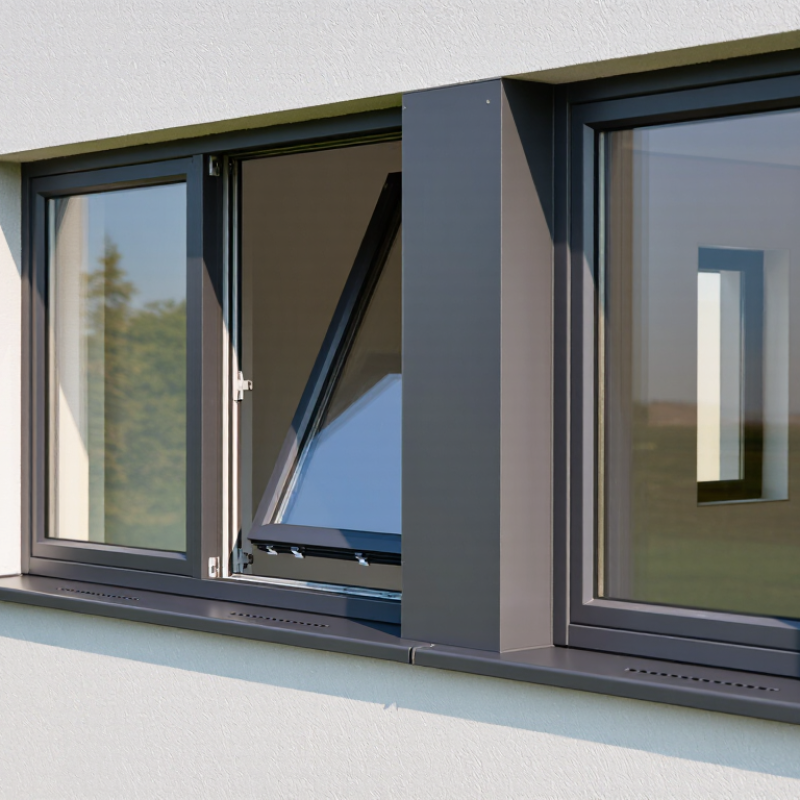
Define Thermal-Break Performance: Polyamide Strips and U-Values Below 1.4 W/m²K
Thermal-break aluminum windows are judged by more than frame appearance. The key detail is the polyamide strip separating interior and exterior aluminum sections. This barrier reduces heat transfer through the frame and limits interior surface cooling. Wider strips can help, but width alone does not prove performance. Material quality, profile design, seals, and drainage also influence results.
Look for documented U-values below 1.4 W/m²K, preferably for the complete window rather than the center glass only. Ask for test conditions, window dimensions, glazing type, and calculation standards. A low number can mislead. A narrow laboratory sample may perform better than a large installed unit with poor sealing. On site, even a strong thermal break can fail when installers leave gaps around the frame. Cold corners appear quickly.
Check whether the polyamide profile includes glass-fiber reinforcement and whether the assembly has continuous gaskets. Request drawings showing the strip position, insulation chambers, and corner connections. Installation depth matters near the wall, especially in cold or windy climates. I have seen specifications promise excellent insulation, while the final window used thinner glass and uninsulated fixing zones. That difference deserves attention. Buyers should compare whole-window Uw values, not only frame Uf values, and inspect test reports before approving the system. Condensation risk also depends on indoor humidity, ventilation, and nearby shading. A technically strong window still needs careful fitting.
Verify Frame, Glass, and Spacer U-Factors Under NFRC 100
10 Tips for Choosing Thermal Break Aluminum System Windows
A thermal break can reduce heat flow through an aluminum frame, but it does not define the window’s full performance. Under NFRC 100-2023, the reported U-factor represents the complete product, including frame, glass, spacer, and edge conditions. Ask for the whole-unit U-factor, not only the center-of-glass value. That distinction matters. A low glass U-factor can still produce a weaker window when the frame or spacer conducts heat efficiently.
The U-factor measures heat transfer in Btu/h·ft²·°F; lower values indicate better insulation. The U.S. Department of Energy reports that windows can influence roughly 25–30% of residential heating and cooling energy use. Even small rating differences deserve attention in large glazed areas. A warm-edge spacer may reduce edge heat loss and condensation risk, while a continuous thermal break limits conductive paths through the aluminum frame. Request NFRC-certified ratings and compare identical sizes, glazing packages, and operating types. Otherwise, the comparison is uneven.
Check the label.
Field performance can still differ. Installation gaps, shims, air leakage, interior humidity, and shading affect results. The honest caveat: a laboratory U-factor is not a promise for every building. I have seen specifications focus heavily on glass while overlooking frame transitions and perimeter sealing. That is an easy mistake. Review the frame, glass, and spacer values together, then question any missing calculation or unexplained rating.
10 Tips for Choosing Thermal Break Aluminum System Windows — Verify Frame, Glass, and Spacer U-Factors Under NFRC 100
Representative whole-window U-factors are shown in Btu/h·ft²·°F. Lower values indicate better heat-transfer resistance. Actual NFRC 100 results depend on the complete window system, including frame geometry, glazing, spacer, dimensions, and edge conditions; these values are for comparison and are not product certifications.
Assess Air Leakage, Water Resistance, and Structural Ratings to AAMA Standards
Choosing a thermal break aluminum window requires more than comparing frame depth or glass options. On site, I have seen attractive units fail because gaskets were compressed unevenly. Start with certified test reports, not catalog claims. Air leakage should be reported at a defined pressure, commonly 75 Pa. Lower leakage means fewer drafts and less conditioned air loss. Ask whether the rating covers the complete window, including hardware, seals, and operable joints.
Water resistance deserves a practical review. A test pressure rating indicates how much simulated wind-driven rain the window withstands before leakage appears. Check the result against the building’s exposure, height, and drainage design. Look for sill pans, weep paths, and properly sealed corners. A strong laboratory result can still disappoint when mortar blocks the sill or the perimeter seal is discontinuous. That detail is easy to underestimate.
Structural ratings under AAMA/WDMA/CSA 101/I.S.2/A440 should match the project’s design pressure, not merely the minimum local requirement. Review positive and negative pressure results, deflection limits, and permanent deformation after testing. For large vents or tall elevations, request engineering calculations and accredited laboratory evidence. Field verification may include visual checks, water testing, and air testing after installation. I would inspect a sample corner before approving production. It costs time. It can expose a weak interface early. No rating replaces careful installation, and that is where many specifications become uncertain.
Match Glazing, SHGC, and Orientation to Climate-Zone Requirements
Thermal-break aluminum system windows must be selected by climate zone, not appearance alone. The U.S. Department of Energy’s Energy Saver guidance estimates that windows account for about 25–30% of residential heating and cooling energy use. That figure is broad, but it shows why glazing deserves careful review. In hot climates, low-SHGC glass limits unwanted solar heat, especially on west-facing façades. In colder zones, a lower U-factor reduces indoor heat loss. Triple glazing may help, though its cost and weight can complicate installation.
Orientation changes the answer. South-facing windows can provide useful winter sun in northern regions, while east and west glass often creates sharp morning or afternoon heat. The International Energy Conservation Code sets different U-factor and SHGC requirements across climate zones, but local amendments still matter. Check the current jurisdictional table.
A thermal break is only one layer of performance. Confirm the complete window’s NFRC-rated U-factor, SHGC, visible transmittance, and air leakage. NFRC ratings compare whole-window performance, not just center-of-glass values. That distinction is easy to miss. I have seen specifications favor impressive glass numbers while ignoring frame size, installation gaps, and exterior shading. The result can be uncomfortable rooms. A careful review should match glazing, orientation, shading, and climate data together, rather than treating one rating as a perfect answer.
