Top 10 Types of Well Casing Pipe You Should Know About?
When drilling for water or oil, the choice of well casing pipe is crucial. These pipes support the well structure and protect it from contamination. Various types of well casing pipes exist, each serving a unique purpose.
Understanding these types can be overwhelming. There's PVC, galvanized steel, and more. Each type has specific advantages and disadvantages. For example, PVC is lightweight and resistant to corrosion but may not withstand high-pressure situations. Steel, while strong, is prone to rust over time.
In this exploration, we will uncover the top 10 types of well casing pipes you should know about. From versatility to durability, these pipes shape the efficiency of your well. Reflecting on their properties can inform better decisions for your drilling projects. The right well casing pipe can make all the difference.
Types of Well Casing Pipes: An Overview
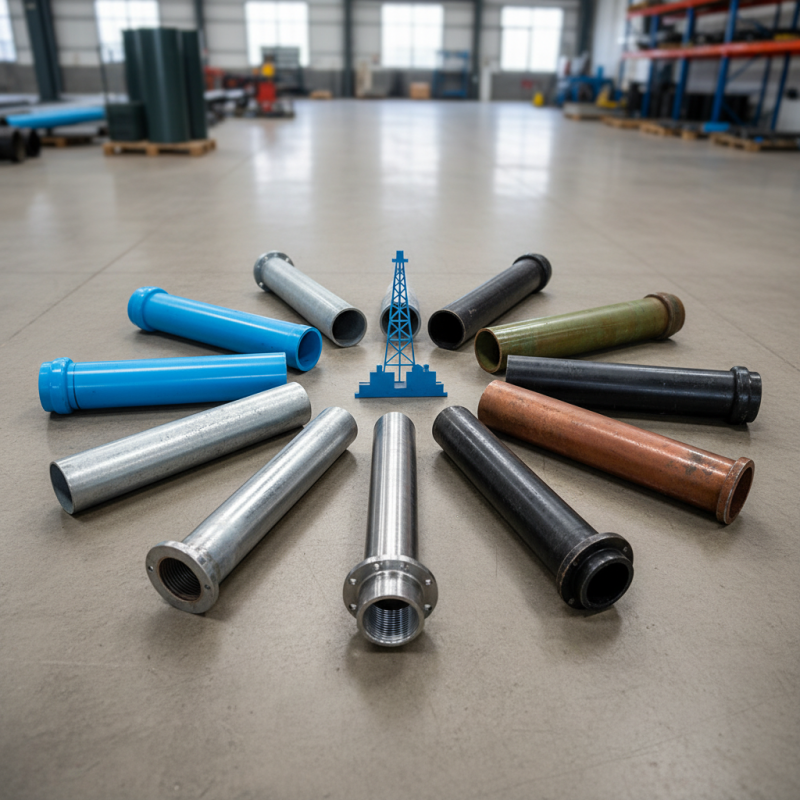
When it comes to well casing pipes, understanding the different types is crucial. Well casings are essential for supporting the well structure and protecting the water supply. They can vary widely in material, size, and purpose. Common materials include steel, PVC, and fiberglass. Each has its own strengths and weaknesses.
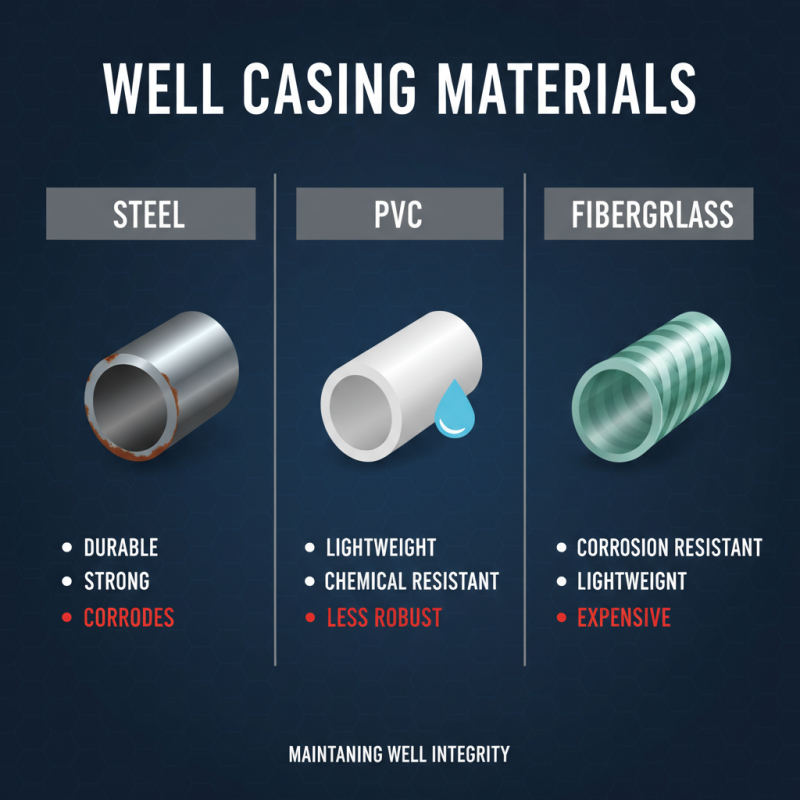
Steel casing, for instance, is robust and durable. However, it can corrode over time. PVC is lightweight and resistant to corrosion, but not as strong. Fiberglass is an interesting option; it offers resistance to harsh chemicals but can be expensive. Balancing cost, durability, and suitability for specific environments is a challenge.
Selecting the right casing pipe requires careful thought. It’s not just about what looks good on paper. Conditions such as soil type, water quality, and depth matter greatly. You might find that what works for one well doesn’t suit another. Reflection on past choices can lead to better decisions in the future. This nuanced approach is key to securing a reliable water source.
Top 10 Types of Well Casing Pipe You Should Know About
| Type of Casing Pipe |
Material |
Diameter (inches) |
Common Use |
Depth Range (ft) |
| Steel Casing |
Carbon Steel |
4.5 - 20 |
General Well Applications |
0 - 1,200 |
| PVC Casing |
PVC |
4 - 12 |
Shallow Wells |
0 - 200 |
| Fiberglass Casing |
Fiberglass Reinforced Plastic |
6 - 10 |
Corrosive Environments |
0 - 1,000 |
| Concrete Casing |
Reinforced Concrete |
10 - 24 |
Large Scale Wells |
0 - 1,500 |
| Composite Casing |
Composite Materials |
4 - 10 |
Modern Wells |
0 - 600 |
| Aluminum Casing |
Aluminum Alloy |
6 - 12 |
Lightweight Applications |
0 - 300 |
| Galvanized Casing |
Galvanized Steel |
4 - 16 |
Corrosion Resistance |
0 - 1,000 |
| Stainless Steel Casing |
Stainless Steel |
6 - 12 |
High Corrosion Resistance |
0 - 800 |
| Liner Casing |
Various Materials |
4 - 16 |
Protecting Other Casings |
0 - 500 |
| Well Completion Pipe |
Various Materials |
4 - 16 |
Final Well Assembly |
0 - 1,500 |
Benefits of Different Materials Used in Well Casing
Well casing is essential for maintaining the integrity of a well. The choice of casing material can significantly affect its performance and longevity. Common materials include steel, PVC, and fiberglass, each with unique benefits and drawbacks. Steel offers durability and strength but may corrode over time. PVC is lightweight and resistant to chemicals but can be less robust under extreme pressures. Fiberglass is resistant to corrosion, yet it can be more expensive and less commonly available.
Different casing types serve various environmental conditions. For example, in acidic soils, PVC might be preferred. In high-pressure areas, steel is often the go-to. However, not all projects require the highest quality materials. Sometimes, budget limits guide decisions. This can lead to using subpar materials, which may not withstand the environment effectively. Such choices often lead to costly repairs later.
Water quality also plays a role in material selection. For instance, stainless steel may be needed in saline environments. Using the wrong casing can lead to contamination. Each material comes with its own challenges and advantages. Consideration of local conditions is critical, yet sometimes overlooked. Decisions have long-term implications. It's worth pondering which material truly fits your needs.
Common Applications of Various Well Casing Types
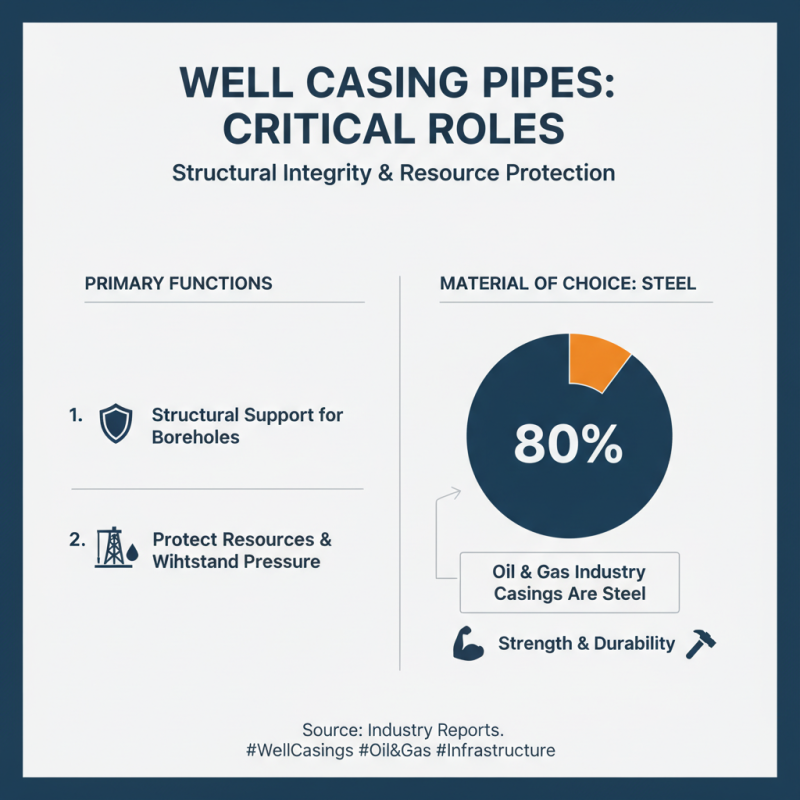
Well casing pipes serve critical roles in various applications. They provide structural integrity to boreholes. For example, steel casing is commonly used in oil and gas industries. It can withstand high pressures and protect resources. According to industry reports, nearly 80% of well casings in these sectors are made of steel due to its strength and durability.
Another important type is PVC casing. It is lightweight, making it ideal for groundwater wells. Research shows that PVC is resistant to corrosion, which extends its longevity. Many installation projects prefer this type for shallow depths. However, its use may be limited in certain geological conditions.
Composite casing pipes are gaining attention for their versatility. These pipes are made from a mix of materials, offering both strength and lightweight properties. Some reports indicate a 60% increase in composite casing usage in geothermal wells. This trend is noteworthy, but challenges like material compatibility need careful consideration. Addressing these complexities can improve performance and sustainability.
Key Factors to Consider When Choosing Well Casing
Choosing the right well casing is crucial for the longevity and efficiency of your well. Several key factors come into play. Consider the material of the casing pipe. Steel and PVC are common choices. Each has its pros and cons. Steel is strong but may rust. PVC resists corrosion but may not withstand as much pressure. Think about the depth of your well. Deeper wells require stronger casing pipes.
Another important factor is the local geology. The type of soil and rock can influence casing choices. Soft soil may require a different casing type than hard rock. It’s wise to consult geological surveys or local experts. Don’t forget to evaluate the project costs. Sometimes, choosing a cheaper option may lead to higher maintenance in the long run. It's a balancing act between cost and quality.
Finally, installation is key. Proper installation will affect the overall performance of the casing. A poorly installed casing can lead to leaks or failure. Reflection on your decision-making process is essential. What did you prioritize? Cost? Quality? The right choices now will pay off later. Always consider the long-term implications of your choices.
Maintenance and Durability of Well Casing Pipes
Well casing pipes are vital for ensuring the structural integrity of water wells. Proper maintenance is crucial for their durability. Without it, pipes can corrode or crack over time. Regular inspections help detect these issues early. Look for signs like rust or leaking water around the wellhead. Paying attention to these detail can save significant costs in the long run.
Cleaning the pipes periodically enhances their lifespan. Sediment buildup can weaken the casing. When debris gathers, it may hinder water flow or degrade water quality. Simple maintenance tasks can yield remarkable benefits. It’s essential to schedule these check-ups to avoid unforeseen failures.
Consider the materials used for these casing pipes. Different materials react differently over time. Some offer better resistance to corrosion. Others may not last as long. Sometimes, a less expensive option may lead to higher costs later. Reflect on the choices made when installing these pipes. How do they stand up in your specific environment?
Top 10 Types of Well Casing Pipe - Maintenance and Durability