
Request A Quote

Phone: 416-244-6476
Email:

    Top Polyethylene Floats for Global Buyers

    Global buyers rarely need the same float, even when their projects look similar on paper. Polyethylene Floats must match the water conditions, load, installation method, and expected service life. A marina in a sheltered basin has different demands from a working dock exposed to chop, sun, and repeated contact with boats. Small details matter. Wall thickness matters. So do connection points.

    For this overview, polyethylene-floats specialist Elena Morris offers a practical reminder: “Choose the float for its working load and exposure, not its appearance alone.” Buyers should compare rated buoyancy, material quality, UV resistance, and the strength of molded fittings. Ask how the stated capacity was tested. Request drawings and clear product specifications, especially when floats will support people or equipment. A low purchase price can look convincing. It may not reflect replacement costs, freight, or installation needs.

    The best choice is not always the largest float. Oversizing can add cost and complicate handling, while undersizing can leave a platform sitting too low. Check the intended load with the supplier, including users, tools, and changing water conditions. Then verify that the proposed layout distributes weight as planned. One point deserves a second look: published figures can be difficult to compare when test methods differ. Global buyers should seek written, project-specific guidance rather than rely on a catalog image. This guide examines leading options, useful specifications, and questions worth asking before placing an order. The details matter. So does sound judgment.
    Top Polyethylene Floats for Global Buyers

    Understanding Polyethylene Floats and Their Main Applications

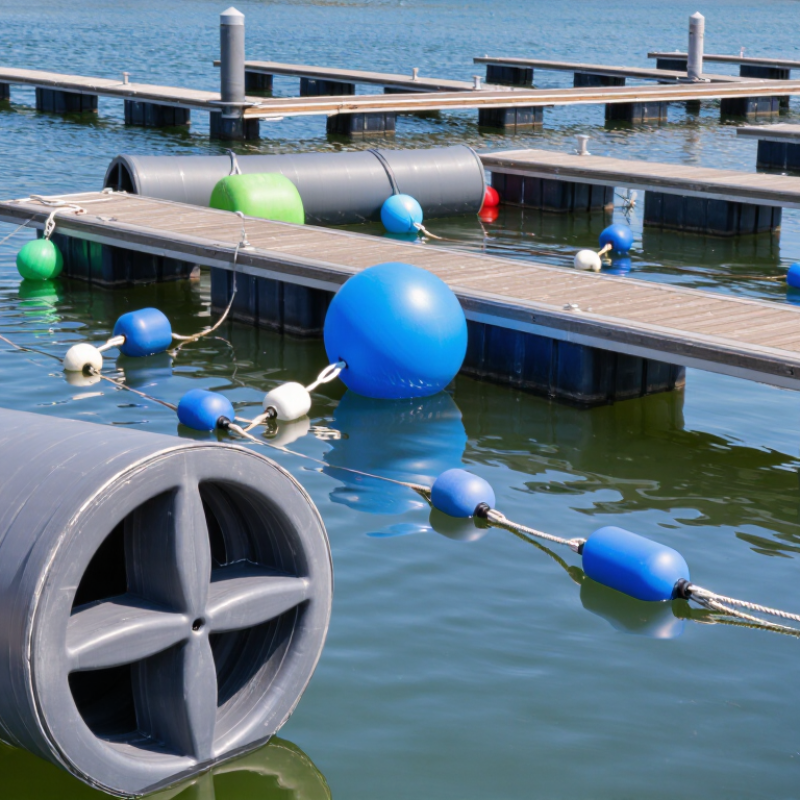
    Polyethylene floats are hollow or foam-filled buoyant units used to support docks, pipelines, aquaculture equipment, and floating barriers. Their low weight makes handling easier, while resistance to moisture and many common chemicals can suit outdoor use. A sunlit marina exposes floats to waves, abrasion, and ultraviolet light. Material alone does not determine service life. Wall thickness, seams, fittings, and installation all matter.

    Applications differ. Modular dock floats need predictable buoyancy and secure attachment points. Pipeline floats must match pipe diameter, load, and water conditions. In aquaculture, floats support nets or walkways, but loads can change as equipment gathers fouling or waterlogged debris. That matters. Buyers should check rated buoyancy, dimensions, temperature limits, and repair options against the project. Published specifications help, but site conditions can still surprise you.

    Tips: Estimate the full working load, including people, gear, and waves. Ask how buoyancy ratings were tested, and inspect samples for even walls and sound joints. Confirm UV protection and fastening details before ordering. Keep a suitable safety margin, then review assumptions with an installer or marine engineer. There is no universal float.

    Comparing Float Designs for Different Water Environments

    Polyethylene floats should match the water, load, and maintenance conditions—not just the purchase price. The FAO’s The State of World Fisheries and Aquaculture 2024 reports 94.4 million tonnes of aquatic-animal production from aquaculture in 2022. That scale makes dependable flotation important, but the report does not prescribe a float design. Site conditions still decide.

    On calm freshwater ponds, modular, rotationally molded floats can support walkways or light platforms with simple, replaceable sections. Check the load path. Concentrated loads from a pump or feed bin can tilt a buoyant platform, even when its total capacity appears adequate. In coastal water, larger waves and repeated impacts may favor wider spacing, reinforced attachment points, and added reserve buoyancy. Salt spray also makes metal fittings a maintenance concern, though the polyethylene body itself does not eliminate wear or UV exposure. For marinas or exposed work areas, inspect seams, fasteners, and surface damage on a set schedule. Foam-filled units can limit water entry after shell damage, but add weight and can complicate repairs. That trade-off is easy to underestimate. Compare expected loads, wave exposure, and repair access before selecting a configuration.

    Assessing Buoyancy, Durability, and Material Quality

    Polyethylene floats earn their place through low density, impact tolerance, and practical fabrication. Typical high-density polyethylene (HDPE) grades have densities around 0.94–0.97 g/cm³, below fresh water’s roughly 1.00 g/cm³. That difference creates buoyancy, but payload, wall thickness, and trapped water all affect real-world performance. Measure material density using ISO 1183-1 methods rather than relying only on a supplier’s grade description. Small details matter.

    PlasticsEurope’s Plastics—the Fast Facts 2024 reports that HDPE accounted for 12.1% of global plastics production in 2023. This indicates broad material availability, not uniform product quality. For buyers, inspect molded walls, seams, and fittings, then ask for documented resin and density test results. UV exposure can embrittle untreated polyethylene over time, while rough handling may score the surface or stress attachment points. A float can look robust and still sit unevenly when loaded. Check its rated load in water, not just its dimensions on a drawing. And ask how buoyancy changes after prolonged sun exposure. A little uncertainty remains: published material data cannot replace testing the finished float under its actual operating conditions.

    Top Polyethylene Floats for Global Buyers: Buoyancy, Durability, and Material Quality

    Typical polyethylene density ranges are approximately 0.910–0.940 g/cm³ for LDPE, 0.915–0.925 g/cm³ for LLDPE, and 0.941–0.965 g/cm³ for HDPE. The chart shows each range’s midpoint alongside fresh water at approximately 1.000 g/cm³. Because these polyethylene grades are less dense than water, they can provide buoyancy; a finished float’s load capacity and durability also depend on its design, wall thickness, and manufacturing quality.

    Reviewing Manufacturing Standards and Customization Options

    For polyethylene floats, manufacturing quality starts with a written specification, not a color sample. Define the resin grade, minimum wall thickness, UV stabilization, operating temperature, and expected load. OECD’s Global Plastics Outlook (2022) reports that global plastics production reached 460 million tonnes in 2019. That scale makes material traceability and documented resin properties practical procurement concerns, even for a single float order.

    Ask suppliers to identify their molding process and inspection methods. For rotationally molded floats, request wall-thickness measurements at several points, dimensional checks, and buoyancy or leak-test records. ASTM D638 can guide tensile testing, while ASTM G154 addresses accelerated UV exposure; neither standard alone certifies a finished float. Details matter. Confirm how fittings are reinforced, how seams are inspected, and whether test samples represent the production batch. A neat certificate is not the same as a reliable test.

    Customization should match the actual site. Specify float dimensions, connection points, color, and required freeboard under load. Salt spray, sunlight, abrasion, and repeated impacts may call for different design choices. Ask for drawings before tooling, then compare the approved sample with production measurements. I would also request batch identification and a clear tolerance table. It can feel like paperwork. Still, vague tolerances often become expensive surprises after installation.

    Choosing Suppliers and Managing Global Procurement

    Top Polyethylene Floats for Global Buyers
    Choosing Suppliers and Managing Global Procurement

    Choosing polyethylene floats for an international project starts with the working conditions, not the catalog photo. Note the water type, expected load, temperature range, and exposure to sunlight. A float that suits a calm pond may not perform well in rough coastal use. Ask suppliers for dimensions, buoyancy data, material specifications, and stated operating limits. Keep the requirements in writing.

    A clear quote should identify unit pricing, minimum order quantities, production time, packaging, and shipping terms. Request a sample when practical, then check its dimensions and finish against your project needs. Small checks matter. Confirm how the supplier handles inspection records and damage claims before placing a large order. The lowest price can become expensive if packaging is weak or delivery dates keep shifting. That assumption can be wrong, too; paying more does not automatically mean better service.

    For global procurement, compare lead times with your installation schedule and allow room for port delays or seasonal demand. Ask how floats are packed to prevent scuffing or deformation during transit. Keep email approvals, drawings, and specification changes together, so different teams are working from the same details. A trial shipment may reveal issues that a polished quotation cannot. Procurement plans still miss things; review the first delivery carefully and adjust later orders based on what you actually receive.

    Top Polyethylene Floats for Global Buyers - Choosing Suppliers and Managing Global Procurement
    Float Category Typical Construction Common Applications Specifications to Compare Global Procurement Checks
    Rotomolded Polyethylene Buoy Hollow polyethylene shell formed by rotational molding; buoyancy depends on the finished shape, wall construction, and sealed design. Mooring, markers, docks, and general-purpose flotation. Overall dimensions, shell material, wall-thickness requirements, fittings, attachment points, color, and stated load or buoyancy rating. Request drawings and a written rating for the intended operating conditions. Confirm UV-resistance requirements, closure details, and inspection criteria.
    Foam-filled polyethylene float Polyethylene outer shell with buoyancy foam inside; the foam type and filling method should be identified in the specification. Applications where buyers seek added support if the outer shell is damaged, subject to the product design and stated rating. Shell dimensions, foam type and density, filling coverage, fittings, weight, and rated buoyancy. Ask for the foam and shell material declarations, quality-control records, and the basis of the buoyancy rating. Check applicable import and chemical documentation requirements.
    Clamp-on pipe float One or more polyethylene float sections secured around a pipe or hose using the specified fastening system. Supporting submerged pipelines, hoses, and cables in water. Compatible pipe outside diameter, float length, internal clearance, fastening method, spacing plan, and required net buoyancy. Provide the pipe dimensions and operating conditions before requesting a quotation. Confirm fastener material, assembly instructions, and replacement-part availability.
    Aquaculture cage float Polyethylene floats or buoyant collars designed to support a cage or net-pen structure. Fish-farming cages and related floating aquaculture equipment. Float geometry, frame compatibility, attachment layout, rated load, net weight, and resistance requirements for the installation environment. Confirm compatibility with the complete cage design and request documented load assumptions. Review local requirements for materials used in aquaculture installations.
    Modular polyethylene pontoon Interconnected molded modules assembled into a floating platform or dock system. Floating docks, access platforms, and temporary or modular work platforms. Module dimensions, connection method, deck interface, system load rating, anchoring arrangement, and replacement-module compatibility. Request system-level drawings and load information, not only individual-module data. Confirm assembly hardware, installation guidance, and shipment configuration.
    Net or cable support float Compact polyethylene float with a specified attachment feature for supporting a line, net, or cable. Netting, aquaculture lines, and other applications where distributed flotation is required. Dimensions, attachment style, line compatibility, spacing, color, and buoyancy per float. Verify the required quantity and spacing with the system designer. Check that attachment features suit the line diameter and expected service conditions.
    Procurement comparison point Compare products against the same written performance specification rather than relying on category names alone. Supplier evaluation and quotation comparison across domestic or international markets. Request material identification, drawings, tolerances, weight, rated buoyancy or load, test method, warranty terms, and quality-control records. Specify delivery terms using the agreed Incoterms® rule and named place. Confirm lead time, packaging, shipment dimensions, export documents, payment terms, and inspection arrangements.
    Buyer note: Float capacity and suitability depend on the product design and operating conditions. Confirm the required buoyancy or load with the supplier and, where relevant, the project engineer; do not infer performance from float dimensions alone.

    Article Source: