What is a Water Pump System and How Does It Work?
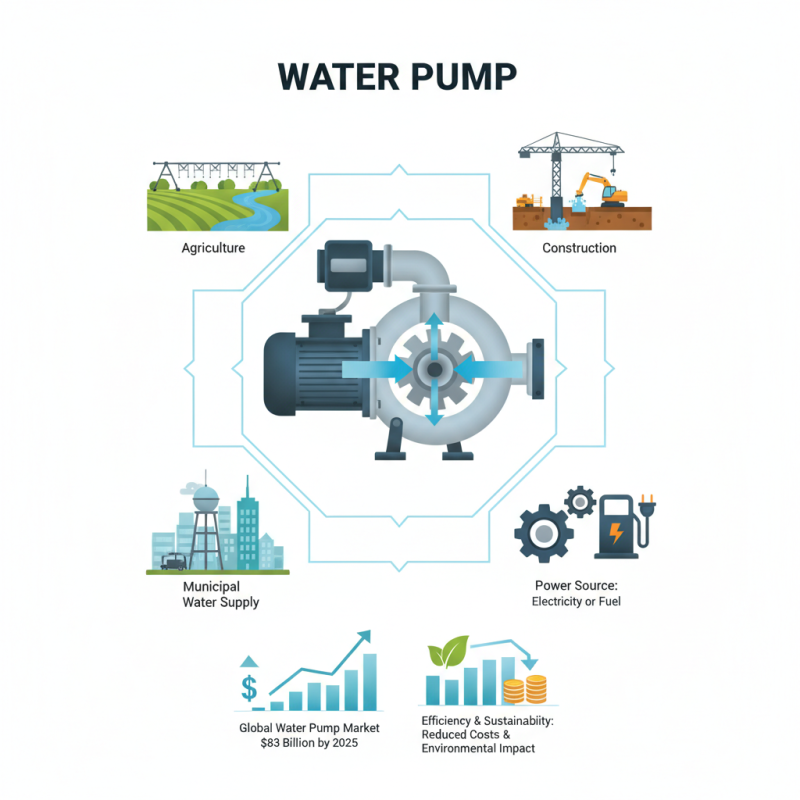
Water pump systems play a crucial role in various industries, including agriculture, construction, and municipal water supply. According to recent reports from the International Pump Industry, the global water pump market is expected to reach $83 billion by 2025. These systems work by moving fluids through mechanical action, typically using electricity or fuel to power the pump.
Despite their widespread usage, many do not fully understand how a water pump system operates. Each component, from the motor to the impeller, serves a specific function that is vital to performance. For instance, choosing the right type of pump can significantly affect efficiency and operational costs. Yet, industries often overlook vital aspects that lead to inefficiencies and increased expenses.
In light of these challenges, a deeper examination of water pump systems is essential. This exploration will reveal the intricacies of their operation and highlight how appropriate choices can lead to better sustainability. Gaining insights into water pump systems not only improves efficiency but also supports environmentally friendly practices.
What is a Water Pump System?
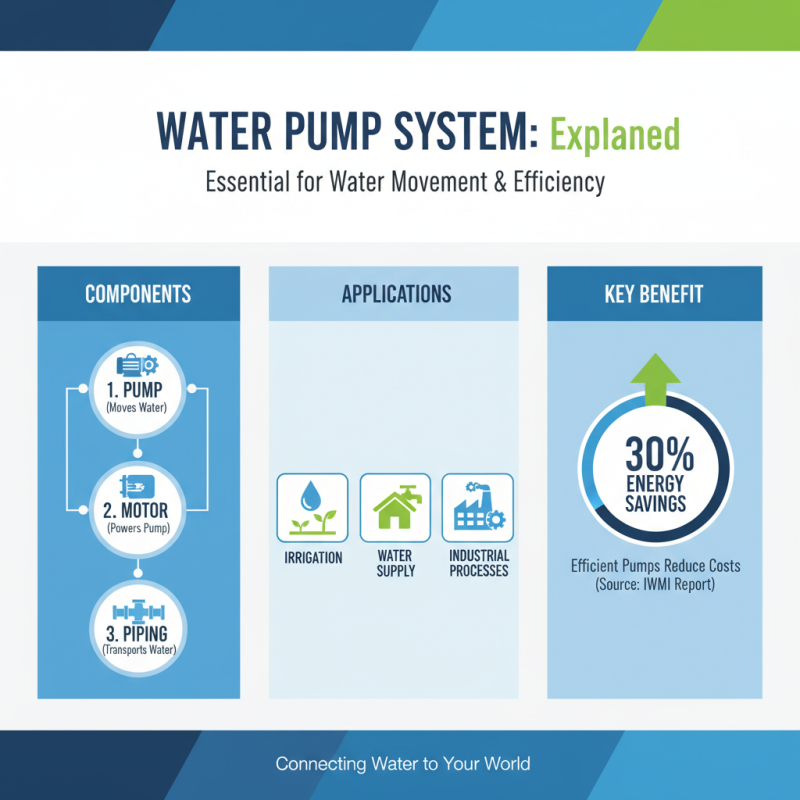
A water pump system is essential for various applications, including irrigation, water supply, and industrial processes. It consists of a pump, motor, and piping. The pump moves water from one place to another, making it a crucial component in many sectors. In fact, according to a report by the International Water Management Institute, efficient water pumps can reduce energy costs by up to 30%.
Water pumps operate by creating a pressure differential. This allows water to flow into the pump, where it is then pushed out through the discharge pipe. The type of pump used will depend on the specific needs of the application. For instance, centrifugal pumps are widely used for their efficiency. However, not all systems are optimized. An improperly sized pump can lead to increased energy consumption and maintenance issues.
**Tip:** Regular maintenance can extend the life of your pump system. Check for leaks and wear in seals to avoid costly failures.
An effective water pump system can significantly enhance productivity and reduce waste. However, many installations still struggle with outdated technology. As a result, efficiency is often compromised. Upgrading to newer models can provide substantial benefits and savings for users.
**Tip:** Keep an eye on your pump's performance metrics. Small fluctuations can indicate underlying problems.
Key Components of a Water Pump System
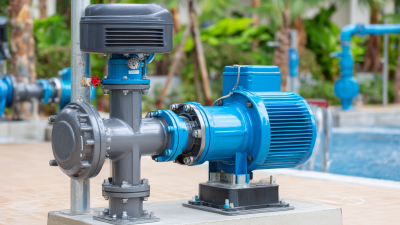
A water pump system is essential for moving water efficiently. At its core, it consists of several key components. The motor is vital. It powers the pump, enabling it to draw and push water. A strong motor is often expensive, but it makes a big difference in efficiency.
Another important part is the pump itself. Different types serve various applications. Centrifugal pumps are common for their ability to handle large volumes. Positive displacement pumps are great for precise control. Each type has its unique benefits and drawbacks. The choice can impact performance significantly.
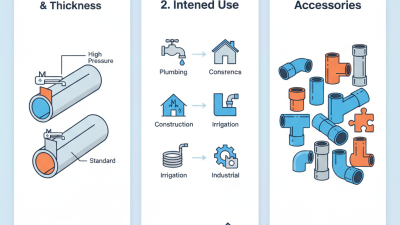
Piping is also critical. It connects the pump to its source and destination, and pipe size matters. A narrow pipe can restrict flow, while a wider one allows for a smoother transfer. Don’t forget about valves; they regulate flow and protect against backflow. Each component has its role, but choosing the right ones is often challenging. It's easy to overlook these details. Proper installation is just as crucial for the whole system to function effectively.
Water Pump System Efficiency Comparison
This chart displays the efficiency of different types of water pump systems. While Positive Displacement Pumps have the highest efficiency at 90%, other types such as Submersible and Centrifugal Pumps also provide significant efficiency ranges.
How Water Pump Systems Operate Mechanically
Water pump systems play a crucial role in various industries, from agriculture to construction. These systems typically consist of a pump, a motor, and a network of pipes. According to the U.S. Department of Energy, approximately 20% of electricity consumed in the industrial sector is used for pumping systems. Understanding their mechanical operation is essential for optimal performance.
Mechanically, water pump systems function by converting mechanical energy from the motor into hydraulic energy. The pump draws water through an intake, using centrifugal or positive displacement principles. Centrifugal pumps, commonly used in many applications, create flow by spinning water. In contrast, positive displacement pumps trap water in a chamber and force it out. A study from the Hydraulic Institute reports that proper alignment and maintenance can enhance efficiency by over 10%.
However, not all systems run perfectly. Common issues include cavitation, which can damage pumps and reduce efficiency. Moreover, improper sizing of pumps can lead to increased energy consumption. Regular monitoring is essential to address these inefficiencies and maintain system longevity. Understanding these complexities can significantly improve the operational life of water pump systems.
Maintenance and Troubleshooting for Water Pump Systems
Water pump systems are crucial for efficient water management. However, they require regular maintenance to function optimally. According to the American Water Works Association, improper maintenance can reduce a pump's lifespan by 50%. This statistic emphasizes the need for proactive measures. Common issues include leaks, abnormal noises, and reduced pressure. These problems can often indicate a need for repairs or replacement.
Regular inspections are essential. Checking for loose bolts or worn-out seals can prevent major breakdowns. Also, monitoring vibration levels can help identify issues early.
Keep an eye on energy consumption; unexpected spikes may signal inefficiencies. Addressing these concerns promptly could save money and prolong the system's life.
Tips to follow: Document every inspection. This will help identify patterns and recurring issues. Clean filters regularly to maintain efficiency. In case of irregular sounds, don’t ignore them. Investigate quickly, as they can lead to serious failures. Ultimately, a well-maintained water pump system enhances reliability and performance. Take these actions to ensure your system runs smoothly.