What Are the Top Plastic Tube Manufacturers?
Choosing the top plastic tube manufacturers requires more than comparing company size or website claims. A reliable evaluation examines material quality, production capacity, tooling expertise, and documented quality controls. It also considers whether a manufacturer can produce tubes for cosmetics, pharmaceuticals, food packaging, household products, or industrial applications. Each sector brings different requirements.
No single supplier leads every category.
This guide introduces manufacturers with proven capabilities, practical experience, and transparent operating standards. It looks at extrusion methods, barrier layers, printing accuracy, closure design, and leak testing. Factory certifications may support confidence, but certifications alone do not guarantee consistent performance. Buyers should review current certificates, request samples, and confirm testing procedures before making a decision.
Details matter.
A useful comparison also includes minimum order quantities, mold costs, lead times, technical support, and shipping reliability. Some manufacturers excel at high-volume production, while others provide better flexibility for custom sizes or short development runs. Environmental performance deserves careful attention too. Recycled content, lightweight designs, and recyclable structures can reduce material use, although claims should be supported by clear data.
This overview is not a permanent ranking. Market conditions, equipment upgrades, and regional supply risks can change the results. That limitation deserves attention. The strongest supplier on paper may not suit a buyer’s filling line, budget, or regulatory market. By combining factory evidence, product samples, customer feedback, and technical review, readers can make a more informed decision when selecting a plastic tube manufacturing partner.
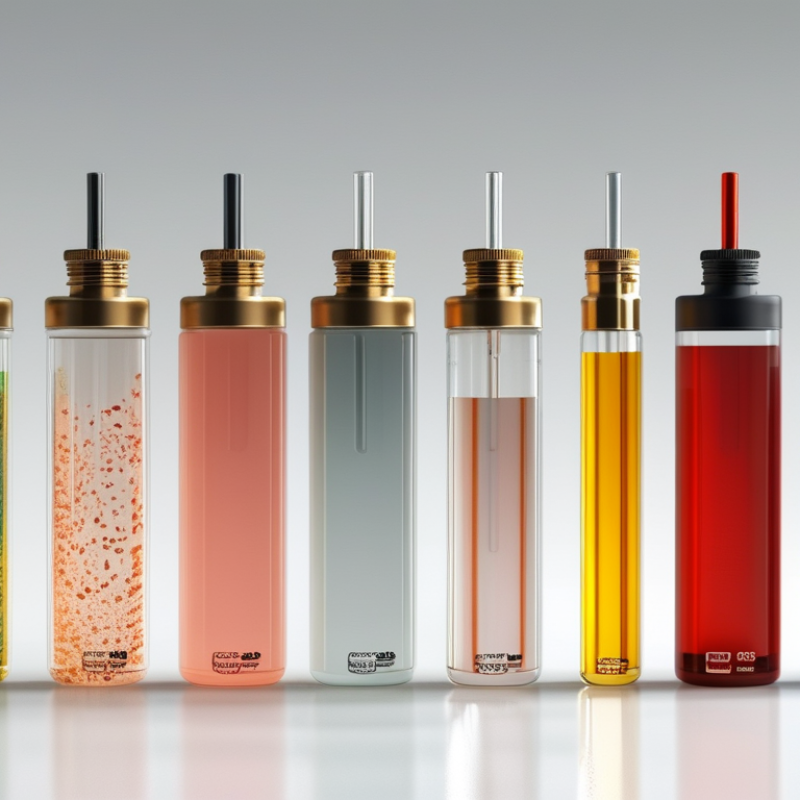
What Defines a Leading Plastic Tube Manufacturer?
A leading plastic tube manufacturer delivers more than attractive packaging. It controls resin selection, wall thickness, sealing, and batch traceability. These details protect products during filling, transport, and daily use. ISO 9001 quality systems, documented testing, and clear corrective-action records show operational maturity. Independent audits matter too. They reveal weaknesses that brochures often hide.
Environmental performance now requires measurable evidence. The OECD’s Global Plastics Outlook (2022) reported 353 million tonnes of plastic waste in 2019, with packaging representing about 40% of plastic use. A responsible manufacturer should therefore measure material usage, recycled content, energy consumption, and production waste. UNEP’s Turning off the Tap report (2023) also identified packaging redesign and reuse as major opportunities for reducing plastic pollution. Still, recycled material can affect color, strength, or barrier performance. No claim should be accepted without test results.
Tips: Ask for migration testing, seal-strength data, and resin certificates. Check whether suppliers can trace each batch to its raw materials. Request evidence for recycled-content claims, not broad sustainability language. A useful supplier should explain failure rates, not only success stories. Perfection is unlikely. Honest limitations are a stronger sign of expertise than vague promises. Evaluate pilot samples under real filling, storage, and transport conditions before approving larger production.
Which Technologies Are Used in Plastic Tube Manufacturing?
Plastic tube manufacturing relies on several technologies, each suited to a different product requirement.
Extrusion is widely used for producing continuous tube bodies from polyethylene, polypropylene, or multilayer compounds. The material passes through a heated die, where temperature and pressure control the wall thickness. Small temperature changes can create visible defects.
Co-extrusion combines several layers in one process. A tube may include a barrier layer, an adhesive layer, and an outer protective layer.
This structure helps protect sensitive creams, gels, or food products from oxygen and moisture.
Injection molding forms precise shoulders and closures, while compression molding can improve dimensional consistency.
Some factories use in-line cameras to inspect color, shape, and surface marks. Leak testing is also important, especially when tubes must withstand squeezing and repeated handling.
Decoration technologies include offset printing, flexographic printing, labeling, and digital printing.
Digital systems support short runs and variable designs, but their surface adhesion can be inconsistent without proper treatment. Plasma or flame treatment may improve ink bonding.
Recycled content is gaining attention, although it can affect color, odor, and mechanical strength.
Experienced manufacturers test resin batches, sealing temperature, drop resistance, and cap torque before production.
The process is highly automated, yet human judgment still matters.
A clean-looking tube can hide weak seals or uneven layers.
More testing is not always better; poorly chosen tests can waste time without revealing the real failure.
How Do Manufacturers Differ by Materials and Applications?
What Are the Top Plastic Tube Manufacturers?
Manufacturers differ mainly through material choices, barrier control, and application testing. Polyethylene tubes suit cosmetics and personal care because they squeeze smoothly and resist moisture. Polypropylene handles higher temperatures and offers stronger chemical resistance. For oxygen-sensitive creams, multilayer structures may combine polyethylene with an EVOH barrier. Aluminum laminate provides stronger protection against light and air, but recycling systems may handle it less easily.
Market data shows why these decisions matter. Grand View Research estimates the global plastic tubes market could grow at about 6.5% annually from 2024 to 2030. Packaging remains the largest plastics-use sector in Europe, representing roughly 40% of demand, according to PlasticsEurope’s 2023 report.
These figures do not mean every tube needs the same material. A toothpaste tube needs controlled dispensing and barrier protection. A pharmaceutical tube requires tighter cleanliness and dosage testing. A food tube may need odor control and migration assessment.
Experienced manufacturers also differ in wall thickness, shoulder design, cap engineering, and recycled-content integration. PCR content can reduce virgin resin use, although appearance and consistency may suffer. That trade-off deserves honest testing.
Smithers’ packaging studies repeatedly highlight barrier performance and recyclability as competing design pressures. In practice, the best supplier is not always the one with the lowest price. It is the one that validates seal strength, compatibility, filling speed, and shelf life under real conditions. Mistakes happen when material claims replace application testing.
What Quality and Sustainability Standards Should Manufacturers Meet?
Top Plastic Tube Manufacturers: What Quality and Sustainability Standards Should Manufacturers Meet?
Reliable plastic tube manufacturers should treat quality as a daily process, not a certificate on the wall. ISO 9001 can support controlled production, traceability, and corrective actions. For cosmetic, food, or pharmaceutical tubes, manufacturers should also follow applicable hygiene and safety requirements. Production records should show resin batches, printing inks, sealing temperatures, and inspection results. A practical factory check includes measuring wall thickness, testing cap torque, and examining seals under pressure. Small defects matter. A leaking tube can damage products and customer trust.
Sustainability requires more than using recycled plastic in marketing claims. Manufacturers should assess energy use, scrap rates, water consumption, and packaging weight. ISO 14001 may help organize environmental controls and improvement targets. They should also verify recycled content through reliable documentation and test whether it affects odor, strength, or product compatibility. Some factories still overlook transport emissions and production waste. That is a weakness worth acknowledging. Better decisions come from measured data, not attractive promises.
Tips: Ask for recent audit reports, material declarations, and batch traceability records. Request samples from different production runs. Check seal strength after heat and cold exposure. Discuss recyclable structures early, because design choices limit later improvements. No audit is perfect. Regular review keeps standards meaningful.
How Can Buyers Evaluate and Select the Right Manufacturer?
Choosing a plastic tube manufacturer requires more than comparing unit prices. Buyers should examine resin traceability, barrier performance, print quality, and production consistency. Grand View Research reported that the global plastic tubes market exceeded USD 6 billion in 2023. It also forecast annual growth above 6% through 2030. That growth attracts new suppliers, but market growth proves nothing. Ask for recent batch records, not polished samples. Request resin certificates, migration test results, and documented change-control procedures. A capable plant should explain wall-thickness tolerances and closure torque clearly.
Audit evidence against the intended application. ISO 9001 certification supports process control, yet certification does not guarantee good tubes. Inspect extrusion lines, clean areas, inspection frequency, and rejected-product handling. For packaging that touches cosmetics, food, or medicines, confirm required testing with an independent laboratory. The OECD’s Global Plastics Outlook reported 353 million tonnes of plastic waste in 2019. It projects nearly three times more by 2060 without stronger action. Ask whether the tube uses compatible mono-materials, recycled content, or a verified recovery pathway. Claims need evidence. Vague “green” language still appears too often.
Tips: Build a weighted scorecard before requesting quotations. Score quality, compliance, delivery reliability, and total cost separately. Run a pilot order with three production lots. Measure dimensions, leakage, opening force, artwork registration, and ageing performance. Also review peak-season capacity, minimum order quantities, tooling ownership, and corrective-action speed. A low price can become expensive after delays or discarded filling lines. I would keep an uncertainty margin; laboratory results rarely predict every factory reality.
| Evaluation Dimension | Suggested Weight | What a Qualified Manufacturer Should Demonstrate | Relevant Materials, Processes, or Standards | Buyer Verification Method |
|---|---|---|---|---|
| Material Expertise | 15% | The manufacturer should be able to recommend a resin structure based on chemical compatibility, flexibility, stiffness, temperature exposure, opacity, and end-use requirements. |
|
Request material safety data, technical data sheets, compatibility testing, and representative samples made with the proposed resin structure. |
| Tube Construction Capability | 12% | The supplier should offer the construction type required for the product, including single-layer, multilayer, coextruded, laminated, or barrier tube designs. |
|
Review cross-sectional samples, layer specifications, wall-thickness data, and the supplier’s documented process-control plan. |
| Dimensional Control | 12% | The manufacturer should control outside diameter, inside diameter, wall thickness, tube length, neck dimensions, ovality, and weight according to an approved drawing. | Dimensional tolerances are application-specific and should be agreed in the technical drawing rather than assumed from a universal industry value. | Ask for a capability study, inspection records, calibrated-gauge certificates, and first-article measurements against the approved specification. |
| Closure and Sealing Compatibility | 10% | The tube, shoulder, or dispensing head should provide a reliable fit with the selected cap, pump, applicator, or sealing system. | Common checks include thread engagement, snap-fit retention, orifice alignment, torque, leak resistance, and compatibility with induction or heat-sealing methods where applicable. | Conduct assembled-package testing, leak testing, torque testing, drop testing, and accelerated aging using the actual closure and filled product. |
| Barrier and Product Protection | 10% | The supplier should match the tube structure to the product’s sensitivity to oxygen, moisture, light, solvents, fragrance loss, or external contamination. | Barrier performance should be expressed through a defined test method, such as oxygen transmission rate or water-vapor transmission rate, where relevant. | Require test reports showing the test conditions, specimen structure, measurement units, laboratory method, and acceptance limits. |
| Quality Management System | 10% | A mature quality system should cover incoming materials, process controls, in-process inspection, nonconforming product, corrective action, traceability, and change control. | ISO 9001 is a widely used quality-management standard. Medical-device packaging may require additional controls aligned with ISO 13485 and applicable regulatory requirements. | Review valid certificates, audit summaries, quality manuals, corrective-action records, and procedures for approving changes to materials, tooling, or production sites. |
| Regulatory and Market Compliance | 10% | The manufacturer should provide documentation appropriate to the destination market and the intended use, including food, cosmetic, pharmaceutical, or medical applications. | Depending on the application and market, documentation may reference U.S. FDA food-contact requirements, EU food-contact rules, relevant GMP expectations, or medical-device packaging requirements. | Request declarations of compliance, composition information, migration or extractables data where applicable, and confirmation of the exact production site covered by the documentation. |
| Testing and Validation | 8% | The supplier should have access to suitable testing for mechanical performance, sealing, leakage, environmental exposure, and package functionality. | Potential tests include tensile properties, compression, drop resistance, seal integrity, leak testing, aging, chemical compatibility, and visual inspection. | Ask for a validation protocol, sampling plan, acceptance criteria, raw data, and a final report that identifies the tested material and production batch. |
| Decoration and Branding Readiness | 5% | The supplier should be able to maintain print registration, color consistency, surface treatment, and artwork control for the selected tube material. | Common options include offset printing, screen printing, flexographic printing, digital printing, labeling, varnishing, and hot-stamp decoration. | Approve a color standard, artwork proof, print tolerances, rub-resistance requirements, and a production sample before mass manufacturing. |
| Production Capacity and Scalability | 5% | The manufacturer should demonstrate sufficient extrusion, molding, assembly, decoration, inspection, and packaging capacity for both current and forecast demand. | Capacity should be evaluated by product type, tube size, decoration method, number of shifts, tooling availability, and validated production rate—not by a general annual claim alone. | Request a capacity plan, current utilization range, tooling schedule, production bottleneck analysis, and a written plan for demand increases. |
| Minimum Order and Commercial Fit | 4% | The supplier’s minimum order quantity, tooling charges, sampling fees, payment terms, and packaging requirements should fit the buyer’s launch and replenishment plan. | Minimum order quantities vary according to tube size, resin structure, decoration method, tooling, and production setup; there is no universal industry minimum. | Compare itemized quotations that separate tooling, samples, unit price, decoration, testing, freight assumptions, and recurring versus one-time costs. |
| Lead Time and Supply Continuity | 4% | The manufacturer should provide realistic timelines for design approval, tooling, pilot production, validation, and repeat orders, together with a contingency plan. | Lead time is affected by tooling complexity, resin availability, decoration, quality approvals, production scheduling, and export arrangements. | Request a milestone-based schedule, service-level expectations, safety-stock recommendations, approved-substitute policy, and notification rules for supply interruptions. |
| Sustainability and End-of-Life Design | 3% | The supplier should explain the material composition, recycled-content options, lightweighting opportunities, and practical recycling considerations for the complete package. | Monomaterial designs can simplify recycling in some systems, while multilayer structures may improve barrier performance but can make recycling more complex. | Request material-composition declarations, recycled-content evidence, life-cycle information where available, and guidance based on the destination market’s recycling infrastructure. |
| Total Evaluation Score | 100% | Select the manufacturer with the strongest risk-adjusted fit for the product, market, compliance requirements, volume, and total cost of ownership. | A weighted scorecard should be combined with technical audits, sample testing, commercial review, and a documented approval process. | Use a 1–5 score for each criterion, multiply by the assigned weight, record evidence for every score, and reassess the supplier after pilot production. |
Related Posts
-
2026 Best Plastic Pipe Options for Your Projects?
-
How to Choose the Right Plastic Pipe for Your Project?
-
What is a Water Pump System and How Does It Work?
-

Why Choose Plastic Pipe for Your Plumbing Needs and Benefits Explained
-

How to Choose the Best Well Drilling Supplies for Your Project?
-

8 Essential Tips for Choosing Between Steel and PVC for Your Next Project