
What Is a Collapsible Wire Mesh Container?
A Collapsible Wire Mesh Container is a reusable storage and handling unit made from welded steel wire panels. Its mesh sides provide visibility, airflow, and quick access to stored goods. When empty, the container folds inward and reduces its storage footprint. That simple movement can free valuable warehouse space. In practice, folding mechanisms vary widely. Some feel smooth, while others require careful alignment.
In warehouses, factories, and distribution centers, these containers commonly hold components, packaged products, tools, and returnable materials. A typical unit may include a steel base, hinged panels, a locking gate, and forklift-ready feet. Operators can identify contents through the grid without opening every container. This improves picking visibility and may reduce unnecessary handling. Yet mesh openings are not suitable for every item. Small parts may need a liner or inner box. Sharp edges, uneven loads, or damaged welds can create practical risks. Routine inspections matter.
Choosing the right model requires more than comparing dimensions and price. Load capacity, folded height, stacking stability, corrosion protection, and access design deserve close review. Reliable suppliers should provide clear specifications, inspection guidance, and traceable quality information. Users should also confirm that the container fits their equipment, workflow, and workplace safety procedures. No design is perfect. A container that works well for pallet storage may frustrate manual picking. This guide explains how Collapsible Wire Mesh Container design affects storage efficiency, handling, maintenance, and long-term value, while acknowledging the small practical issues that product brochures often overlook.
Definition and Core Features of Collapsible Wire Mesh Containers
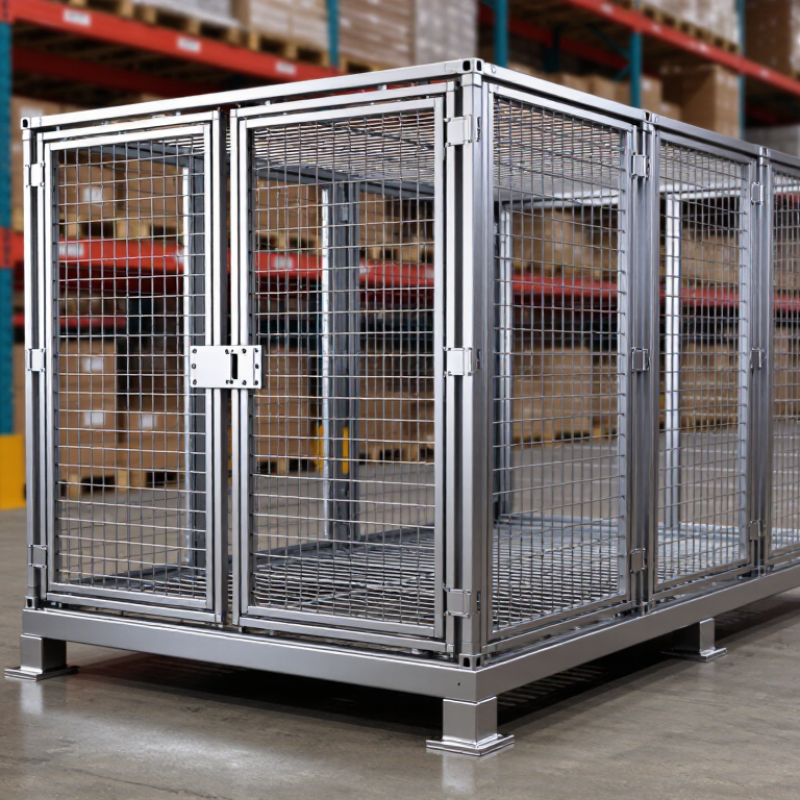
A collapsible wire mesh container is a reusable steel storage unit with hinged panels and a base. Its walls fold inward when empty, reducing return-transport volume and storage space. Unlike a fixed cage, it can move from production areas to distribution zones without repacking small parts.
Core features include welded wire panels, a hinged front gate, locking pins, and a load-bearing base. Mesh openings improve visibility and airflow, while the gate allows access without dismantling the stack.
Many models use pallet feet or fork-entry channels for hand pallet trucks and forklifts. Always verify the rated load, stacking height, and fork dimensions before use. These details differ by construction.
Durability depends on more than steel thickness. Check welds for cracks, pins for deformation, and hinges for binding. A bent panel may prevent safe folding. Operators should place weight evenly and keep unstable items secured inside.
The “heavy-duty” label can be misleading without a tested capacity. That deserves scrutiny.
In practice, collapsible design saves space, but it may trade some rigidity for convenience. Regular inspections and clear handling instructions make the container more reliable, especially in busy warehouses where impacts happen.
Structural Components and Common Manufacturing Materials
What Is a Collapsible Wire Mesh Container?
Structural Components and Common Manufacturing Materials
A collapsible wire mesh container is a reusable steel unit for storing, handling, and transporting materials. Its folding panels reduce empty return volume and simplify warehouse storage.
The structure normally includes welded wire panels, a reinforced base, corner posts, hinges, and a locking gate. Some designs add stacking pins or fork pockets for safer lifting. The base may use wire mesh, steel plate, or closely spaced bars. Each option changes airflow, cleaning effort, and load distribution.
Low-carbon steel is common because it balances strength, cost, and weldability. Galvanized steel adds a zinc coating that helps resist moisture and surface rust. Powder-coated steel offers color control and extra surface protection, but damaged areas still need attention. Stainless steel suits demanding environments, although its higher price can limit practical use.
Wire diameter and mesh opening affect performance. Thicker wire improves rigidity, while smaller openings contain small components more effectively. However, stronger is not always better. Excess material can increase weight and handling risks. Weld quality matters too; uneven joints may create sharp edges or early failure points.
During inspection, check hinge movement, gate alignment, weld continuity, and base distortion. A small oversight can become a large maintenance problem. Load ratings should reflect real use, not only ideal test conditions. Moisture, uneven floors, repeated stacking, and careless forklift contact can change container behavior over time.
How Collapsible Wire Mesh Containers Operate and Fold
A collapsible wire mesh container uses a rigid steel frame, mesh panels, and hinged joints to create a reusable storage unit. Its open sides provide airflow and visibility, while the base supports boxes, parts, or packaged materials. In practical warehouse use, workers can inspect contents without opening the container.
The folding process is mechanical and simple. Remove loose items first. Release the side locks or retaining pins, then lower the front panel if the design allows it. Fold the remaining panels inward, one at a time, around their vertical hinges. The side panels usually fold flat against the base, reducing the container’s height considerably. It becomes compact.
When reopening the container, place it on a level floor. Raise each panel until the hinges align and the frame stands square. Engage every lock before loading materials. A partly secured panel can shift under pressure, even when the container looks stable. Check for bent mesh, damaged hinges, and missing pins during routine inspections. Gloves can help prevent cuts, but they do not replace careful handling. The process seems easy. It is also easy to rush. Some operators stack folded units unevenly, which may cause leaning or difficult retrieval. Load limits vary by construction, so the frame should be checked against its rated capacity rather than appearance.
| Data Dimension | Typical Specification or Range | How It Works or Why It Matters |
|---|---|---|
| Basic Definition | Reusable metal storage and transport container | A collapsible wire mesh container is made from welded steel wire panels, a base, corner posts, and folding side sections. It is designed to hold, move, store, and return materials efficiently. |
| Common External Footprint | Approximately 800 × 600 mm to 1,200 × 1,000 mm | The footprint is selected to match pallets, shelving bays, forklifts, and available warehouse space. Larger models may use footprints close to 1,200 × 1,200 mm. |
| Typical External Height | Approximately 600–1,000 mm | Height depends on the intended load and stacking configuration. Lower units are often used for small parts, while taller units provide greater volume for bulky goods. |
| Mesh Opening | Commonly about 25 × 25 mm to 100 × 50 mm | The opening size affects visibility, ventilation, containment of small items, and overall weight. Smaller openings help prevent smaller components from falling through the sides. |
| Wire and Frame Material | Welded low-carbon steel wire and formed steel sections | Steel provides the rigidity required for repeated handling. The frame normally carries concentrated loads while the wire panels provide containment and visibility. |
| Surface Finish | Electro-galvanized, hot-dip galvanized, or painted steel | Zinc coatings improve corrosion resistance. Painted finishes can provide additional protection and visual identification, but suitability depends on the operating environment. |
| Typical Load Capacity | Approximately 500–2,000 kg per container | Capacity varies with base construction, wire diameter, container dimensions, load distribution, and stacking requirements. The manufacturer's rated working load should always be followed. |
| Folded Height | Often reduced to about 15%–30% of the assembled height | The side panels fold inward or down onto the base, creating a compact nested package. The exact folded height depends on panel thickness, hinges, and the folding sequence. |
| Folding Mechanism | Hinged side panels with locking pins, latches, or drop gates | When assembled, the panels are raised and secured to the corner posts or adjacent panels. Releasing the locking hardware allows the sides to fold onto the base in a controlled sequence. |
| Typical Folding Sequence | Remove or release the top restraint, unlock the side panels, fold the ends, then fold the long sides | The precise order depends on the design. Operators should keep hands and feet clear of hinge points and confirm that all panels are fully locked before loading. |
| Stacking Capability | Commonly 3–5 loaded units, subject to design rating | Stacking legs, corner posts, or locating sockets transfer the load vertically. Stacking must be performed on a level surface and within the specified working-load limit. |
| Empty Return-Space Reduction | Often approximately 60%–85% less volume than assembled containers | Folding empty containers reduces truck, trailer, and warehouse space requirements. The actual saving depends on the folded height and the number of units nested together. |
| Handling Equipment | Forklift, pallet truck, or lifting equipment with compatible entry points | Many designs include fork-entry channels or reinforced base members. Forks should be fully inserted and centered before lifting to reduce tipping and frame damage. |
| Access Features | Drop-down gates, hinged doors, or removable panels | Access openings allow operators to retrieve goods without unloading the entire container. Gate height and position should match the stored material and handling process. |
| Visibility and Ventilation | High visibility and continuous airflow through the mesh walls | The open structure makes contents easier to identify and inspect while allowing air circulation. It does not provide weatherproof or dust-tight protection without additional covers. |
| Typical Applications | Automotive components, fabricated parts, warehouse picking, recycling, and returnable logistics | The containers are suitable for durable goods and parts that benefit from reusable handling equipment, clear visibility, ventilation, and efficient empty returns. |
| Main Advantages | Reusable, stackable, space-saving, visible, and durable | Their folding structure reduces return logistics costs and storage volume, while the rigid steel construction supports repeated use in industrial material-handling environments. |
| Important Limitations | Not inherently waterproof, airtight, or suitable for every load type | Loose, very small, corrosive, or weather-sensitive materials may require liners, trays, lids, or a different container design. Sharp loads must not exceed the mesh or base limitations. |
| Safe Operating Practice | Inspect the base, mesh, hinges, locks, and stacking points before use | Do not use containers with cracked welds, bent posts, damaged locking hardware, or unstable bases. Keep loads evenly distributed and never exceed the rated working load. |
Types, Sizes, and Load Capacity Options
What Is a Collapsible Wire Mesh Container?
Types, Sizes, and Load Capacity Options
A collapsible wire mesh container uses hinged panels that fold inward when empty. This design reduces return-transport space and makes storage more manageable. Common types include stackable containers, nesting containers, and models with drop gates. Stackable versions usually have reinforced feet and corner posts. Nesting models often save more floor space, but their empty height may vary. Drop-gate designs allow workers to reach stored parts without moving the entire container.
Sizes range from compact bins for small components to large industrial units for castings, tools, or packaged materials. Typical footprints include 800 × 600 mm and 1200 × 800 mm, although custom dimensions are also available. Mesh openings should match the stored goods. Small parts can fall through wide openings, causing avoidable loss or handling delays. A lined base may help, but it can reduce visibility and cleaning access.
Load capacity depends on wire diameter, frame construction, base style, and how weight is distributed. Many units support several hundred kilograms, while reinforced designs can handle substantially more. Check both the working load and the safe stacking load. They are not always equal. A container may carry 800 kg on the floor but support less when stacked several levels high. Loads should stay centered and below the upper frame. Uneven loading is a common weakness. In real warehouses, damaged hinges, rough floors, and repeated forklift contact can reduce practical capacity. Specifications need regular inspection, not blind trust.
Industrial Applications, Benefits, and Limitations
What Is a Collapsible Wire Mesh Container?
Industrial Applications, Benefits, and Limitations
A collapsible wire mesh container is a reusable steel unit with hinged panels. Workers can fold it flat when empty. This reduces storage volume and return-transport costs. The mesh sides allow airflow, visual inspection, and quick identification of stored goods.
In manufacturing plants, these containers often hold metal parts, molded components, tools, and maintenance supplies. Warehouses also use them for order staging and internal material movement.
Their practical value comes from flexibility. Forklift pockets support mechanical handling, while stackable frames use vertical space efficiently. Operators can inspect contents without opening a solid box. Folded units may occupy only a fraction of their assembled height. This matters when production demand changes weekly.
With suitable coatings, containers can resist moderate moisture and repeated industrial contact. Still, coating quality and weld strength require regular inspection. A damaged hinge can affect safe folding.
Limitations become visible in demanding environments.
Small items may fall through the mesh without liners or trays. Dust, water, and fine debris can enter easily. Uneven loading may reduce stacking stability, even when the rated capacity seems adequate.
Operators should check load limits, center of gravity, floor condition, and forklift compatibility.
Overloading is not a clever shortcut. It creates avoidable risk.
These containers are not ideal for every product. Delicate surfaces may need padding. Outdoor exposure can accelerate corrosion.
In practice, the best choice depends on handling habits, storage duration, and maintenance discipline. Space savings look impressive, but poor training can erase the benefit.
