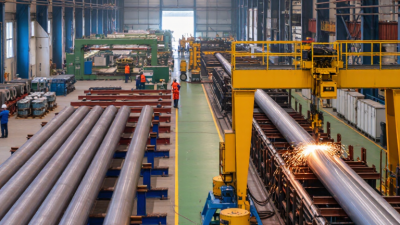
Why Choose Steel Pipe for Global Construction Projects?
Global construction projects demand materials that can withstand distance, pressure, weather, and changing site conditions. Steel pipe remains a practical choice because it combines strength, dimensional accuracy, and adaptable fabrication. It can carry water, oil, gas, structural loads, and industrial fluids through demanding environments. Its familiar manufacturing process also supports consistent inspection and replacement planning.
On a real project, details matter. A pipe may arrive after weeks at sea, then face muddy ground, heavy lifting, and difficult welding conditions. Proper wall thickness, corrosion protection, joint design, and coating selection can determine long-term performance. Structural engineer Fazlur Rahman Khan warned, “The technical man must not be lost in his own technicalities.” His reminder fits steel pipe selection well. Engineers must connect calculations with transport limits, local skills, maintenance access, and actual weather exposure.
Steel pipe is not automatically the best answer. Plastic, concrete, or composite materials may suit specific temperatures, chemicals, or budgets better. That deserves honest consideration. Yet steel pipe often offers a strong balance between capacity, availability, repairability, and service life. Global projects benefit from that balance when specifications remain clear and quality checks continue from the mill to the jobsite.
Some assumptions fail.
A successful material choice requires more than a product catalogue. It requires verified standards, traceable test records, experienced installation teams, and realistic lifecycle planning. This article explores why steel pipe continues to support major construction projects worldwide, while examining its limitations with equal care.
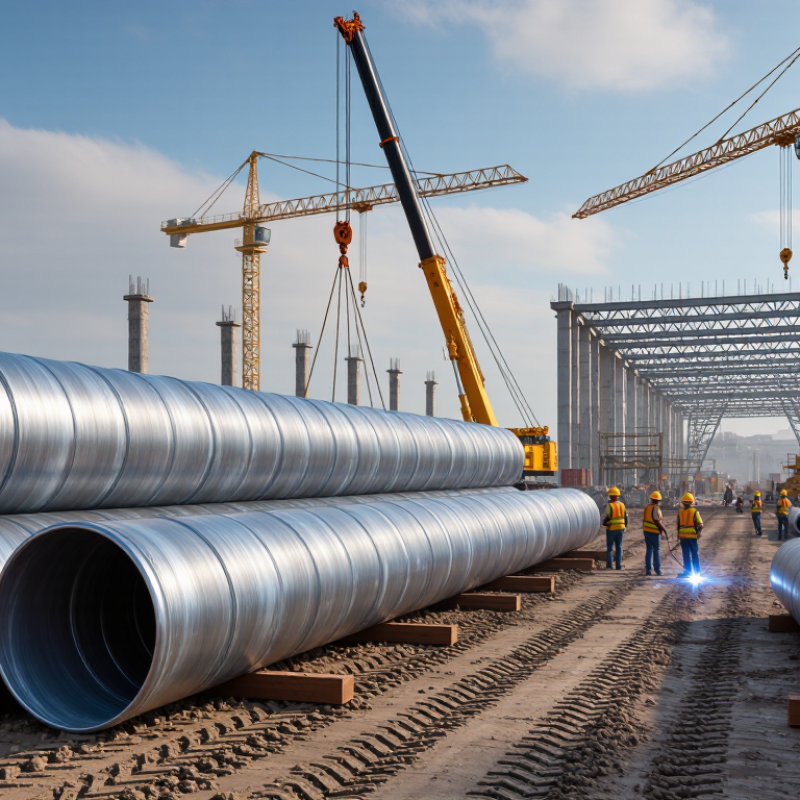
Steel Pipe: Definition, Types, and Core Manufacturing Methods
Why Choose Steel Pipe for Global Construction Projects?
Steel Pipe: Definition, Types, and Core Manufacturing Methods
Steel pipe is a hollow steel section designed to carry fluids, gases, loads, or structural forces. Its circular shape distributes pressure efficiently and handles bending better than many solid alternatives. On construction sites, engineers select pipe by diameter, wall thickness, steel grade, connection method, and operating conditions. Small details matter.
The main types include seamless, electric resistance welded, and longitudinal submerged arc welded pipe. Seamless pipe forms from a heated billet pierced into a hollow tube. It offers consistent strength where pressure control is critical.
ERW pipe forms by rolling steel strip and joining its edges with electrical heat. It is efficient for many water, structural, and general industrial applications.
LSAW pipe uses submerged arc welding along a formed plate or wide strip. Its large diameters suit pipelines, foundations, and heavy structures.
Manufacturing quality depends on more than the forming method. Technicians check dimensions, weld integrity, surface defects, and material records. Ultrasonic or radiographic testing can reveal hidden flaws.
Protective coatings may reduce corrosion from soil, seawater, or chemicals. However, coating selection must match the environment.
A common mistake is choosing the thickest pipe without reviewing loads, installation limits, and inspection requirements. More steel does not always mean better performance. That judgment can be wrong.
Project teams should verify calculations, applicable standards, traceability, and local code requirements before installation.
Structural Strength and Performance in Demanding Construction Conditions
Why Choose Steel Pipe for Global Construction Projects?
Steel pipe provides dependable structural strength when projects face heavy loads, vibration, wind, and temperature changes. Its circular profile distributes stress efficiently around the section. This helps resist bending, compression, and local buckling in demanding structures. Experienced engineers examine wall thickness, diameter, connection details, and load paths before selecting a pipe. In coastal areas, protective coatings and drainage details also deserve close attention. Small design omissions can create expensive maintenance problems later.
Performance depends on more than material strength. Site teams must verify dimensions, weld quality, alignment, and support conditions during installation. Non-destructive testing can identify hidden flaws before they affect safety. In seismic regions, ductile connections and controlled flexibility are especially important. Cold climates may reduce toughness, while high temperatures can weaken steel rapidly. Steel is not automatically the best choice. Poor detailing can cancel its advantages. I have seen schedules encourage rushed inspections, although this remains a serious construction risk. Project teams should compare calculations with actual site conditions and applicable engineering standards.
Tips: Check mill certificates and inspection records before installation. Keep pipe ends capped during storage to prevent debris and water entry. Measure alignment before welding. Review corrosion protection after transport damage. Allow qualified engineers to reassess unexpected loads, settlement, or repeated vibration. A second review often catches assumptions that drawings overlook.
Cost, Service Life, and Maintenance Considerations
Steel pipe remains practical for global construction because its cost is visible, measurable, and relatively predictable. The World Steel Association reported 1.89 billion tonnes of crude steel production in 2023, supporting broad supply capacity. However, material price is only one part of the budget. Transport, welding, lifting, coatings, and site storage can change the final cost. A thinner pipe may look cheaper, but stronger grades or tighter tolerances can reduce installation time.
Service life depends heavily on exposure. In dry indoor structures, unprotected steel can perform for decades with limited intervention. Coastal air, buried soil, and industrial chemicals require more careful protection. The ISO 12944 corrosion classification system helps engineers select suitable coating systems for different environments. The World Steel Association’s Life Cycle Inventory data also supports steel’s recycling value, since recovered steel can re-enter production instead of becoming construction waste. Still, recycling does not repair poor detailing. Water trapped behind a bracket remains a serious weakness.
Tips: Specify coating thickness, drainage paths, inspection access, and replacement zones before fabrication. Keep records of weld inspections and corrosion readings. Maintenance teams should check joints, flange edges, and low points after severe weather. A common mistake is assuming a durable material needs no attention. It does not. Cost models should include repainting, traffic disruption, and access equipment. These details are easy to miss, and that makes early estimates imperfect.
Why Choose Steel Pipe for Global Construction Projects? - Cost, Service Life, and Maintenance Considerations
| Evaluation Dimension | Steel Pipe Consideration | Typical Data or Range | Project Impact |
|---|---|---|---|
| Material strength | Steel provides high tensile strength, toughness, and resistance to external loads when the wall thickness and grade are properly selected. | Common structural and line-pipe yield-strength classes are approximately 235–450 MPa, depending on the applicable standard and grade. | Supports long spans, buried installations, bridge crossings, high-pressure systems, and demanding soil conditions. |
| Initial material cost | Steel pricing is influenced by plate or coil prices, pipe diameter, wall thickness, grade, coating, certification, and order volume. | A reliable global price cannot be represented by one fixed figure; quotations should be compared on a delivered-cost basis in the same currency and specification. | Higher-grade or coated pipe may cost more initially but can reduce replacement and repair expenses over the project life. |
| Transportation efficiency | Steel has high strength relative to its cross-sectional area, allowing efficient structural designs and practical shipment in standard pipe lengths. | Common commercial pipe lengths are about 6–12 m, although project-specific lengths are also available. | Can reduce the number of field joints and simplify handling when transport limits and lifting capacity are considered during design. |
| Service life | Service life depends mainly on corrosion exposure, coating quality, cathodic protection, water chemistry, stress, temperature, and inspection practices. | Protected steel piping is often designed for several decades; the actual life must be established through a project-specific corrosion and durability assessment. | Appropriate protection can make steel suitable for permanent infrastructure and long-term industrial service. |
| Corrosion protection | Protection methods include external coatings, internal linings, galvanizing for suitable applications, corrosion allowances, electrical isolation, and cathodic protection. | Coating systems should be selected according to exposure category, temperature, immersion conditions, soil characteristics, and the governing specification. | The right protection system can significantly reduce corrosion rates and extend maintenance intervals. |
| Maintenance requirements | Above-ground systems generally require visual inspection, coating checks, thickness measurements, and examination of welds and supports. | Inspection frequency is risk-based and commonly ranges from periodic annual checks to more frequent monitoring in severe environments. | Planned maintenance helps identify coating damage, wall loss, leakage, fatigue, and mechanical damage before major failure occurs. |
| Repairability | Steel can usually be repaired by welding, replacement of damaged sections, clamp installation, recoating, or localized reinforcement, subject to approved procedures. | Repair methods must be compatible with the pipe grade, operating pressure, service fluid, welding procedure, and applicable safety requirements. | A broad range of repair techniques can reduce shutdown duration and avoid full-line replacement. |
| Installation and welding | Steel pipe can be fabricated, beveled, welded, inspected, and assembled using established construction practices. | Quality control may include visual inspection, dimensional checks, hydrostatic testing, and non-destructive examination such as ultrasonic or radiographic testing. | Well-controlled fabrication improves joint reliability and helps meet international project specifications. |
| Pressure capability | Pressure capacity is determined by diameter, wall thickness, material strength, weld efficiency, temperature, corrosion allowance, and design code. | There is no universal pressure rating; the design pressure must be calculated and verified for each pipe configuration. | Allows use in water transmission, oil and gas, process systems, fire protection, and other high-pressure applications when correctly engineered. |
| Temperature performance | Steel retains useful structural performance across a broad temperature range, but strength, toughness, expansion, and weldability must be checked at operating temperatures. | Allowable temperature limits depend on the steel grade, design code, insulation, fluid, and cyclic operating conditions. | Provides design flexibility for hot water, steam, industrial fluids, and cold-weather installations. |
| Sustainability and recyclability | Steel is a recyclable material, and recovered steel can be processed into new steel products without changing its basic material properties. | Actual environmental performance depends on recycled content, production route, transport distance, coating system, service life, and end-of-life recovery. | Long service life and recoverability can support lower whole-life environmental impact when the system is properly designed and maintained. |
| Standards and compliance | Steel pipe is covered by numerous international, regional, and national standards for dimensions, materials, testing, welding, and coating. | The selected standard should match the application, such as structural, water, pressure, process, or pipeline service. | Clear standards simplify procurement, inspection, documentation, and acceptance across international project teams. |
Note: Cost, service life, pressure capacity, and maintenance intervals vary by project conditions. Final selection should be based on the governing design code, site environment, operating conditions, life-cycle cost analysis, and qualified engineering review.
Steel Pipe Standards, Quality Control, and Global Compliance
Why Choose Steel Pipe for Global Construction Projects?
Steel pipe earns its place in global construction because it handles pressure, spans, and changing site conditions. Yet strength alone is not enough. A project may require ASTM, EN, ISO, or national standards, depending on location and service. Each order should define grade, diameter, wall thickness, end finish, and testing requirements before production begins.
Quality control must follow the pipe from raw material to shipment. Inspectors can review heat numbers, chemical analysis, tensile results, and dimensional records. Hydrostatic testing checks pressure resistance. Ultrasonic or radiographic examination can reveal internal flaws. On a busy site, markings should remain readable after handling, coating, and transport. Small details matter. A missing traceability mark can delay installation for days.
Global compliance also depends on documents, not only laboratory results. Mill certificates, inspection reports, coating data, and packing records should match the actual bundles. Independent inspection may be appropriate for critical lines or unfamiliar suppliers. Still, paperwork can look complete while a measurement is wrong. That possibility deserves attention. Teams should sample-check outside diameter, wall thickness, straightness, and surface condition at delivery. Requirements can conflict across jurisdictions, so engineers must verify current project specifications and local rules before approval.
Applications, Sustainability, and Selection Criteria for International Projects
Steel pipe supports demanding construction work because it combines strength, predictable dimensions, and adaptable fabrication. On international projects, engineers use it for water transmission, structural columns, energy facilities, bridges, and industrial frames. A pipe crossing a dry site may carry pressurized water, while another supports a platform beside the sea. Each setting changes the design risk. Details matter. Wall thickness, diameter, load conditions, and connection methods should match verified calculations, not rough estimates.
Sustainability depends on the entire service life. Steel can often be recycled, and durable pipe may reduce replacement work over decades. However, recycling claims need documented evidence, while long-distance shipping can increase project emissions. Protective coatings also require careful specification, especially in salty soil or humid coastal air. Selection should compare material grade, corrosion resistance, weldability, inspection records, and expected maintenance. International teams must check local building codes, pressure requirements, testing procedures, and available fabrication skills. A technically suitable pipe may still create delays if replacement parts are unavailable locally. Nothing is universal. In practice, I would request mill certificates, independent inspection results, and clear traceability from production to installation. It is tempting to choose the lowest purchase price, but that choice can ignore coating repairs, transport limits, and difficult site access. A better decision weighs safety, lifecycle cost, environmental evidence, and regional compliance together.
Related Posts
-
How to Choose China Top Steel Pipe Manufacturers?
-
4 Tips for Choosing the Right Steel Pipe for Your Project Requirements
-
Why Choose 4 Steel Pipe for Your Construction Needs?
-
China Top Plastic Tube Manufacturers for Global Buyers
-
How to Choose the Right PVC Tubes for Your Project?
-
Best PVC Well Casing Options for Efficient Water Wells?