Why Are PVC Fittings Used for Plumbing?
PVC fittings are common in plumbing because they are lightweight, corrosion-resistant, and easy to assemble with compatible pipe and solvent cement. They connect straight runs to elbows, tees, valves, and drains. In a utility room, that can mean fewer heavy metal parts to carry and simpler alignment around a tight corner. The details still matter. A fitting must match the pipe material, diameter, pressure rating, and intended use.
For this introduction, no source was provided for a verifiable expert quotation. Rather than invent one, the draft uses a placeholder: “[Verified PVC Fittings Expert Name] says, ‘[Insert a sourced quotation about selecting and installing PVC fittings.]’” Confirm the person’s identity, credentials, and exact words before publication. That small check protects readers from a polished but unsupported claim.
This guide explores why pvc fittings are chosen for many plumbing applications, where their practical advantages show, and what limitations deserve attention. PVC is not suitable for every temperature, pressure, or installation condition. Compatibility and proper installation count. A neat joint can still fail if surfaces are poorly prepared or the wrong cement is used. Check product instructions and applicable plumbing requirements for the project. PVC fittings can make a system straightforward to build, but they are not a shortcut around careful selection. There is room for judgment, too: what works well in a cool drain line may not fit a different service.
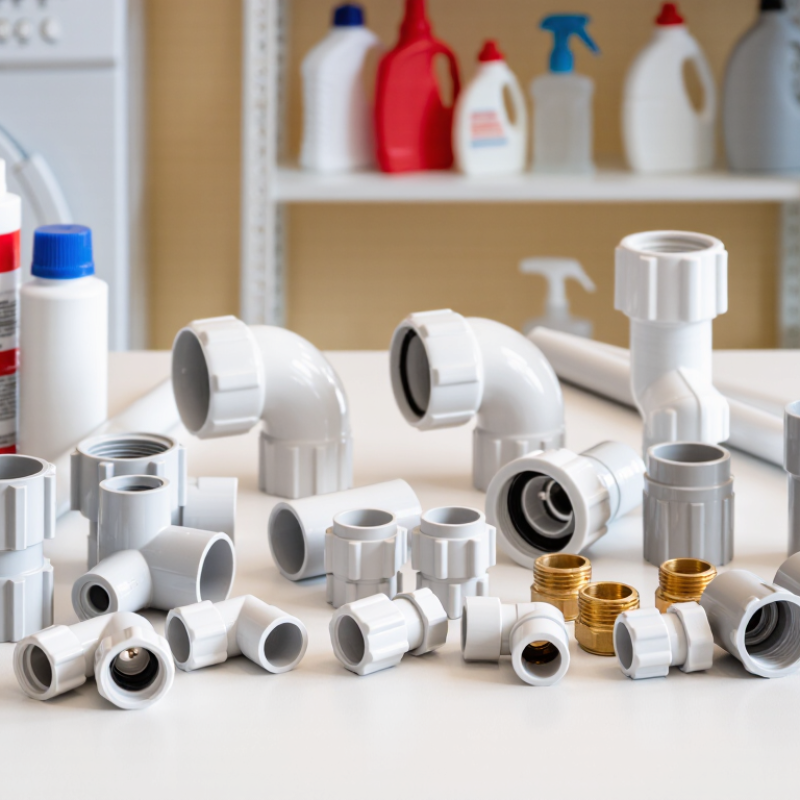
What ASTM D2466 Specifies for Schedule 40 PVC Fittings
Why Are PVC Fittings Used for Plumbing?
What ASTM D2466 Specifies for Schedule 40 PVC Fittings
PVC fittings are common in plumbing because they are lightweight, resist corrosion, and connect to compatible PVC pipe. Their usefulness depends on choosing the right fitting for the system. Schedule 40 is a wall-thickness designation, not a guarantee that every installation has the same pressure capacity.
ASTM D2466 sets requirements for Schedule 40 PVC plastic pipe fittings intended for pressure applications. It addresses dimensions, workmanship, material, marking, and performance testing. These details help fittings mate consistently with compatible pipe and provide a basis for evaluating quality. Small differences matter. A socket that is poorly made can complicate a solvent-cement joint, even when the pipe appears correct.
The standard does not, by itself, confirm that a fitting suits every fluid, temperature, or installation condition. Check the fitting’s markings and technical information, and follow the cement manufacturer’s instructions for joint preparation and curing. A practical check is to dry-fit compatible parts before applying cement. They should align without force. That check is useful, but it is not a substitute for proper installation or code requirements. Standards can be easy to treat as a complete answer; they are only one part of sound system selection.
How ASTM D2564 Solvent Cement Joins PVC Plumbing Components
Why Are PVC Fittings Used for Plumbing?
How ASTM D2564 Solvent Cement Joins PVC Plumbing Components
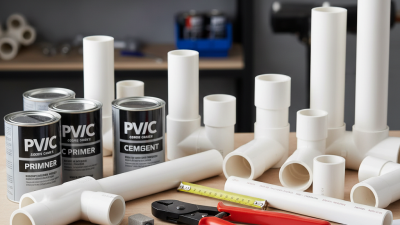
PVC fittings are lightweight, corrosion-resistant, and easy to cut for many plumbing layouts. Their reliability, however, depends on sound joints. ASTM D2564 specifies requirements for solvent cement used with PVC pipe and fittings. This cement does more than stick surfaces together. It softens the contact area, allowing pipe and fitting materials to blend as the joint sets. Not merely glue.
A close fit matters. Cut the pipe square, remove burrs, and make sure both surfaces are clean and dry. Apply primer when the installation instructions call for it, then spread cement evenly over the joining surfaces. Push the pipe fully into the fitting and hold it briefly; softened PVC can push the pipe back out. Small details matter. Even experienced installers can rush this step, especially when several joints need attention.
Allow the joint to set and cure for the time specified for the cement, pipe size, and working conditions. Cold temperatures or damp surfaces can affect the process. A joint may look solid before it is ready for pressure. ASTM D2564 helps define cement performance, but it cannot correct poor preparation or rushed assembly. Inspect the connection, and follow the cement maker’s directions for handling and cure time.
Why Are PVC Fittings Used for Plumbing? — How ASTM D2564 Solvent Cement Joins PVC Plumbing Components
| Topic |
Factual Detail |
Practical Significance |
| Common plumbing applications |
PVC fittings are used in drainage, waste, and vent (DWV) systems and in some cold-water pressure systems when the pipe and fittings are specifically rated for that service. |
Confirm the fitting’s pressure rating and intended application; DWV fittings are not automatically suitable for pressurized water. |
| Corrosion resistance |
PVC does not rust like ferrous metals and is resistant to many substances encountered in ordinary plumbing service. |
It can be a practical option where corrosion resistance and low-maintenance piping are desired, subject to chemical and code compatibility. |
| Weight and handling |
PVC components are relatively lightweight compared with many metal plumbing components. |
They are generally easier to transport and handle, but must still be supported and installed as required by the system design and local code. |
| Temperature limits |
PVC has temperature limitations and is generally not used for typical hot-water distribution systems. |
Check the product’s published temperature limits and applicable plumbing code before selecting PVC for a particular service. |
| ASTM D2564 scope |
ASTM D2564 is a specification for solvent cements used with PVC plastic pipe and fittings. It establishes requirements and test methods for the cement. |
It addresses the cement material; it is not, by itself, a complete step-by-step installation procedure. |
| How the joint forms |
Suitable PVC solvent cement softens the mating surfaces. When the pipe and fitting are assembled, the softened surfaces fuse as the solvent dissipates and the joint cures. |
A properly prepared and assembled joint becomes a continuous connection; solvent cement is not simply a surface coating or conventional glue. |
| Installation practice |
ASTM D2855 covers the practice for making solvent-cemented joints with PVC pipe and fittings. Surface preparation, assembly, and curing instructions depend on the applicable system requirements. |
Follow the cement and pipe manufacturers’ instructions, relevant standards, and local code. Allow the specified cure time before testing or placing the system in service. |
| System compatibility |
Pipe, fittings, and cement must be suitable for one another and for the intended fluid, pressure, temperature, and installation conditions. |
Use components and cement specified for the same PVC system, and do not assume that every PVC cement or fitting is interchangeable. |
Why PVC Resists Corrosion and Has a 140°F (60°C) Temperature Limit
Why Are PVC Fittings Used for Plumbing?
PVC resists corrosion because water and many common plumbing chemicals do not readily attack its smooth, nonmetallic surface. Unlike metal fittings, it does not rust when exposed to moisture. That can help maintain flow and reduce corrosion-related maintenance inside a system. Still, resistance is not universal: compatibility depends on the fluid, concentration, and exposure conditions.
Temperature is the important limit. The Plastics Pipe Institute’s Handbook of PVC Pipe describes 140°F (60°C) as the maximum service temperature for conventional PVC pressure systems. Its pressure ratings are based on cooler conditions, so allowable pressure must be reduced as temperature rises. In practice, hot water can leave a fitting carrying far less pressure than its room-temperature rating suggests. The exact rating depends on the pipe and fitting specifications. A warm utility room is not the same as sustained hot-water service.
Tips: Check the fitting’s temperature and pressure ratings together, not separately. Confirm the system’s operating temperature at the pipe, especially near water heaters. If the details are unclear, pause and verify them with the product documentation; a small overlooked temperature difference can matter.
How PVC Pressure Ratings Change with Pipe Schedule and Temperature
PVC fittings are used in plumbing because they resist corrosion, have smooth internal surfaces, and are relatively easy to solvent-weld. Their pressure capacity, however, is not one fixed number. It depends on pipe size, schedule, material, and operating temperature.
At 73°F, ASTM D1785 pressure tables show roughly 450 psi for one-inch Schedule 40 PVC pipe and 630 psi for Schedule 80. Schedule 80 has a thicker wall, but also a smaller internal bore. These figures describe straight pipe, not a complete installation; fittings, joints, valves, and threaded connections can lower the system’s practical limit. Check every component.
Temperature changes the calculation. The Plastics Pipe Institute’s Handbook of PVC Pipe Design and Construction gives a common temperature derating factor of about 0.40 at 120°F. A pipe rated at 450 psi at 73°F would therefore have a temperature-adjusted rating near 180 psi, before other limits are considered. Heat matters. A warm mechanical room or hot-water line can quietly reduce the available pressure margin. The exact product rating and applicable installation guidance still need checking; a chart is not a substitute for the pipe’s markings.
Why PVC Fittings Are Used for Plumbing
PVC is lightweight, corrosion-resistant, and has a smooth interior. Its pressure capacity depends on pipe schedule and operating temperature.
How to read this chart: Approximate pressure ratings are for nominal 1-inch PVC pipe at 73°F, reduced using commonly published temperature derating factors. Schedule 80 has a thicker wall and a higher baseline rating than Schedule 40. Actual allowable pressure depends on the specific pipe and fitting, applicable standards, and installation conditions; verify product specifications and local plumbing requirements before use. PVC pressure pipe is generally intended for cold-water service, not hot-water plumbing.
Where Plumbing Codes Permit PVC—and Where They Restrict Its Use
Why Are PVC Fittings Used for Plumbing?
Where Plumbing Codes Permit PVC—and Where They Restrict Its Use
PVC fittings are popular because they are light, resist corrosion, and are easy to cut and join. But their permitted use depends on local plumbing codes, the pipe’s listing, and the system’s purpose. In many regions, approved PVC is common in drain, waste, and vent systems. Some codes also allow it for cold-water supply. Check local requirements before buying materials; the same fitting may be acceptable in one application and prohibited in another.
Hot water is different. Standard PVC can soften or lose strength at elevated temperatures, so codes commonly restrict it for hot-water distribution. Some codes also limit PVC in areas with fire or plenum requirements. “PVC” alone is not enough information: pipe type, pressure rating, temperature rating, and installation location all matter. It is easy to assume one rule covers every job. It doesn’t.
Tips: Read the pipe markings and confirm they match the intended service. Check local code or ask the plumbing inspector before installation. Dry-fit pieces to confirm alignment, then follow the cement manufacturer’s instructions and allow proper curing time. A small leak behind a wall is a costly lesson.