Request A Quote

Phone: 416-244-6476
Email:

    What Are the Top Types of Water Pump Systems?

    Water moves quietly through homes, farms, factories, and drainage networks, but the pump behind it must match the job. A water pump system may draw from a shallow well, lift water from a deep bore, increase pressure in a tall building, or move wastewater away from a flooded space. The right choice depends on more than the pump’s name. Flow rate, lift height, pipe size, water quality, and power supply all affect performance.

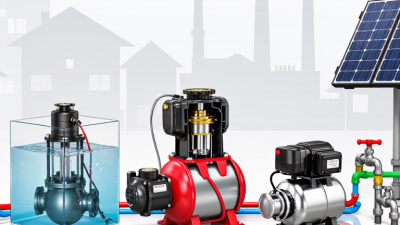
    Several common types appear across these settings. Centrifugal pumps suit many steady-flow applications, while submersible pumps operate underwater and are often used in wells or sump pits. Jet pumps can serve certain shallow or deep wells, depending on their configuration. Booster systems help maintain pressure where supply is weak or demand varies. Positive-displacement pumps move a measured volume and can handle some demanding transfer tasks. Details matter. A pump that works well in a garden may struggle in a deep well or a large building.

    This guide compares the main pump system types, their typical uses, and the practical trade-offs behind each choice. It also points to key selection factors, such as required pressure, maintenance access, and energy use. Specifications should always be checked against the actual site and manufacturer guidance; a category label alone is not enough. The categories are useful, but real installations do not always fit them neatly. That is worth remembering before choosing equipment.
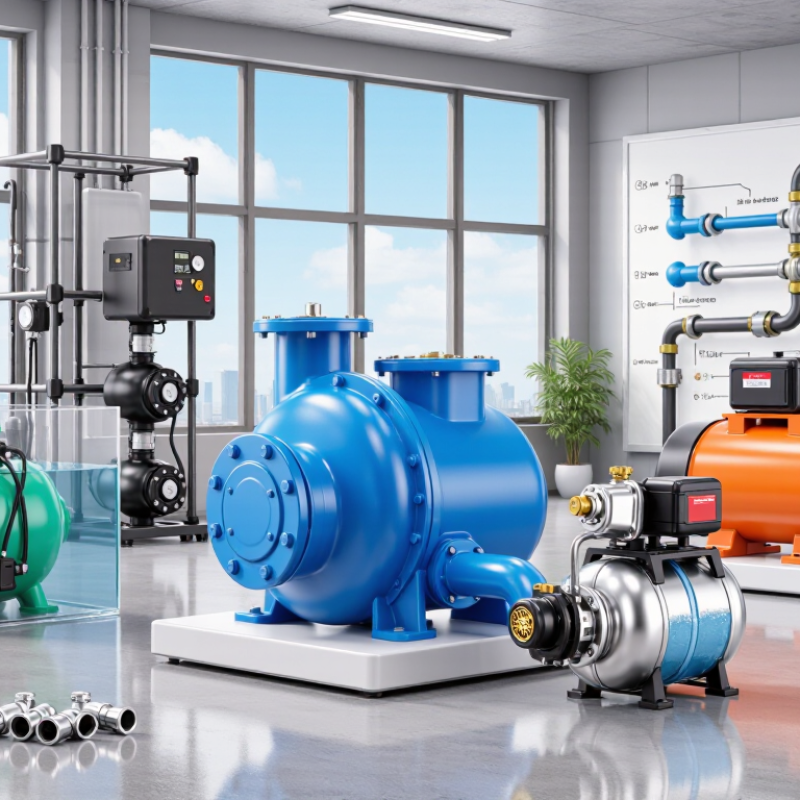
    What Are the Top Types of Water Pump Systems?

    Centrifugal Pump Systems and Their Main Uses

    What Are the Top Types of Water Pump Systems?
    Centrifugal Pump Systems and Their Main Uses

    A centrifugal pump moves water by spinning an impeller, converting rotational energy into flow and pressure. Its straightforward design suits steady, moderate-to-high flow applications. You’ll see these systems in municipal water distribution, irrigation, building HVAC loops, and industrial process transfer. They work best with relatively clean, low-viscosity liquids; solids, air, or changing suction conditions can reduce performance. Simple, but not universal.

    The U.S. Department of Energy’s Improving Pumping System Performance sourcebook estimates that pumping systems use nearly 20% of global electricity demand. It also reports they can account for 25–50% of energy use in some industrial plants. That makes operating-point selection important, not just motor size. A pump running far from its best-efficiency point may waste energy, vibrate, or wear seals faster. Checking flow, pressure, and suction conditions is more useful than guessing from pipe diameter alone. Centrifugal pumps can disappoint when demand varies sharply.

    Tips: Compare the system curve with the pump curve before choosing a unit. Check minimum-flow needs, impeller clearance, and whether variable-speed control suits the load. Record inlet pressure and discharge flow after installation; the numbers may challenge your first assumptions.

    Positive Displacement Pump Systems: Reciprocating and Rotary Types

    Positive displacement pumps move water by trapping a set volume and pushing it toward the discharge line. Reciprocating types use a piston, plunger, or diaphragm that travels back and forth. They can deliver modest flow at high pressure, making them useful for dosing or pressure-washing applications. A piston pump may produce noticeable pulses. A pulsation dampener can smooth the flow, though it adds another component to maintain.

    Rotary types use turning parts, such as gears, screws, or vanes, to carry water through the casing. Their flow is generally steadier, and some handle viscous fluids well. For clean water, tight internal clearances support efficient operation; grit can wear those surfaces quickly. Not every rotary design suits water, either. Check the pump’s material compatibility and limits on solids and dry running.

    Both types need careful system sizing. Flow, suction conditions, pipe losses, and required pressure all matter. A positive displacement pump can keep building pressure against a closed outlet, so a correctly selected relief valve is essential. Pressure ratings alone can be misleading. I have seen a neat specification look convincing on paper, then fail to account for pulsation or abrasive debris in the actual water.

    What Are the Top Types of Water Pump Systems? — Positive Displacement Pump Systems: Reciprocating and Rotary Types

    Pump type How it moves water Typical flow characteristics Strengths Limitations and design considerations Common water applications
    Reciprocating piston pump A piston moves back and forth in a cylinder. Inlet and outlet check valves direct water into and out of the pumping chamber. Delivers a pulsating, finite volume of water per cycle. Flow generally increases with operating speed. Can produce high pressure at relatively low flow; suitable for controlled, metered delivery. Pressure pulsation may require a dampener. Check valves and seals need inspection, and the pump must not operate against a closed discharge without appropriate protection. High-pressure cleaning, water testing, and some dosing or injection duties.
    Reciprocating plunger pump A moving plunger displaces water through a chamber, with inlet and outlet valves controlling flow. Positive-displacement flow is delivered in pulses; output is related to displacement and speed. Well suited to high-pressure service and applications requiring a compact, mechanically driven pumping unit. Requires suitable seals, clean valve passages, and pressure-relief protection. Pulsation and wear should be considered in system design. Pressure washing, water-jet systems, and industrial high-pressure water service.
    Reciprocating diaphragm pump A flexible diaphragm moves back and forth to displace water. The diaphragm separates the liquid from the drive mechanism. Usually pulsating; flow depends on diaphragm displacement, stroke rate, and operating conditions. Can isolate the pumped liquid from the mechanical drive and is useful where leakage control or liquid separation matters. Diaphragm material must suit the water chemistry and temperature. The diaphragm and check valves are wear components. Water treatment, chemical dosing into water systems, and transfer of treated or chemically conditioned water.
    Rotary gear pump Meshing gears trap liquid between the gear teeth and casing, carrying it from the inlet to the outlet. Provides a comparatively steady flow that generally varies with rotational speed; actual delivery is affected by internal slip. Compact design with a simple rotary mechanism; can provide consistent delivery in suitable operating conditions. Close clearances make water lubricity, abrasives, and contamination important considerations. A relief path is needed to protect against overpressure. Specialized water-transfer or dosing duties where the pump design and materials are suitable for the liquid.
    Rotary screw pump One or more rotating screws move liquid along the pump casing in sealed cavities. Typically produces smooth, low-pulsation flow; capacity is generally related to rotational speed. Smooth delivery and steady operation can be advantageous in continuous-duty systems. Performance depends on screw and casing clearances. Material compatibility, solids, and the pump’s water-service design must be checked. Selected industrial water-transfer duties and systems designed for continuous, low-pulsation delivery.
    Rotary vane pump Sliding vanes in a rotor form changing-volume chambers that draw in and displace liquid. Usually delivers a relatively steady flow; output changes with speed and can be influenced by internal leakage. Can provide a compact pumping arrangement and controlled displacement in applications matched to its design. Vanes and running clearances are subject to wear. Many designs are intended for liquids with more lubricity than water, so suitability for water must be verified. Specialized systems where the pump materials, lubrication characteristics, and operating conditions are appropriate.
    Rotary lobe pump Rotating lobes carry liquid in cavities between the lobes and pump casing. Positive-displacement flow is generally related to speed; delivery may be pulsating depending on lobe design and operating conditions. Some designs can handle gentle transfer duties and are arranged for straightforward cleaning or maintenance. Requires suitable clearances and protection against dry running or overpressure. Water-service suitability varies by design. Specialized water and wastewater duties, including transfer of liquids containing some suspended material when the pump is specified for it.

    Selection note: Positive-displacement pumps move a defined volume per cycle or revolution, but delivered flow can vary with speed, pressure, leakage, and pump condition. Select a pump for the required flow, pressure, water quality, materials, and duty cycle; provide appropriate overpressure protection.

    Submersible Pump Systems for Wells and Drainage

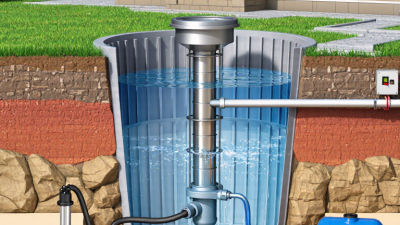
    Submersible pumps operate below the waterline, pushing water upward through a discharge pipe. For a private well, the right setup depends on well depth, expected flow, and the distance to household taps. A pump chosen by horsepower alone may cycle too often or struggle when several taps run at once. A qualified well technician can measure water levels and estimate demand before recommending capacity. Quiet, but not maintenance-free.

    For drainage, submersible pumps commonly sit in a sump basin, collection pit, or flooded low area. A float switch turns the pump on as water rises and off when the level drops. Check that the switch moves freely and that the discharge hose or pipe directs water away from the building. Leaves, grit, and small stones can clog an intake screen or wear internal parts. Not always obvious.

    Well water and drainage water create different demands. A pump intended for clear well water may not tolerate muddy water or debris. Check the manufacturer’s permitted particle size, operating depth, and dry-run protection before installation. Electrical connections near water need suitable protection and careful installation by a qualified professional. Inspecting the system after heavy rain can reveal a stuck float or a blocked outlet before the next storm.

    Jet Pump Systems for Shallow and Deep Wells

    Jet pump systems serve shallow and deep wells, but their layouts differ. A shallow-well jet pump draws water through one pipe and is generally suited to water levels no more than about 25 feet below the pump. Deep-well systems use an ejector assembly in the well and two pipes; many are designed for depths approaching 100 feet. Actual performance depends on the pump curve, water level, pipe size, and elevation. The distinction matters: a well’s total depth is not the same as the distance from the pump to the water.

    The U.S. Geological Survey’s Estimated Use of Water in the United States in 2015 reports that groundwater supplied about 82.3 billion gallons per day, roughly 25% of freshwater withdrawals. That scale makes dependable well equipment important, but the report does not compare pump types. Jet pumps can be practical where the pump must remain above ground, though ejector placement and priming add complexity. Small installation choices matter. A little air leak can interrupt suction, and the wrong sizing can mean weak flow or frequent cycling.

    Tip: Measure the static water level, then check the pump’s performance chart for expected drawdown and flow. Keep the foot valve submerged, protect exposed piping from freezing, and leave room to inspect fittings. Manufacturer ratings vary, so treat the 25- and 100-foot figures as general guidance, not guarantees.

    Solar-Powered Water Pump Systems and Their Components

    Solar-powered water pump systems turn sunlight into a practical water supply, but the panel is only one part of the design. A typical setup includes photovoltaic modules, wiring and protection devices, a pump controller, a motor-driven pump, pipes, and a water source. The controller manages power and may adjust the motor as sunlight changes. Small details matter. A dry-run sensor can help prevent damage when a well’s water level falls.

    Pump selection depends on daily water demand and total dynamic head—the vertical lift plus pressure and pipe losses. Designers should also check seasonal sunlight, well yield, and the distance to the storage tank. A common mistake is sizing from the pump’s nameplate alone. It looks straightforward, but can leave a system short of water on cloudy days. In many locations, storing pumped water in a tank is simpler than adding batteries, though the right choice depends on when water is needed.

    IRENA’s Renewable Power Generation Costs in 2023 reports a global weighted-average levelized cost of 4.4 US cents per kilowatt-hour for newly commissioned utility-scale solar photovoltaic projects. That figure is not a solar-pump operating-cost estimate; it provides broader context on solar electricity costs. For a pump system, installation, maintenance, water storage, and local conditions also matter. Not every site fits. A careful design should compare the pump’s flow at the required head with the available solar power, then allow for seasonal variation.

    Solar-Powered Water Pump Systems: Typical Daytime Output

    Illustrative clear-sky solar output, shown as a percentage of the system’s midday peak. Actual output varies with location, season, weather, and system design.

    How the system works: A photovoltaic (PV) array supplies electricity to a pump controller, which regulates power to the pump. The pump moves water to its destination; a storage tank can provide water when sunlight is low. Batteries are optional—many solar pumping systems store water instead of electricity.