Request A Quote

Phone: 416-244-6476
Email:

    7 Best Well Pump Supplies for Global Buyers?

    Choosing reliable well pump supplies is not simply a matter of comparing prices. A rural home, farm, or small commercial site may need different equipment. Water depth, flow demand, pipe diameter, voltage, and water chemistry all matter. A stainless-steel submersible pump may suit a deep borehole, while a shallow-well jet pump may work better for a compact installation. The wrong pressure tank or check valve can create unstable flow, noisy cycling, and early motor failure.

    Dr. David G. Driscoll, author of Groundwater and Wells, is often quoted as saying, “The pump is the heart of the water system.” That principle guides this review of the 7 Best Well Pump Supplies for Global Buyers? Each option is considered through practical criteria, including motor efficiency, corrosion resistance, control-box quality, cable safety, replacement availability, and technical documentation. Reliable suppliers should also provide clear performance curves, installation instructions, warranty terms, and compatible spare parts.

    Global purchasing adds another layer of risk. A pump designed for 60 Hz power may not perform correctly on a 50 Hz network. Regional certifications, shipping conditions, and local service should never be treated as minor details. No ranking is perfect. A product that performs well in clean groundwater may struggle in sandy or mineral-rich water. Buyers should verify well-test data before ordering, not after installation. The strongest choice is usually the one that fits the entire system, not merely the cheapest item in a catalogue.
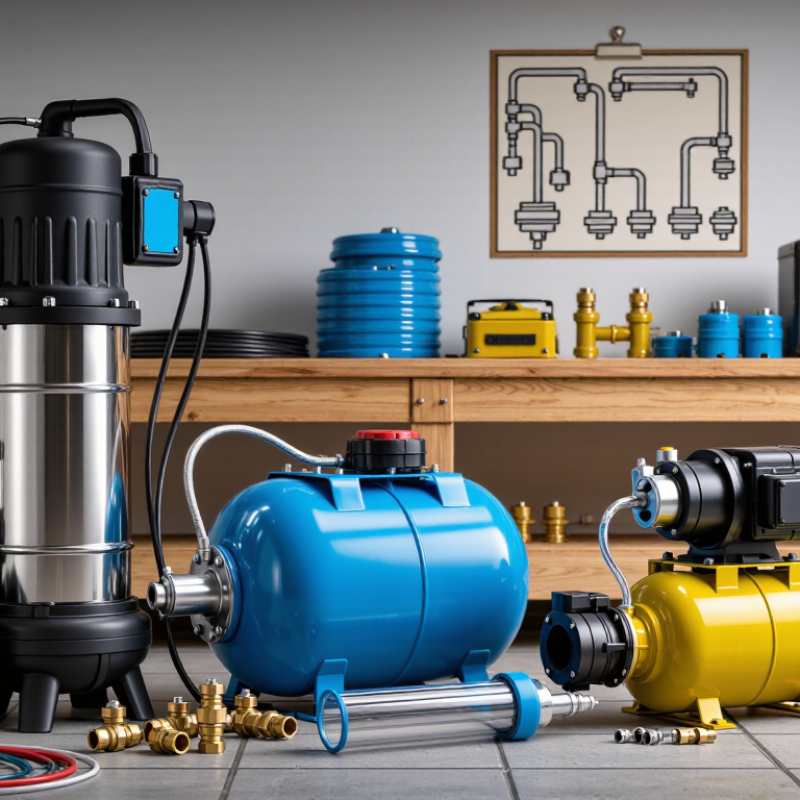
    7 Best Well Pump Supplies for Global Buyers?

    Types of Well Pump Supplies and Their Main Uses

    7 Best Well Pump Supplies for Global Buyers

    Well pump supplies should match water depth, flow demand, and power conditions. Submersible pumps work inside deep wells, pushing water upward through discharge pipes. Jet pumps stay above ground and suit shallow wells, although their suction limits are easy to overlook. Hand pumps remain useful in rural areas without stable electricity. They are simple, but users must accept slower delivery.

    Pressure tanks reduce frequent pump starts and help stabilize household water pressure. Control boxes protect suitable electric pumps from overload and voltage changes. Check valves prevent water from flowing backward into the well. HDPE pipes, rising mains, cables, and waterproof connectors complete the installation. Small seals matter more than many buyers expect. A failed connector can stop an otherwise reliable system.

    The United Nations World Water Development Report 2024 states that agriculture accounts for about 70% of global freshwater withdrawals. This supports strong demand for efficient well systems in irrigation regions. The U.S. Department of Energy also reports that pumping systems may consume 25% to 50% of industrial facility electricity. Buyers should therefore compare motor efficiency, duty cycle, spare parts, and local voltage standards. A practical mistake is choosing the cheapest pump first. I would not do that. A modestly higher initial cost may reduce energy use and service calls, but actual savings depend on well depth, water quality, and maintenance skill.

    Well pump supplies serve different roles in groundwater systems. Submersible and jet pumps lift water, while pressure tanks and switches regulate delivery. Check valves, pitless adapters, and well screens help protect the system and support reliable installation. In this chart, 1 indicates a common primary use and 0 indicates that the supply is not typically used for that purpose.

    Key Features to Compare Before Buying Well Pump Supplies

    7 Best Well Pump Supplies for Global Buyers?

    Key Features to Compare Before Buying Well Pump Supplies

    Global buyers should compare compatibility before price. A mismatched component can reduce flow, overheat the motor, or shorten service life. The seven core supplies include the submersible pump, motor cable, drop pipe, check valve, pressure tank, control box, and well seal.

    Check the pump curve against total dynamic head, well depth, and required flow. Do not guess. Voltage and frequency must match the local power system. Cable insulation should suit wet-well conditions, temperature, and installation depth. For drop pipes, compare pressure ratings, wall thickness, thread standards, and resistance to corrosion. Fit matters. A check valve needs the correct diameter and reliable sealing under repeated cycling.

    Pressure tanks should offer suitable drawdown capacity, replaceable air valves, and a membrane compatible with potable water. Control boxes need overload protection, correct phase settings, and accessible replacement parts. Well seals should match casing dimensions and resist moisture entry. Material quality also deserves attention. Stainless steel may handle mineral-rich water better than lower-grade metal, but the actual water chemistry should guide the decision.

    Review test reports, installation instructions, warranty terms, and spare-part availability. Packaging matters when supplies cross humid or dusty routes. I would also request dimensional drawings before ordering. Small errors happen, even in careful purchasing. A fitting that looks standard may use a different thread. That detail matters. Local technicians should confirm site conditions before installation, especially where water levels change seasonally.

    7 Best Well Pump Supplies for Global Buyers? - Key Features to Compare Before Buying Well Pump Supplies

    Well Pump Supply Primary Function Key Specifications to Compare Typical Materials Power or Connection Requirements Best For Important Buying Considerations
    Submersible Well Pump Pushes water from inside the well to a pressure tank or building supply line. Flow rate, total dynamic head, pump diameter, maximum immersion depth, motor power, and operating voltage. Stainless steel, engineered thermoplastics, cast iron, and corrosion-resistant fasteners. Usually requires a dedicated electrical circuit, submersible cable, grounding, and compatible control equipment. Deep wells and continuous household or irrigation water supply. Confirm well diameter, static water level, recovery rate, pipe size, voltage, frequency, and local electrical requirements before purchase.
    Shallow-Well or Convertible Jet Pump Uses suction and pressure differences to draw water from a shallow water source. Maximum suction lift, flow rate, pressure rating, horsepower, inlet and outlet size, and single- or dual-pipe configuration. Cast iron, thermoplastic, stainless steel, brass, and rubber sealing components. Requires an above-ground electrical connection, suction piping, priming capability, and a properly sealed intake line. Shallow wells, cisterns, and applications where the pump must remain accessible above ground. Suction-lift performance decreases as the water level becomes deeper; the intake line must be airtight and protected from freezing.
    Pressure Tank Stores pressurized water and reduces pump cycling during normal demand. Tank volume, drawdown capacity, maximum working pressure, connection size, diaphragm or bladder design, and pre-charge setting. Painted or galvanized steel outer shell with a synthetic rubber diaphragm or bladder. Must match the system pressure switch and plumbing connection; pre-charge is normally set with the tank depressurized. Domestic water systems requiring stable pressure and fewer pump starts. Compare usable drawdown rather than only total tank volume, and verify pressure ratings against the system cut-in and cut-out settings.
    Pitless Adapter Transfers water from underground well casing to a buried service line while allowing pump removal from above ground. Well casing diameter, service-line size, flow capacity, sealing method, frost-line compatibility, and connection type. Stainless steel, brass, bronze, or approved corrosion-resistant polymer components. Requires a compatible well casing, drop pipe, underground water line, and sanitary sealing arrangement. Cold climates and installations where the water line must exit below the frost line. Check casing dimensions carefully and select materials approved for potable-water contact where applicable.
    Well Cap or Well Seal Closes the top of the well and helps prevent surface water, insects, and debris from entering. Casing outside diameter, venting method, cable seals, pipe openings, load rating, and sanitary certification. Aluminum, cast iron, stainless steel, rubber gaskets, and non-corrosive hardware. Must accommodate the drop pipe, electrical cable, vent, and any required sampling or inspection openings. Sanitary protection of drilled wells and secure above-ground wellhead installations. Use a sealed, correctly sized model and follow local well-construction rules; avoid designs that allow unfiltered surface runoff into the casing.
    Check Valve Allows water to move in one direction and helps prevent reverse flow when the pump stops. Pipe size, pressure rating, flow coefficient, cracking pressure, installation orientation, and temperature range. Brass, bronze, stainless steel, PVC, or reinforced engineered polymer. Must match the pipe thread or socket connection and be installed according to the arrow showing the flow direction. Maintaining system pressure and protecting pumps and piping from reverse flow. Confirm compatibility with potable water, water chemistry, pressure, and flow; excessive or incorrectly placed valves can increase friction loss.
    Pump Control Box and Pressure Switch Controls motor starting and stopping, protects selected pump components, and manages system pressure. Motor voltage, phase, horsepower, rated current, pressure cut-in and cut-out settings, enclosure rating, and overload protection. Thermoplastic or metal enclosure, copper conductors, electromechanical contacts, and thermal protection components. Must exactly match the pump motor and local power supply, including voltage, frequency, phase, and grounding requirements. Systems requiring reliable motor control and automatic pressure-based operation. Never select by horsepower alone; verify the motor data plate, wiring diagram, environmental rating, and regional electrical safety standards.
    Specifications vary by installation and local regulations. Before ordering, confirm well depth, water level, required flow, total dynamic head, pipe size, electrical supply, water quality, and applicable potable-water or electrical certifications.

    Seven Essential Well Pump Supplies for Global Buyers

    Seven Essential Well Pump Supplies for Global Buyers

    Reliable well systems depend on more than the pump itself. A submersible pump provides lifting power, while a pressure tank reduces frequent starts. A pump controller protects the motor from unstable voltage and dry-running conditions. These three supplies should match the well depth, flow demand, and local electrical standard. Small differences matter.

    A check valve prevents water from flowing backward through the rising main. A pitless adapter creates a buried connection that helps protect pipes from freezing. A sanitary well seal closes the casing and limits surface contamination. Properly rated electrical cable and waterproof connectors complete the installation. Keep connections above standing water whenever possible. Safety comes first.

    Field inspections often reveal mismatched components. A powerful pump cannot fix a narrow or damaged well. I once reviewed a supply list that ignored cable length and voltage loss. That assumption was costly. Global buyers should request pump curves, material specifications, thread standards, and test records before purchasing. A local well professional should confirm installation details and compliance requirements. Product descriptions alone are not enough.

    How to Match Supplies with Different Well Pump Systems

    7 Best Well Pump Supplies for Global Buyers

    How to Match Supplies with Different Well Pump Systems

    Choosing well pump supplies starts with the pump system, not the product catalog. Submersible pumps need waterproof electrical cable, a properly rated control box, and a check valve near the discharge outlet. Jet pumps usually require a pressure tank, foot valve, and correctly sized suction pipe. I have seen installations fail because buyers matched pipe diameter but ignored voltage and pump horsepower.

    The most useful supplies include a pressure tank, pressure switch, check valve, control box, submersible cable, pitless adapter, and sanitary well cap. Match the pressure tank to the pump’s flow rate and cycling pattern. A small tank may cause frequent starts. That shortens motor life. Select the pressure switch according to the system’s working pressure, then confirm local electrical requirements before ordering.

    Water conditions also matter. Stainless or corrosion-resistant fittings are safer for mineral-heavy water, while fine sediment may require an accessible screen or filter. Measure well depth, casing diameter, pipe length, and cable distance carefully. One missed measurement can delay an otherwise suitable installation. I once assumed a standard control box would fit a replacement motor; it did not. That mistake reinforced a simple lesson: verify the motor data plate, wiring diagram, and connection sizes before purchase. Not every “universal” supply is truly universal.

    International Sourcing, Quality Standards, and Supplier Checks

    7 Best Well Pump Supplies for Global Buyers?

    International buyers should judge well pump supplies by field performance, not catalog appearance. The seven practical categories are submersible pumps, surface pumps, pressure tanks, control boxes, waterproof cables, check valves, and corrosion-resistant fittings. Each item should match well depth, flow demand, voltage, water chemistry, and installation conditions. A pump tested only in clear water may fail quickly in sandy wells.

    Ask suppliers for test reports, material specifications, wiring diagrams, and traceable production records. Quality systems such as ISO 9001 can indicate process control, but certification alone proves little. Verify certificate numbers with the issuing organization. Check electrical safety, electromagnetic compatibility, and local import requirements before payment. Small details matter, including cable length, thread size, seal material, and spare-part availability.

    Request a sample unit when possible. Measure current draw, discharge pressure, noise, and restart behavior under realistic conditions. Inspect welds, insulation, connectors, and packaging after delivery. I once trusted a polished inspection sheet and overlooked unclear motor protection data. That was a costly lesson. Supplier checks should include factory video calls, reference customers, production capacity, warranty terms, and response times. Keep approved drawings and inspection photos in one shared file. A low price can hide weak testing, inconsistent components, or difficult after-sales support. Reliability takes evidence.