Request A Quote

Phone: 416-244-6476
Email:

    How to Choose the Right Water Pump?

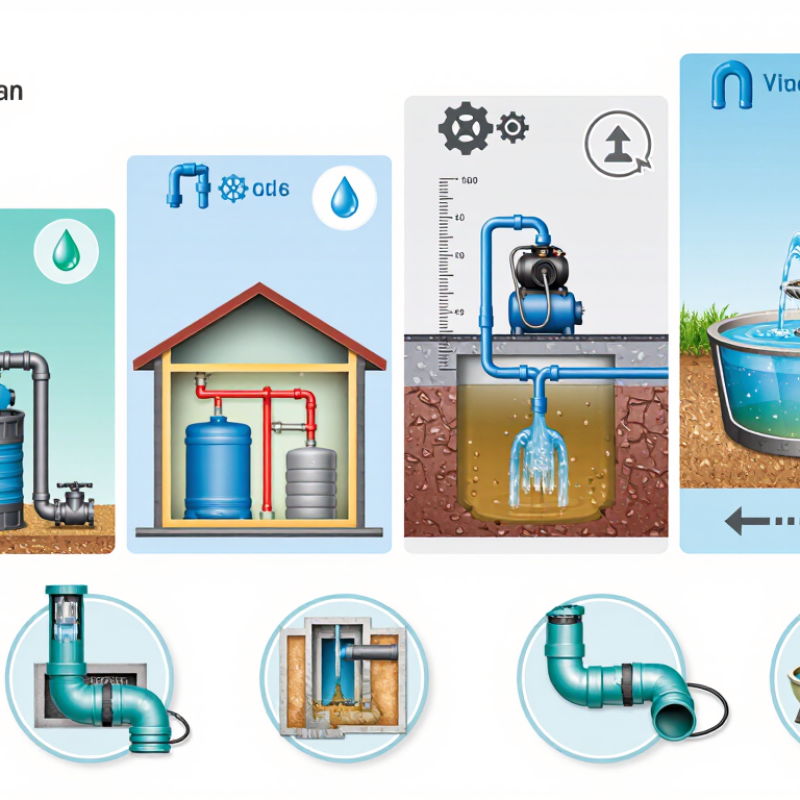
    Choosing the right water pump starts with the job it must do, not the largest number on a product label. A pump moving water from a rain barrel has different demands from one supplying a home, draining a flooded basement, or circulating water through a pond. Small details matter. Measure the required flow rate and the total lift, including vertical height and friction from pipes, bends, and filters. A pump rated for high flow may deliver far less once it works against that resistance.

    The water source and operating conditions matter just as much. Check whether the water is clean, sandy, hot, or likely to contain debris, then match the pump’s materials and design to those conditions. Consider power availability, noise, run time, installation space, and how easily the unit can be serviced. Read the manufacturer’s performance curve rather than relying on a single maximum-flow figure; that figure may not reflect your setup. For a permanent installation or an uncertain demand, advice from a qualified pump professional can prevent costly mismatches.

    No single model suits every property. A pump that performs well in a short test may struggle during a long dry spell or under continuous use. That can mislead. Compare realistic operating points, maintenance needs, and total ownership costs before choosing. This guide explains the key pump types and specifications, helping you narrow the options with practical questions. If your measurements are estimates, treat them as estimates—and verify them before buying.
    How to Choose the Right Water Pump?

    Define Required Flow and Total Dynamic Head (TDH)

    Before choosing a pump, define the flow your system actually needs. A garden irrigation line may need steady delivery across several zones, while a transfer tank may need a faster fill. Check the required volume over time, then note whether demand is constant or changes during use. Bigger is not automatically better. Excess flow can waste energy and strain pipes.

    Calculate total dynamic head (TDH) at that flow rate. Include the vertical lift from the water source to the discharge point, the pressure required at the outlet, and losses from pipe length, bends, valves, and filters. For example, a long, narrow pipe with several elbows can add meaningful resistance. Estimates can be imperfect; record assumptions and verify them against measured pressure or system details.

    Tips: Use the same units throughout your calculations. Measure the actual elevation difference, not the building’s total height. List fittings and pipe sizes, and check the pump curve for the point where flow and TDH meet. A single “maximum head” rating does not show the flow available at that head. Recheck the numbers if the system changes.

    How to Choose the Right Water Pump? — Define Required Flow and Total Dynamic Head (TDH)

    This illustrative system requires 8 m of static lift and 10 m of pressure head. Estimated friction loss rises with flow, so required TDH is calculated as static lift + pressure head + friction loss. At 40 L/min, for example, the estimated TDH is 21 m. Actual values depend on pipe size, length, fittings, elevation, and required outlet pressure; verify them for your installation before selecting a pump.

    Convert Flow Accurately: 1 US GPM = 0.0631 L/s

    How to Choose the Right Water Pump?

    When comparing pump specifications, convert flow rates before deciding what your system needs. One US gallon per minute equals 0.0631 liters per second. The conversion is simple: multiply US GPM by 0.0631. For example, a pump rated at 10 US GPM delivers about 0.631 L/s under the stated test conditions. Check the units carefully. Imperial gallons are larger, so the same numerical rating does not represent the same flow.

    A practical check can reveal a mismatch. If a pump fills a 5-US-gallon container in 30 seconds, its measured flow is about 10 GPM, or 0.631 L/s. Keep the outlet setup consistent, and treat this as an estimate rather than a laboratory result. Small errors matter. A narrow hose, extra fittings, or a higher lift can reduce delivered flow, even when the label shows a generous maximum.

    Use the required flow at the actual discharge height, not just the pump’s headline rating. Look for performance data at the relevant head, then convert the listed GPM into L/s for comparison with your process requirements. I would still allow some margin, but not guess blindly: too much capacity can waste energy or create unwanted pressure. It is easy to overlook pipe losses, and that is where a neat calculation can meet a less neat installation.

    Estimate Water Horsepower: GPM × TDH (ft) ÷ 3,960

    Water horsepower measures the power transferred to water, not the electricity a motor draws.
    Estimate it with GPM × TDH (ft) ÷ 3,960. GPM is the flow rate; TDH is total dynamic head in feet. Include the vertical lift, pressure needed at the outlet, and losses from pipes, elbows, valves, and filters. For pressure, roughly 2.31 feet of water equals 1 psi. Small details matter. A narrow pipe or clogged filter can add resistance that a simple height measurement misses.

    For example, a system moving 40 GPM against 60 feet of TDH needs about 0.61 water horsepower: 40 × 60 ÷ 3,960. That number describes useful power delivered to the water. It is not the motor’s required horsepower. Divide by pump efficiency to estimate shaft power; at 60% efficiency, 0.61 ÷ 0.60 is about 1.02 hp. Motor and drive losses may raise electrical demand further.

    Treat the result as a starting point, not a guarantee. Real flow can differ when pipe runs are longer than expected or fittings are overlooked. Check the pump curve at your target flow and head, then compare it with measured system performance.

    Check Available NPSH Against Pump NPSH Required (NPSHr)

    A pump can look perfectly sized and still struggle if its suction conditions are poor. Compare the available net positive suction head (NPSHa) with the pump’s required NPSH (NPSHr) at the expected flow rate. NPSHa describes the pressure available at the pump inlet above the liquid’s vapor pressure. NPSHr is the minimum stated by the pump manufacturer to limit cavitation under specified test conditions.

    Check the whole suction path. Include liquid level, suction-pipe friction, fittings, inlet pressure, and liquid temperature. Hotter water has higher vapor pressure, which reduces the available margin. For example, a long, narrow pipe or a partly clogged strainer can consume pressure before water reaches the impeller. Small losses add up.

    Keep NPSHa above NPSHr, with a sensible margin for changing conditions. Do not treat equality as safe: NPSHr is commonly based on a defined test criterion, not a promise of quiet, damage-free operation. Verify the figures at the actual flow, speed, and temperature, and use consistent units and reference points. The calculation may look tidy, yet real suction lines are rarely perfect. If the margin is thin, check the assumptions, measure inlet pressure where practical, and consider reducing pipe losses or lowering the pump.

    Verify Operating Range with ANSI/HI 9.6.3 and Test Grades in ISO 9906:2012

    How to Choose the Right Water Pump?
    Verify Operating Range with ANSI/HI 9.6.3 and Test Grades in ISO 9906:2012

    A pump should operate near the duty point, not merely reach it once. ANSI/HI 9.6.3 helps define preferred and allowable operating regions around the best efficiency point (BEP). Check the full operating range, including expected changes in flow and system pressure. A pump that spends long periods far from its BEP may experience extra vibration, heat, or mechanical stress. Small differences matter.

    Use the system curve and real operating scenarios to compare candidate pumps. For example, a building system may need less flow overnight than during peak demand. Confirm that both conditions fit the pump’s allowable operating region. A spreadsheet can look precise while the duty point is still poorly defined. Recheck assumptions such as fluid temperature, density, and control-valve position.

    ISO 9906:2012 sets acceptance test grades for verifying hydraulic performance. Agree on the grade before purchase: Grade 1 has tighter acceptance tolerances than Grade 3. The selected grade affects how closely test results must match specified values for flow, head, and efficiency. A factory test confirms performance under stated test conditions; it does not automatically guarantee identical results in the installed system. Ask for the test point, instrument details, and acceptance criteria in writing.

    How to Choose the Right Water Pump? - Verify Operating Range with ANSI/HI 9.6.3 and Test Grades in ISO 9906:2012

    Use the pump curve and project requirements together. ANSI/HI 9.6.3 addresses preferred and allowable operating regions; ISO 9906:2012 defines acceptance tests and performance tolerances. Confirm the applicable limits and test conditions for the selected pump and contract.

    Selection dimension What to verify Illustrative check Why it matters
    Required duty point Check required flow and total head against the published curve at the specified impeller diameter and speed. Example: 100 m³/h at 40 m head. Confirm the curve intersects this point under the stated test conditions. A pump must meet the system duty without relying on an unverified speed or impeller change.
    BEP proximity Locate the best efficiency point (BEP) on the curve and compare the required operating points with it. Example: if BEP flow is 110 m³/h, a 100 m³/h duty is about 91% of BEP flow. Check the actual operating-region limits rather than using this percentage alone. Operating too far from BEP can increase hydraulic loads, vibration, noise, and energy use.
    Preferred operating region (POR) Use ANSI/HI 9.6.3 guidance and pump-specific manufacturer data to establish the POR for the selected design. Plot minimum, normal, and maximum system flow on the pump curve; verify that normal operation falls within the applicable POR. POR limits depend on pump characteristics and are not one universal percentage for every pump.
    Allowable operating region (AOR) Confirm the permitted operating limits across the expected duty range with the pump supplier and applicable ANSI/HI guidance. Check start-up, low-flow, peak-demand, and parallel-pump scenarios against the documented limits. The AOR is broader than the POR, but operation within it still needs to meet the pump’s stated constraints.
    NPSH available Calculate NPSH available (NPSHA) for the system and compare it with the pump’s NPSH required (NPSHR) at relevant flows. Example: compare system NPSHA with the vendor’s NPSH3 curve and apply the project’s specified margin. Insufficient NPSH margin can lead to cavitation and performance degradation. NPSH3 denotes the NPSH associated with a 3% head drop in the applicable test.
    ISO 9906:2012 acceptance grade State the required ISO 9906:2012 grade and acceptance criteria in the purchase documents; examples of grade designations include 1B, 2B, and 3B. Agree on the grade, tested duty points, measurement method, and applicable tolerance table before ordering. Acceptance tolerances depend on the specified grade and test parameter; do not assume one tolerance applies to every result.
    Tested performance Review the certified test results for flow, head, input power, and efficiency where required by the agreed test scope. Compare measured values with the contractual guarantee using the selected ISO 9906:2012 acceptance criteria. A documented test verifies pump performance under defined conditions; it does not by itself confirm performance in every installed system.
    Power and motor sizing Check absorbed power over the full operating range, including the maximum expected flow, and confirm suitable motor capacity. Review the power curve alongside the system curve; account for the specified liquid properties and operating conditions. Power demand can change with flow and fluid properties, so sizing from the nominal duty point alone may be insufficient.

    Practical decision: Select a pump whose expected operating points satisfy the applicable ANSI/HI 9.6.3 operating-region guidance, then specify the ISO 9906:2012 acceptance grade and test scope contractually. The numerical examples above are illustrative; verify all limits against the project data and pump documentation.